
Why this time around, Netanyahu’s meeting with Trump might not go to script
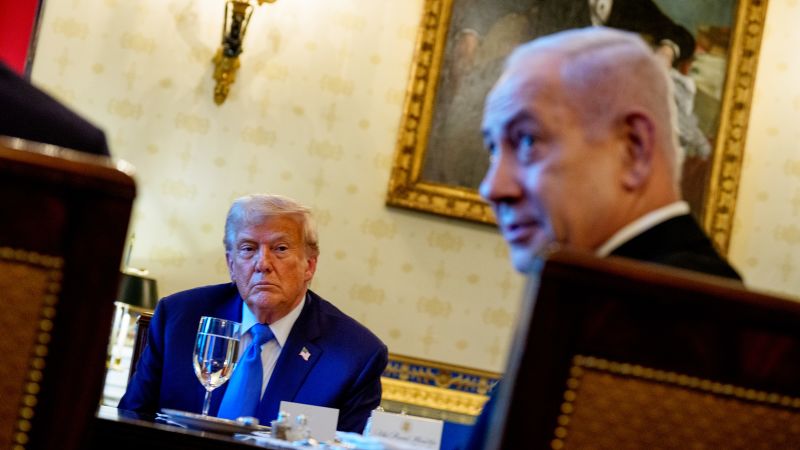
Activelifezero.com – For years, Israeli Prime Minister Benjamin Netanyahu’s trips to meet US President Donald Trump in Washington followed a choreographed script: a red carpet, a warm handshake and shared messages about the closeness of the Israel-US alliance. But the relationship has markedly shifted since the two last met five months ago. The close cooperation and effusive praise from the start of the Iran war have given way to Trump’s expletive-laden outbursts directed at his most vocal international advocate.
This is Netanyahu’s seventh visit to the US since Trump returned to power — more than any other world leader. This time, though, he arrives in Washington as a leader facing reelection, trying to steady a relationship that has grown visibly strained. Even before Netanyahu’s arrival, Trump made his displeasure with him known during a telephone interview on Fox News when asked about reports the Israeli leader planned to share intelligence showing Iran rebuilding its nuclear program.
“I don’t need Bibi to tell me that. Bibi is telling me that because he wants me to stay involved,” Trump said. Netanyahu has been working to secure an invitation to the White House for several weeks, according to a US official and an Israeli source, to discuss progress in the Iran war and warn Trump against diplomatic concessions.
Trump had been resistant to meeting, and some White House officials have been frustrated at what they regarded as Israeli attempts to secure a meeting through media leaks — to “will a meeting into existence,” the US official said. This week’s funeral of US Sen. Lindsey Graham provided an opportunity for a sit-down, even though it will be secondary to the larger event.
A senior US administration official said Trump has a “strong relationship” with Netanyahu and that Israel has “no greater friend” than the American president. “Americans and our allies around the world are already safer for the United States and Israel’s bold actions to deny the Iranian regime the ability to develop a nuclear weapon,” the official told CNN. When the two leaders last met, in February, they laid the groundwork for what became a joint military campaign against Iran.
The opening strikes of the war became a showcase of unprecedented military coordination, which Netanyahu and Trump both eagerly promoted and praised. But as the war dragged on, failing to achieve the overly optimistic goal of toppling the Iranian regime, the gap between them became clear: Netanyahu wanted to keep pressing – Trump wanted an exit. In the lead-up to the war, Trump had been convinced by the prime minister and others that the conflict would be contained and last a matter of weeks.
Several months later, his anger at the current situation — an uneasy and deadly stalemate — has led to expletive-filled private meetings and fury at the regime in Tehran for not folding in the way he once expected, according to a US official. Netanyahu plans to present Trump with fresh intelligence on the state of Iran’s nuclear and military rebuilding, an Israeli source said, though he said Israel assesses “Trump has little interest in resuming a full fight, at least before America’s elections in November.” The Israeli leader has avoided confronting Trump publicly over the sudden April ceasefire but his political allies slammed the agreement with Iran, and pro-Netanyahu media outlets openly targeted the deal’s architects: Vice President JD Vance, Jared Kushner and Steve Witkoff. Vance in turn accused members of Netanyahu’s cabinet of working to sabotage the Iran negotiations and sway American public opinion against the agreement, warning that Israel is alienating “the only powerful ally they have left.” Trump is acutely aware of the political pressures Netanyahu faces ahead of Israel’s national election in October, according to officials, and knows his support for the prime minister could be critical.
Aware of that leverage, Trump has selectively shown support, including last week when he said Netanyahu would not be arrested if he came to the United States after New York Mayor Zohran Mamdani’s initial refusal to roll back a campaign pledge to do so. Trump has not blamed Netanyahu for the predicament, at least in public. But he has called him “crazy” and “difficult” for continuing a bombing campaign inside Lebanon that threatened a ceasefire.
And he has excoriated him over the telephone for diverging from Trump’s war aims. That divergence of aims extends beyond Iran. As Trump pushed Netanyahu to stop fighting against Hezbollah, Lebanon became another point of friction.
In one phone call in early-June reported by Axios, he told Netanyahu, “Everybody hates you now … everybody hates Israel because of this.” Israel eventually agreed to a trilateral agreement with Lebanon one month ago but refuses to withdraw completely from southern Lebanon without Hezbollah’s disarmament first. Netanyahu told his security cabinet Sunday that the Trump administration wants to pull Israeli forces back from positions in Lebanon, as well as in Gaza and Syria, according to an Israeli source briefed on the meeting. Netanyahu, the source told CNN, clarified that he intends to oppose the idea.
In addition to longstanding regional conflicts, two more issues emerged in recent weeks: Trump’s potential plans to sell advanced stealth F-35 fighter jets to Turkey and the US-Saudi civil nuclear agreement. Israeli officials worry the former could erode the country’s qualitative military edge while the latter could trigger a regional nuclear arms race. Trump has tied the Saudi deal publicly to normalization with Israel and expansion of the Abraham Accords, though Riyadh hasn’t confirmed or accepted any such link.
Asked on Monday about the possible fighter jet sales to Turkey and Netanyahu’s opposition to such a deal, Trump replied that “nobody” dictates the sales but him, calling Turkey a “tremendous ally.” Netanyahu buys political loyalty with controversial legislation ahead of election Ahead of his departure Monday, Netanyahu said he plans to discuss “all the issues on the agenda, first and foremost, Iran. Naturally, our goal is to safeguard our security and also to expand the circle of peace around us.” The Israeli source said that Netanyahu will seek assurances that any arms sales to Turkey or nuclear cooperation with Saudi Arabia won’t compromise Israel’s military edge, along with progress on a new long-term US-Israel defense pact to replace the Obama-era memorandum that is set to expire. “Netanyahu wants to move forward from the war to other things — such as a security agreement, perhaps normalization with Saudi Arabia — and to ensure that he is coordinated with Trump regarding things that he can use in the elections,” the source said.
He believes that direct engagement with Trump can bypass disagreements within the administration, the source told CNN. Netanyahu has dismissed the frictions as “tactical” disagreements, insisting the relationship is as close as ever. But an Israeli official said it took time to schedule the meeting with Trump, and that initially “he was blocked,” though it was unclear by whom.
The meeting was only confirmed after Netanyahu announced he would attend Graham’s funeral. The stakes for Netanyahu are as high as ever. According to most recent polls, he falls far short of the majority needed to secure another term in October’s election.
Trump has long been one of his most valuable campaign assets, and demonstrating continued influence in Washington matters for Netanyahu, who still hopes to host him in Israel for a pre-election visit. Notably, the meeting is not currently scheduled to include a public photo opportunity. Their meeting in February, however, was also kept off camera due to sensitive military planning before the war.
The discretion this time could conceal the next campaign against Iran … or the tensions around the next ceasefire. This story has been updated with additional developments.
Related Reading
Frequently Asked Questions
What is Why this time around Netanyahu s meeting?
Why this time around Netanyahu s meeting is the main topic of this guide. The article explains the context, practical details, and next steps readers should understand.
Why does Why this time around Netanyahu s meeting matter?
Why this time around Netanyahu s meeting matters because readers are looking for a useful answer, not just a short summary. Good content should match search intent and help them decide what to do next.
