
Cyclospora outbreaks start with human contamination. Nobody has ever been able to figure out how
Cyclospora Outbreaks Start With Human Contamination: The Unsolved Puzzle
Activelifezero.com – Cyclospora outbreaks start with human contamination, yet scientists still cannot pinpoint exactly how this happens. As summer heat intensifies across the United States, health officials are grappling with a persistent mystery surrounding the microscopic parasite causing widespread gastrointestinal illness. The core question remains deceptively simple: what mechanism allows human waste to contaminate our food supply? Dr. Mark Moorman, former director of the Office of Food Safety at the US Food and Drug Administration, offered a straightforward explanation. “Humans are the source,” he explained, emphasizing that cyclospora has only ever been found in human feces. The logic is clear enough for anyone to understand. “It doesn’t take a rocket scientist or a microbiologist to overthink this.”
Record-Breaking Outbreak Season
This summer stands out for its extraordinary scale. The Centers for Disease Control and Prevention confirms the nation is facing its largest cyclospora outbreak ever recorded, with over 11,500 confirmed and suspected cases spanning 41 states. Unlike previous years, most infections were contracted domestically rather than during international travel. Dr. Keith Schneider, a food safety professor at the University of Florida, highlighted the significance. “Typically, we only see 2,000 to 4,000 a year, so this is a pretty big spike,” he observed. Historically, about one in five cases involves travelers returning from abroad, making this predominantly domestic outbreak particularly noteworthy.
“We’ve not seen anything like this,” said Dr. Kali Kniel, a professor of microbial food safety at the University of Delaware. “I think we’re looking at an unusual year with multiple outbreaks happening at the same time.”
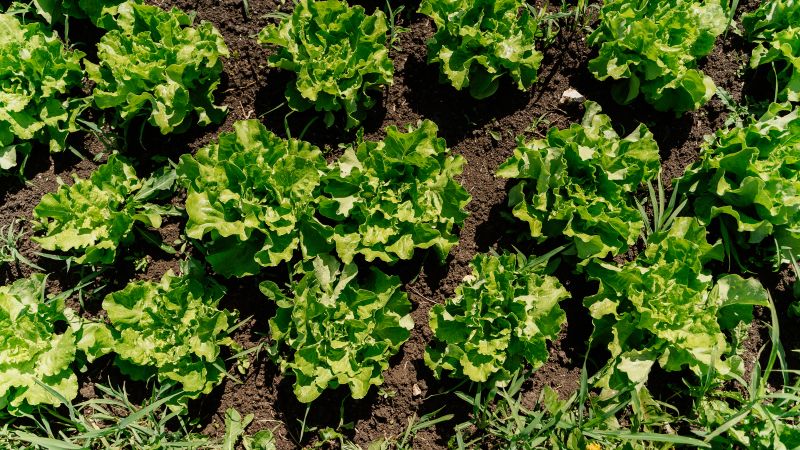
The Food and Drug Administration has launched investigations into six separate cyclospora outbreaks this season. The largest involves nine Midwestern states and appears linked to iceberg lettuce grown in Mexico. Additionally, the FDA recently announced examination of another cluster involving 72 related cases without a clear origin. While investigators have gathered strong circumstantial evidence connecting cyclospora to agricultural production and processing facilities, they have yet to identify the precise contamination pathway.
Why Tracking Remains Difficult
A major challenge in resolving these outbreaks lies in the parasite’s biological behavior. People who eat contaminated food or water do not fall ill immediately. The parasite needs up to two weeks before symptoms like cramping, nausea, watery diarrhea, and abdominal bloating appear. By the time patients realize their condition is ongoing and seek medical help, three weeks to a month may have passed since initial exposure. This delay makes source identification much harder.
Lab confirmation through stool sample analysis adds further time. After diagnosis, cases must be reported to local health departments, which then interview affected individuals about potential exposures. Contact tracers often struggle because most people cannot accurately recall their recent meals, let alone what they ate weeks before. To work around this, investigators frequently pull electronic records from loyalty cards and bank statements to rebuild dietary patterns.
“We just don’t have much in the way of success stories to say, ‘Ah, got it, smoking gun,’ ” Moorman said.
Past investigations demonstrate these difficulties. During a 2013 FDA review of a cyclosporiasis outbreak tied to salad mix processed by Taylor Farms de Mexico, researchers could not detect the parasite in their testing. However, they noticed harvesting workers had taken antidiarrheal medications or the specific antibiotic combination used to treat cyclosporiasis. Unfortunately, these medications serve various purposes, and no formal diagnoses appeared in the reviewed medical records.
Most investigative work begins at the state level, with multistate outbreaks requiring coordination between state health departments and the CDC. Once the CDC determines sufficient evidence points toward a particular source, agency specialists transfer the investigation to the FDA. The FDA then traces the contaminated product through distribution channels.
Frequently Asked Questions
How long does it take to get sick after eating contaminated food? Cyclospora symptoms typically appear 1 to 2 weeks after exposure to the parasite.
What are the common symptoms of cyclospora infection? Symptoms include watery diarrhea, stomach cramps, nausea, bloating, and fatigue.
Can cyclospora be treated with antibiotics? Yes, the infection is usually treated with a combination of trimethoprim-sulfamethoxazole antibiotics.
Why is this year’s outbreak so large? Experts believe multiple outbreaks occurring simultaneously, combined with domestic rather than travel-related cases, are driving the record numbers.
How do investigators find the source of contamination? Investigators use patient interviews, electronic purchase records, and laboratory testing to trace contaminated food back to its origin.
