
New US escalation in Iran makes Trump’s endgame vacuum more urgent
Activelifezero.com – More US combat deaths and a widening reescalation of the Iran war are putting a new spin on a long unanswered question: What is President Donald Trump’s endgame and how will he deliver it? From its initial shots, this war has been under-explained by the administration. The return to something like full-scale aerial war after a ninth consecutive night of US air raids is no exception.
The president seems to be bombing again because the personal, political and economic costs of Iran’s major win so far — its stranglehold on the Strait of Hormuz — are impossible for him to accept. But he has yet to tell Americans why he believes this tactic may be more successful than it was before. Meanwhile, the sharply increased tempo of US bombing and Iran’s broadened retaliation — the attack that killed two US service members and left one missing last week was in Jordan — risks pulling the entire region back into the conflagration.
Jordan, a US ally that lies east of Israel and west of Iraq, is more distant to Iran than US targets in the Gulf states. But Tehran’s success in hitting US troops in the country shows that it retains lethal capacities despite weeks of American attacks. On Sunday, Iran accused the US of attacking an under-construction nuclear power plant and warned of an appropriate response.
Israel said it was ready to immediately resume combat if attacked. The Iran war is not yet the kind of “forever war” in the Middle East that the president repeatedly swore off fighting. But it is nowhere near a finite war either.
Absent some unforeseen shift in the brutal regime’s political foundation inside Iran, it’s unclear how this round of strikes could meaningfully reshape its options. The administration has not said whether its aim with the new strikes is solely to disable Iranian assets along the Strait of Hormuz that allow Tehran to attack civilian shipping, or whether it is preparing the ground for wider action potentially involving ground troops. Another unknown is whether the president is now more willing to go after civilian targets as a tool of extra pressure on Iran’s battered economy and power structure.
And only time will tell whether he has the patience to tolerate the global economic shocks that may ensue before his reimposed blockade on ships and ports decisively increases the heat on Iran. After all, he told Americans last month that he inked an initial agreement to end the war because he didn’t want to cause another Great Depression. That was seen as a bid to mitigate political damage to the GOP ahead of November’s midterm elections.
Such questions are especially pertinent now not just because the conflict is ramping up nearly five months after Trump declared it won in a couple of days, but because this new phase seems to be an attempt to fix the failings of the initial war. US forces are now effectively fighting to deprive Iran of its capacity to use the strait to hold the global economy hostage. The strait was open to free navigation before the war.
If Trump can’t restore that status quo, he will be remembered for a strategic disaster. But his options for doing so are limited, especially since aspects of the newly constituted Iranian regime seem actively bullish about more war. The president could have explained his latest thinking on the war in a national address last week.
But he mentioned it only obliquely, devoting most of his time to claims that the US electoral system corrupted, even though declassified documents released by the White House failed to back up his comments. That omission only added to the strategic uncertainty. US casualty figures for the Iran war bear no comparison to the deaths and injuries the nation suffered during the Afghan and Iraq wars.
But every loss rips apart a family. And every loss increases the onus on political leaders to demonstrate the mission justifies the sacrifice. On Friday, two personnel were killed in an Iranian strike on a US base in Jordan; another is missing.
On Saturday, a US soldier died in northern Iraq during a controlled detonation of unexploded ordnance from a downed Iranian drone. This brought the US death toll to 17. Civilian casualties in Iran are presumed to be higher but are impossible for outside media outlets to verify.
Trump reacted to the deaths of the first two service personnel in an interview with the New York Post. He called the losses “a shame” and said he’d contact the families of the fallen. He told NewsNation that “we hate to see it happen.” The most direct attempt Sunday by the administration to explain its actions came from US Energy Secretary Chris Wright.
He told ABC News’ “This Week” that the president’s “focus is on degrading the Iranian ability to terrorize the world, to hold world commerce hostage, as they are doing right now, and to prevent Iran from getting nuclear weapons. That is unchanged.” Wright disputed the accuracy of public reports showing the near-cutoff of tanker traffic through the strait. Open-source data from maritime tracking agency MarineTraffic reported that traffic through the strait dipped to just eight ships on July 16, down from 15 a day earlier.
Before the war, an average of about 116 ships used the vital sea lanes daily. Republican Rep. Michael McCaul of Texas told “Fox News Sunday” that the military “was winning this war against Iran.” He added: “We stopped … to negotiate a ceasefire and a negotiated settlement.” McCaul was referencing the memorandum of understanding that Trump said achieved all US goals but that collapsed partly because Iran sought to demonstrate its control over the strait.
McCaul said the “fundamental objective now” was for the US military to take out Iranian launch pads and drones. On CNN’s “State of the Union” on Sunday, Democratic Sen. John Fetterman, who broke with factions of his party over the war and his support for Israel, said Trump should press on.
“I think it’s entirely appropriate to continue to confront Iran,” Fetterman told Jake Tapper. But Sen. Mark Warner, the top Democrat on the Senate Intelligence Committee, said: “This is what happens when you start a war of choice.” Warner, a member of the Gang of Eight top congressional leaders briefed on the most sensitive intelligence, told CBS’ “Face the Nation” that “I can say unequivocally there was no imminent threat from Iran.” The current Washington debate about the war, like Trump’s public statements, seems only to illuminate a vicious circle.
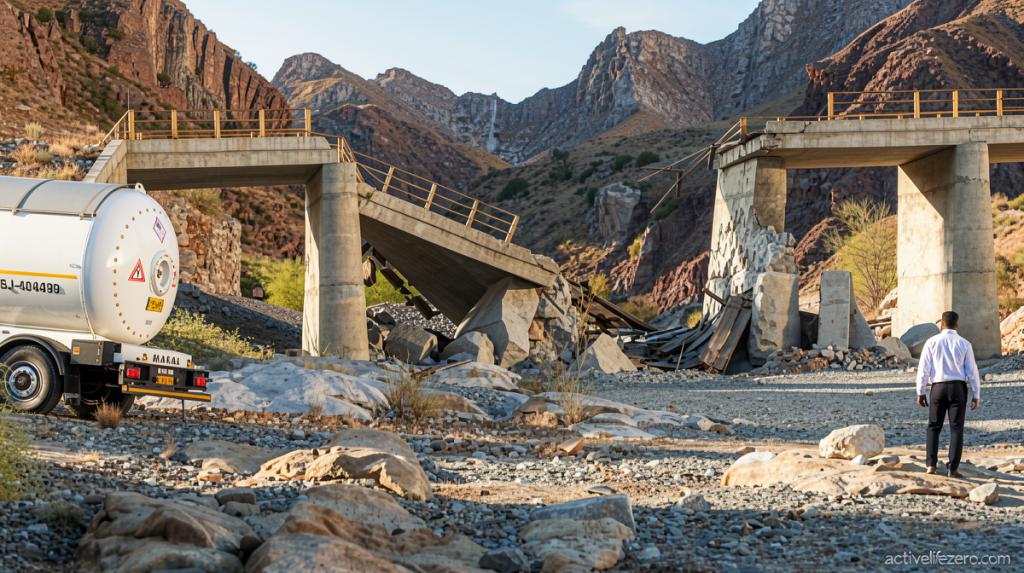
Attacking Iranian positions around the strait and civilian targets like bridges used by the military may degrade Tehran’s threat. But in an age of drones, when just a few missiles can deter ships from tackling the strait, will the US military ever be able to reduce risks to tolerable levels? Rebuking Trump over the war may work as a political argument for Democrats ahead of the midterms.
But it does nothing to help find a resolution. If political pressure forces Trump to walk away, the world economy will be held to ransom by a tyrannical regime in Tehran. And there’s no sign anyway that it will agree to concessions through diplomacy that US and the world may deem acceptable.
The course of escalating air strikes might work for a time, but without repeatedly returning to military action, Trump, or the next US commander in chief, may struggle to ensure Iran’s threat has been decisively eliminated. And without the visibility that an elusive nuclear agreement could offer through international monitoring, the idea — if only theoretical — that the Islamic Republic might race to an atomic bomb can’t be ruled out. Perhaps this intractability best explains Trump’s latest strategy of escalation without a clear end game.
Retired US Navy Adm. James Stavridis told Tapper that all Trump’s options were bad. Iran doesn’t “have a great hand of cards, but they’re playing it pretty well … kind of reminiscent of the North Vietnamese in the war in Vietnam or the Taliban in Afghanistan,” Stavridis said.
“So they’re working to make us determine that this candle is not worth the game, that we would in fact ultimately walk away.” He continued: “I don’t think they will succeed at that strategy, but it’s certainly the one they’re pursuing. And they are thus far at least hanging around the hoop and staying in the game.”
