
Glimpse what life was like for survivors of the Pompeii disaster
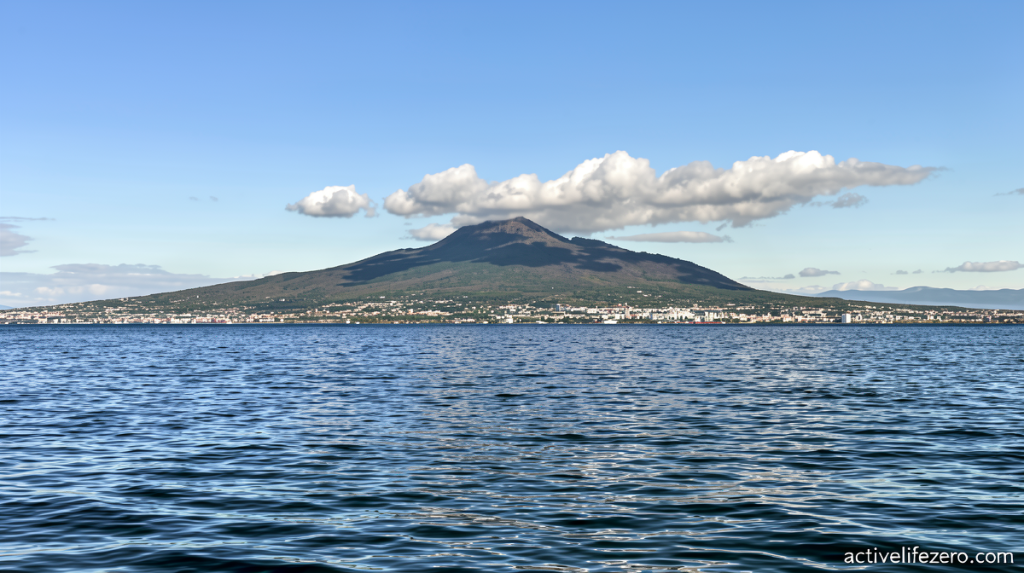
Beyond the Ash: New Discoveries Reveal Pompeii’s Living History
Activelifezero.com – Most people picture Pompeii as a frozen moment in time, a thriving harbor town that suddenly went quiet when Mount Vesuvius unleashed its fury, covering the ancient Roman settlement beneath a heavy blanket of volcanic ash in the year AD 79. Dr. Steven Tuck, who serves as both professor and department head of classics at Miami University located in Oxford, Ohio, shared his perspective with CNN. He described the conventional narrative as remarkably enduring. Visitors wandering through the archaeological site encounter a straightforward tale: everyone perished, and the entire community vanished beneath the debris.
However, Tuck’s numerous expeditions to the site uncovered something he terms “evidence via absence.” This concept refers to missing objects that tell their own story. Empty family shrines and vacant animal stables stood as silent witnesses to those who had departed. Tuck explained that careful observation reveals numerous items absent from where they should remain. The harbor shows no vessels moored, and the strongboxes where Romans stored their wealth sit completely hollow. This realization challenged the traditional belief that every resident met their end that day.
The Search for Those Who Escaped
Over ten years, Tuck dedicated himself to the Pompeii Survivors Project, conducting a comprehensive investigation into individuals who successfully fled before Pompeii and the neighboring town of Herculaneum were consumed. His research culminated in a 2025 publication titled “Escape From Pompeii: The Great Eruption of Mount Vesuvius and its Survivors.” The methodology involved examining digital databases maintained by global scholarly teams, searching through Latin inscriptions carved onto stone tablets nearly two millennia ago. These inscriptions contained names from both cities, allowing Tuck to trace whether individuals’ stories concluded on the catastrophic day or continued beyond it.
The experiences of three individuals form the centerpiece of the new documentary series “Pompeii: Out of Time.” Tom Hiddleston, an actor who earned his classics degree at Cambridge University in the United Kingdom and first explored the ruins at age seventeen in 1998, serves as both executive producer and host. The program debuts Wednesday on National Geographic, with streaming availability beginning Thursday on Disney+ and Hulu platforms.
Reconstructing the Final Hours
The docudrama combines theatrical recreations with scholarly investigation, transporting audiences into the experiences of a young blacksmith’s apprentice, a female merchant, and a member of the Praetorian Guard during the eruption. A distinctive feature includes a countdown timer displayed throughout, tracking each character’s ultimate destiny. Hiddleston noted the extraordinary opportunity to access comprehensive details about everyday existence in Pompeii. He characterized the site as a living monument connecting modern observers to ancient human experiences.
Continuing archaeological work, including initiatives directed by specialists like Tuck who appear in the series, illuminates previously overlooked dimensions of urban life before and following the catastrophe. These discoveries demonstrate how evolving narratives create richer understanding of human determination when confronting sudden natural disasters.
The series opens with seismic activity shaking the city, yet residents continue their routines without particular concern. Christopher Jackson, a geologist and visiting professor within Imperial College London’s Earth science and engineering department, explained to CNN that inhabitants lacked awareness connecting these tremors to future events. Jackson guides Hiddleston through the eruption’s progression, noting that earthquakes persisted for four days preceding the main event. Additionally, a sequence of quakes seventeen years prior had compromised buildings and water systems, which remained under construction when the volcano finally erupted.
Jackson observed that locals likely remained unaware of residing near an active volcano, as it had not erupted within living memory. Roman lawyer and writer Pliny the Younger documented the destruction from across the Bay of Naples, producing what historians consider among the earliest written records of a volcanic event. His uncle, Pliny the Elder, held command of both naval and military forces in the Roman Empire and lost his life attempting to rescue victims across the bay. Modern scientists like Jackson have cross-referenced Pliny the Younger’s observations with geological evidence preserved at Vesuvius, utilizing his comprehensive chronicle to rebuild the volcano’s behavior. The eruption progressed through five distinct phases spanning approximately twenty-four hours.
