
An American blue crab took over Italian lagoons. Now fishers are looking for new careers
Blue Crab Takes Over Italian Lagoons
Fishers Face New Challenges
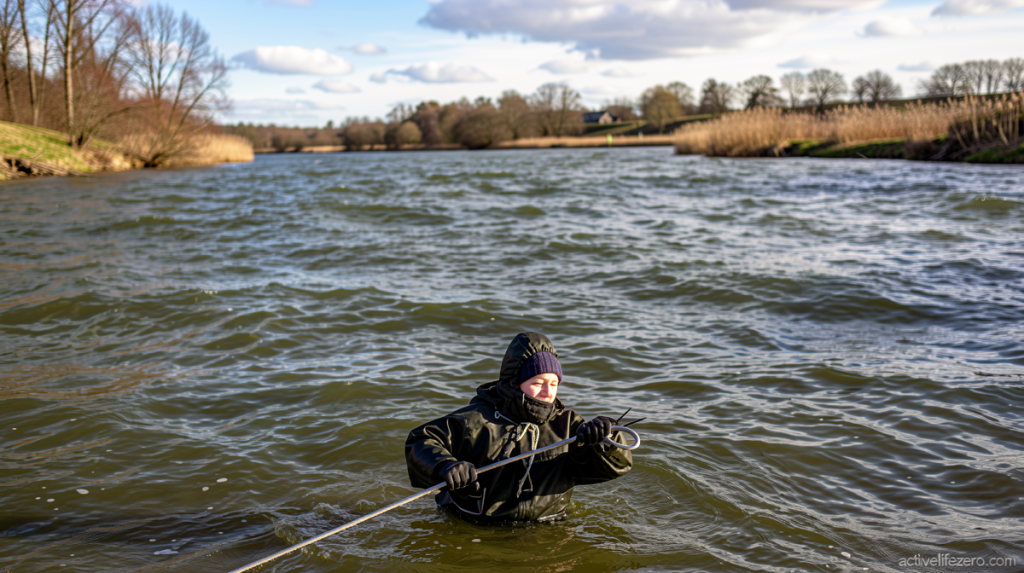
An American blue crab took over the Scardovari lagoon, transforming the lives of traditional fishers. Before dawn breaks, Oscarina Soncin and Giovanna Pizzo have already been working for hours in the cold waters of northeastern Italy. Standing knee-deep in the lagoon, the two women use metal rakes to scrape the ocean floor, sending mud, sand, and prized Manila clams swirling into their nets. For over twenty years, this daily ritual has been their livelihood, challenging traditional gender roles in a profession dominated by men. Their dedication earned them recognition from National Geographic in 2021, and they built a sustainable business that provided steady income and a deep connection to the sea.
However, everything changed in 2023 when Soncin and Pizzo began noticing something troubling. Their nets came up filled with broken shells containing nothing inside. The clams were disappearing, and the women had to spend more time on the water just to meet their daily quotas. An unexpected competitor had arrived in their waters—the Atlantic blue crab, a species native to the United States that has now become a dominant force in the Po Delta ecosystem.
The Scale of the Crisis
The impact has been devastating for local fishing communities. According to the regional fishing consortium, more than 600 fishers have abandoned their traditional livelihoods, representing forty percent of all members. Many surrendered their fishing licenses entirely, seeking employment in other sectors, while others remain determined to adapt to this unprecedented ecological transformation.
Annual clam harvests in the Scardovari lagoon have plummeted by ninety-three percent since the blue crab population exploded. In some areas, clam beds have been completely wiped out, leaving barren seabeds where once-thriving populations once lived. The Atlantic blue crab, highly valued as seafood along the American eastern seaboard and in the Gulf of Mexico, has become an invasive powerhouse in Italian waters.
Understanding the Perfect Storm
Scientists have identified multiple factors contributing to this dramatic shift. The Po Delta’s naturally nutrient-rich waters create an ideal feeding ground for the crabs. Massimiliano Costa, who directs the Po Delta Park, explains that Italy’s longest river delivers abundant nutrients from both natural sources and agricultural activities, creating a food surplus that benefits marine organisms including the invasive crabs.
“The introduction of eggs and larvae through maritime transport has likely occurred continuously over several decades,” noted Viviana Carli, a technician with the Po Delta Park field team. “What seems to have changed were the environmental conditions, which became much more favorable for the species, allowing the population to increase dramatically.”
Climate change has played a crucial role in this transformation. Rising ocean temperatures and milder winters have enabled blue crabs to multiply at unprecedented rates. The Mediterranean has warmed sufficiently to allow these crabs to reproduce multiple times within a single breeding season, while studies indicate that warmer winters have extended their reproductive period and reduced mortality from cold exposure.
Extreme weather events have further accelerated the invasion. In 2022, northern Italy experienced its most severe drought in two hundred years, allowing salty seawater to penetrate far upstream into the Po River. This created optimal conditions for female blue crabs to reproduce and for their eggs to develop properly. The following year, heavy rainfall and flooding dispersed larvae and juvenile crabs throughout the entire delta region.
Adapting to Change
The incoming tides from the Adriatic Sea continue to replenish oxygen levels and bring saltwater that female crabs require for reproduction. Meanwhile, the crabs have adapted to local conditions by burrowing into the muddy seafloor, where they can hide from predators and endure temperature fluctuations during winter months.
“My experience has taught me that anything can happen in nature,” Soncin reflected. “The sea can give a lot, but it can also take everything away, and that is exactly what happened to me.”
Pizzo, who originally entered clam harvesting because it offered flexibility for her family life, expressed her surprise at the situation. She never imagined the blue crab could establish such a strong presence in the Po Delta given the region’s climate conditions. Now, both women face an uncertain future as they navigate this ecological upheaval that threatens not only their profession but also a cultural tradition that has sustained generations of Italian fishers.
Italy currently ranks as the second-largest producer of Manila clams globally, trailing only China in production. As the blue crab continues to spread through Italian waters, local communities must find new ways to sustain their livelihoods while preserving their rich maritime heritage for future generations.
