
Martha Lillard, last US polio patient using iron lung, dies at 78 in Oklahoma
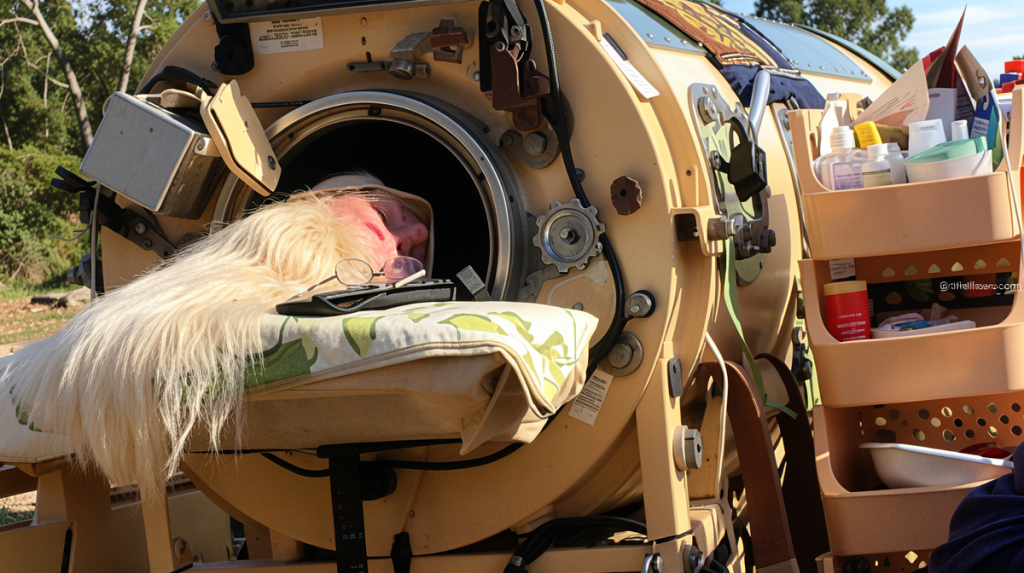
Martha Lillard last US polio patient – “`html
Martha Lillard, Last US Polio Patient, Dies at 78
Martha Lillard, the last US polio patient in America, passed away on June 26 in Oklahoma at the age of 78. For more than seven decades, she relied on an iron lung to breathe, defying medical predictions that she would not survive past her twentieth birthday. Her sister Cindy McVey announced the news to The Associated Press, sharing that Martha’s determination and spirit carried her through a life few could imagine.
A Life Within the Iron Lung
Contracted polio at just five years old, Martha spent most of her life encased in the cylindrical iron lung that surrounded her body. The machine worked by changing air pressure, effectively breathing for her by pushing air into and out of her lungs. As a child, she attended school for only two hours each day, with tutors visiting to complete her lessons. Eventually, she finished her education at Shawnee High School using a special telephone system that connected her to teachers and classmates through an intercom inside her classroom.
“They told her she wasn’t supposed to live past 20 years old,” McVey recalled. “She had the enthusiasm and the drive to continue living and make the best of her life.”
Martha and her family traveled extensively to Missouri, with her father calling hotels ahead of time to ensure they had doors wide enough for the iron lung. She even learned to drive a car for a while. “To me, it was just normal,” said McVey, who is now 75.
Polio’s Toll and Medical Breakthroughs
Before vaccines became widely available, polio was one of America’s most feared diseases. Annual outbreaks paralyzed thousands of children across the country. The situation improved dramatically in 1955 when the vaccine was introduced. According to the Centers for Disease Control and Prevention, vaccination efforts brought American cases down to fewer than 100 per year in the 1960s and under 10 in the 1970s. By 1979, the United States officially declared polio eliminated.
Martha’s condition left her paralyzed from the neck down. Through extensive therapy, she regained partial movement in her left arm and some use of her legs. Her left arm could only move horizontally at waist level, yet she lived independently for many years, cooking her own meals and managing daily tasks on her own.
Love Found Online
The internet transformed Martha’s world, allowing her to stay informed about current events and her own health. More significantly, it led to a connection that would define her later years. After the September 11, 2001 attacks, Martha searched for information online and found a chat room where she met a man living in Egypt. Their correspondence continued for over twenty years, according to McVey.
“They were really soul mates,” McVey said. “He’s extremely brokenhearted.”
Martha finally married Baha Salh in February after he obtained a visa to travel to Oklahoma. Their relationship stands as one of the longest-distance connections made possible by digital communication.
Challenges and Legacy
The coronavirus pandemic brought new difficulties for Martha. She contracted COVID-19 twice during the outbreak. Before her first illness, her lung capacity measured below 25 percent. For the last five years of her life, breathing problems kept her at home. During her final two years, she remained inside the iron lung nearly around the clock.
McVey described her sister as artistic and creative. Martha wrote poetry and composed original songs throughout her life. She even wrote her own obituary, which a local funeral home posted online. Her self-written tribute highlighted her volunteer work with the Humane Society and her love for Beagles, mentioning that she helped rescue animals by sharing posts on Facebook.
Martha later updated her obituary to state that she “died of long-haul Covid 19,” though McVey added the exact date of her passing. A death certificate listed chronic pulmonary failure and post-polio syndrome as contributing factors.
In recent years, McVey and Martha desperately sought ways to keep her comfortable and connected to the world outside her iron lung. Martha Lillard, last US polio patient to pass away, leaves behind a legacy of resilience and hope that inspired countless people worldwide.
“`
