
What the Guadalupe River left behind
The Legacy of the Guadalupe: A Story of Loss and Resilience
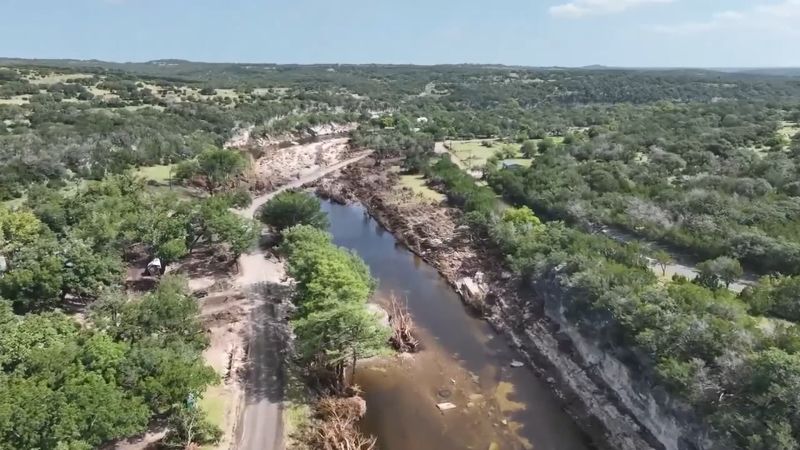
What the Guadalupe River left behind – Last summer, when the Guadalupe River unleashed its fury across the Texas Hill Country, Elida Sierra Lutz and her three children were among the many caught in the relentless deluge. The family’s story unfolded in a matter of hours as the waters rose without warning, transforming a peaceful afternoon into a life-threatening emergency. Elida’s 18-year-old son, who often wore a black zippered hoodie, was swept away along with his wallet, glasses, and cell phone. Her 10-year-old daughter lost her Nintendo devices, lifejacket, and a pair of white Crocs adorned with handpicked charms. The entire travel trailer was swallowed by the torrent, leaving the family to confront the reality of their belongings being carried off like fragments of a shattered dream.
Meanwhile, about 10 miles downstream at Heart O’ the Hills, a summer camp that had hosted generations of families, the flood left a haunting mark. Program director Bailey McEachern returned from a break between sessions to a scene of devastation, where the water had not only claimed the camp’s beloved director and co-owner but also erased cherished memories and artifacts. Among the losses were cabin signs, 1950s-era sterling-silver necklaces featuring thunderbird and crossed-arrow motifs, and a revered trophy known as The Cup. The camp’s Eight Traits—qualities like courage, trust, and faith—were etched into the redwood crown molding of Director Jane Ragsdale’s office, now disintegrated by the flood’s merciless force. What remained were echoes of a history that had been swept away, leaving survivors to ponder what had been taken and what might still be found.
A River’s Unseen Victims
The flood’s wrath extended far beyond the immediate loss of property. At least 136 lives were claimed, including dozens of children from other sleepaway camps, a devoted grandmother, a heroic father, and a cherished coach. For those who survived, the flood was a reminder of the fragility of life and the suddenness with which nature can strip away everything. Yet, even as they clung to the hope of safety, the question lingered: What had become of their belongings? The items they had cherished—souvenirs, family heirlooms, and personal trinkets—were now relics of a battle fought against the elements, their fates uncertain.
It wasn’t long before the community began to mobilize. Dondi Voigt Persyn, a mother of three and grandmother of four from Boerne, Texas, stood on a hill above the Guadalupe River, 35 miles from the disaster zone, and felt a call to action. With a background in pathology and a passion for perfumery, she brought a unique blend of precision and creativity to the task. On the first day of recovery, she found a handful of mixed-metal necklaces, a photograph of a small child, clothing, and a bag of miscellaneous items. Each object told a story, and Dondi knew the survivors would need more than just physical recovery—they would need emotional closure.
“They’re gonna want their things,” she mused, “like I would want mine.” This simple realization sparked a journey that would unite strangers and transform a local effort into a broader movement. Dondi enlisted her best friend, DeAnna, to help navigate the complexities of reuniting lost items with their owners. Together, they launched FOUND on the Guadalupe River, a Facebook group that would become a lifeline for those grappling with the aftermath.
The Unlikely Hero of Recovery
At first, the group was a collection of scattered posts—photos of wallets, sports equipment, and even stuffed animals. Strangers began to collaborate, sharing leads and offering hope. One of the earliest successes came on July 7, around lunchtime, when Dondi posted about five necklaces she had discovered tangled in the mud. Within hours, a comment from Patty Hyatt, a retired schoolteacher, confirmed the find:
“Oh my goodness, those are mine,”
wrote Patty. The necklaces had been part of her collection, lost when floodwaters ripped through her trailer and carried everything she owned away.
Patty’s story, like many others, highlighted the emotional weight of the loss. The items weren’t just possessions; they were symbols of identity, security, and the small joys that had been uprooted. As Dondi and DeAnna worked tirelessly, the group grew into a vibrant community of searchers, each contributing to the effort in their own way. Some posted clues, while others shared photos of recovered objects, sparking connections that bridged the gap between loss and hope.
Over time, the initiative expanded. The river had taken more than just objects—it had taken a sense of normalcy, leaving people to rebuild from the ground up. Dondi’s role as the group’s curator was pivotal, ensuring that every post was clear and every lead was followed. The recovery process was not without its challenges. Sorting through debris, identifying owners, and coordinating returns required patience, intuition, and a deep understanding of the human spirit. Yet, with each successful reunion, the effort gained momentum, proving that even in the face of nature’s fury, people could come together to restore what was lost.
A Community Woven Together
The flood had left a scar on the land and the hearts of those who lived along its banks. But it also forged a new kind of unity. FOUND on the Guadalupe River became more than just a platform for recovery; it was a testament to resilience. Volunteers from all walks of life joined the cause, driven by a shared desire to help. A doting grandmother who had lost her belongings found comfort in the knowledge that her items had been returned. A heroic father, who had saved his children from the water, was able to reclaim the trinkets that had survived the storm. The camp’s survivors, too, began to see their losses as part of a larger narrative—one that honored the people and memories the flood had claimed.
As the weeks passed, the group’s reach grew. What had started as a local effort became a movement that spanned the state, drawing attention from media and beyond. The story of the Guadalupe River’s devastation was no longer just about the destruction it caused; it was also about the determination of those who refused to let it define their lives. Dondi’s journey from volunteer to leader exemplified this spirit, as she transformed a single act of kindness into a community-driven mission. The items recovered were not just replacements; they were pieces of a puzzle that, when put together, told a story of survival and solidarity.
In the end, the Guadalupe River left behind more than destruction—it left behind a legacy of compassion. The survivors, once overwhelmed by loss, found solace in the small victories of reconnection. Their belongings, now returned, reminded them that even after the worst, there was a chance to rebuild. The river had taken much, but the strength of the human spirit ensured that nothing was truly lost forever.
