
Turkey blocks American LGBTQ+ cruise from docking, citing ‘moral standards’
Turkey Blocks American LGBTQ+ Cruise, Citing ‘Moral Standards’
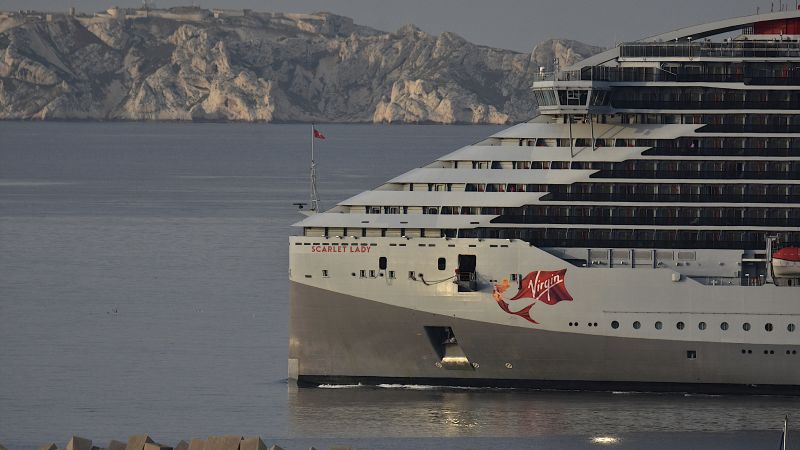
Turkey blocks American LGBTQ cruise – In a recent development, Turkish officials have prevented a cruise ship tailored for American LGBTQ+ travelers from docking in the nation’s ports, citing concerns over “moral standards” and “family values,” according to Rich Campbell, the CEO of Atlantis Events, which organized the Mediterranean voyage. The ship, named the Scarlet Lady, was set to embark from Greece on July 5, 2026, and was originally planned to stop in Kuşadası, a bustling Turkish port, two days later before proceeding to Istanbul. However, local authorities canceled the scheduled stops, claiming the vessel was chartered by groups associated with behaviors they deemed incompatible with Turkish societal norms.
The Scarlet Lady, operated by Virgin Voyages—a cruise line backed by Richard Branson—was expected to host over 1,000 American passengers, with approximately 1,100 of them from the United States and the rest from the UK, Canada, and Australia, as noted by Atlantis Events. The company had planned a 10-day itinerary that included stops in Greece, Turkey, and Croatia, described on its website as an “epic adventure” for travelers to explore the Mediterranean’s cultural and scenic highlights. Now, the revised plan will see the cruise make stops in Cairo, Egypt, and Crete, Greece, instead of Turkey.
Turkey’s decision has drawn criticism from rights groups and LGBTQ+ advocates, who point to the country’s increasingly stringent stance on the community. President Tayyip Erdogan’s ruling AK Party has been vocal in its opposition to LGBTQ+ rights over the past decade, with authorities banning Pride marches in Istanbul since 2015. This latest action reinforces the government’s efforts to maintain conservative social norms, according to officials in Aydin Province, where the port of Kuşadası is located. They stated there is “no possibility” of allowing the group to visit their region due to its alignment with “moral values.”
“It’s pretty stunning, to be honest. I mean, and the reasoning behind it is that it’s a gay group,” Campbell told CNN. “It’s very concerning to me when a country decides they can pick and choose which tourists are allowed in and which are not.”
Rich Campbell emphasized that this was the first time in 36 years Atlantis Events had been explicitly instructed to avoid Turkey’s ports. He noted that the cruise was not political but rather a “tourist experience” focused on exploration and cultural exchange. “We are just a group of people who are just touring the world and trying to see everything we can,” said Randy Slovacek, a journalist and frequent traveler on Atlantis cruises, in an interview from Athens. “There’s never been a problem, none at all, but suddenly they have a problem.”
Slovacek, who has previously visited Turkey on Atlantis trips, expressed sympathy for local vendors who had anticipated the cruise’s economic impact. “They’re missing out on business that would have supported their communities,” he remarked. “However, Cairo and Crete will be enjoying our tourism dollars.” His comments highlight the growing tension between Turkey’s restrictive policies and the global demand for inclusive travel experiences.
The situation in Turkey has taken on new significance amid the rise of the MAGA movement in the United States and its influence on international perceptions of LGBTQ+ rights. While the cruise’s itinerary change was primarily a response to Turkish authorities’ demands, it also underscores broader challenges faced by LGBTQ+ travelers seeking to visit regions with conservative policies. The incident has sparked debates about whether such bans are part of a larger effort to stigmatize the community or a targeted response to specific events.
Following the cancellation, CNN sought comments from Turkey’s Ministry of Culture and Tourism, the Turkish embassy in Washington, and Virgin Voyages. As of now, no official statements have been released, though Atlantis Events has confirmed the revised ports. The cruise’s brochure, which featured a party at a local bar in Istanbul, was recently scrutinized by authorities. Campbell clarified that the brochure was not an official product of Atlantis and had no direct connection to the company’s operations.
Despite the setback, the Atlantis Events team remains focused on delivering an enjoyable experience for its passengers. The revised itinerary, which includes stops in Cairo and Crete, aims to maintain the cruise’s appeal while complying with Turkish regulations. The 10-day journey will continue to showcase iconic Mediterranean destinations, offering travelers access to sun-drenched beaches, historic sites, and vibrant cultures. However, the absence of Turkey raises questions about the extent to which the country’s policies are shaping global tourism and the experiences of LGBTQ+ travelers.
For many aboard the Scarlet Lady, the decision to exclude Turkey from the itinerary feels like a symbolic blow. Slovacek, who has documented LGBTQ+ issues in various countries, described the move as an example of how governments can impose restrictions on cultural diversity. “It’s not just about the cruise—it’s about how a country can deny entry to a group of people based on their identity,” he said. “That’s a big statement.”
Meanwhile, the incident has reignited discussions about the role of tourism in promoting inclusivity. Critics argue that the ban reflects a broader pattern of discrimination against LGBTQ+ individuals in Turkey, while supporters of the policy highlight the importance of preserving traditional values in a rapidly modernizing society. The Scarlet Lady’s voyage, now adjusted to avoid the controversy, serves as a case study in how international travel can be affected by domestic political priorities.
As the cruise sets sail, the focus remains on the passengers’ experiences and the economic implications for Turkey. With the loss of a significant number of American tourists, the country may need to reassess its approach to balancing cultural identity with global appeal. The decision to block the cruise also sets a precedent for future travelers, signaling that certain destinations may now require additional scrutiny to ensure compliance with local norms.
Campbell acknowledged the impact of the cancellation but remained optimistic about the cruise’s ability to adapt. “We’re still able to offer an incredible journey, just with a slightly different route,” he said. “The core of our mission is to provide unforgettable experiences, and we’ll continue to do that.” The revised plan may serve as a temporary solution, but the underlying issue of LGBTQ+ inclusion in Turkish tourism is likely to persist, prompting further debate in the coming weeks.
In conclusion, the Scarlet Lady’s altered itinerary reflects a growing divide between progressive tourism and conservative policies in Turkey. While the government cites “moral standards” as the reason for the block, the decision highlights the challenges faced by LGBTQ+ travelers in accessing diverse cultural experiences. As the cruise continues its journey, the broader implications of this action will be closely watched by both domestic and international advocates for equality.
