
FIFA stunned the soccer world by allowing the USA’s Folarin Balogun to play on Monday. Trump’s role is under the microscope
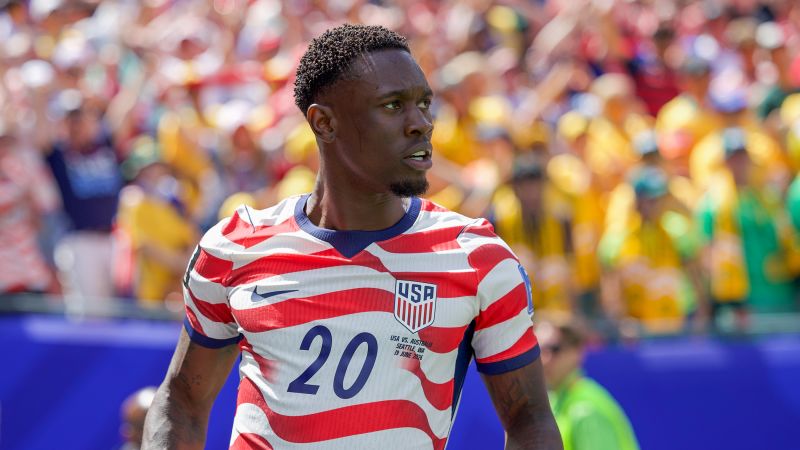
FIFA Stuns Soccer World by Allowing Balogun to Play
FIFA stunned the soccer world by allowing striker Folarin Balogun to compete in the Round of 16 clash against Belgium on Monday. This unexpected decision has sparked widespread debate, with many questioning the influence of U.S. President Donald Trump on the outcome. According to a reliable source, Trump engaged in a conversation with FIFA President Gianni Infantino following Balogun’s red card incident, leading to a last-minute review of the disciplinary action.
The Red Card Controversy and FIFA’s Reversal
Balogun’s dismissal in the 64th minute of the Round of 32 match against Bosnia and Herzegovina was initially deemed a “serious foul play” by VAR officials. The decision triggered an automatic one-match ban, which fans and the U.S. Soccer federation expected. However, FIFA invoked an unusual clause in its regulations to suspend the ban, enabling Balogun to take the field against Belgium. This reversal has intensified scrutiny of the governing body’s decision-making process.
Despite the red card remaining on Balogun’s record, the suspension is now temporary. If he commits a similar offense during the probationary period, the ban will be reinstated. The U.S. team had counted on his goal-scoring ability, with Balogun scoring three goals in four matches. His performance in the Round of 32, including a pivotal strike in the first half, highlighted his importance to the squad. The sudden eligibility for Monday’s match has left many questioning FIFA’s fairness.
“We were punished enough against Bosnia to play with 10 men for 30 minutes. The decision was completely unfair. 99.9% of people agree it was an unfair red card. Maybe today we were lucky,”
FIFA’s action to reverse the ban has drawn both praise and criticism. While some see it as a necessary adjustment, others argue it undermines the integrity of the disciplinary code. The use of Article 27, which allows for the postponement of penalties, has been a topic of discussion, especially given the high-stakes nature of the World Cup match. This decision has further fueled speculation about the extent of Trump’s involvement in the process.
Trump’s Influence on the Outcome
Trump’s call to Infantino has intensified speculation about his role in the reversal. Days before the decision, the White House reportedly reached out to FIFA’s leadership, with Trump later celebrating on Truth Social. “Thank you to FIFA for doing what was right,” he wrote, framing the move as a correction of a “great injustice.” The timing of the intervention has led to questions about whether political pressure influenced the ruling, though FIFA has not officially confirmed this.
The U.S. Soccer federation expressed support for the decision, stating, “We accept FIFA’s ruling and are pleased Balogun will be eligible for the Round of 16 match.” This statement underscores the team’s focus on the upcoming game, even as debates continue over the fairness of the reversal. The interaction between Trump and FIFA highlights the growing political influence in international sports governance.
Implications for the Tournament and Future Matches
FIFA’s decision to allow Balogun to play has set a precedent, potentially impacting future disciplinary actions. The use of Article 27 in this context has raised concerns about consistency in applying rules. Balogun’s presence in the Round of 16 could shift the dynamics of the match, with Belgium now preparing for a more formidable opponent. The ruling also reflects the close ties between Trump and Infantino, who have been allies for years.
The controversy surrounding Balogun’s red card has become a focal point of discussion, with FIFA’s intervention drawing attention to the intersection of politics and sports. While the exact role of Trump remains unclear, the decision has confirmed that high-level political influence can sway key moments in international competitions. As the World Cup progresses, this incident will likely shape perceptions of FIFA’s impartiality and the impact of external pressures on its rulings.
