
‘The greatest cosmic movie ever made’: Historic telescope kicks off an unprecedented survey
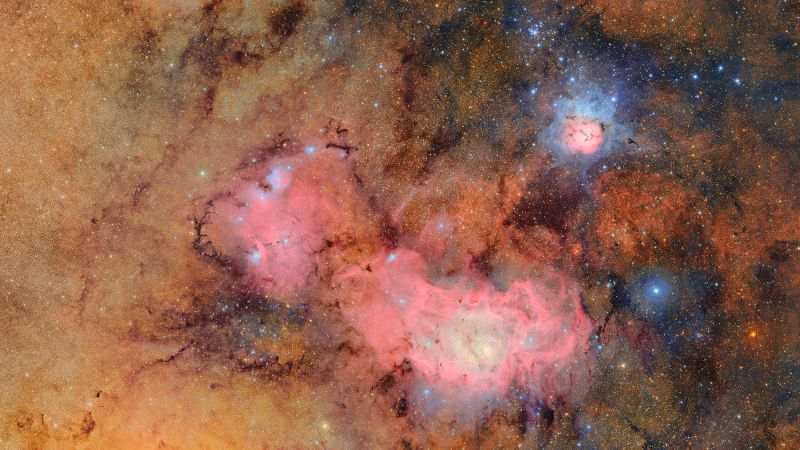
The Greatest Cosmic Movie Ever Made: Rubin Observatory Begins Unprecedented Survey
The greatest cosmic movie ever made is now unfolding as the Vera C. Rubin Observatory in Chile officially kicks off its groundbreaking Legacy Survey of Space and Time (LSST). This decade-long initiative will capture a dynamic, evolving portrait of the universe by imaging the southern sky nightly. With a powerful digital camera the size of a small car, the observatory will produce one image every 40 seconds, building a vast archive of celestial activity that could unlock new cosmic insights. The project’s goal is to document how stars, galaxies, and other cosmic objects shift and transform over time, creating a revolutionary timeline of the universe’s history.
A New Era in Astronomical Research
Perched on the 8,800-foot summit of Cerro Pachón in northern Chile, the observatory benefits from its remote location, which minimizes light pollution and ensures clear atmospheric conditions. This setting allows for precise imaging, crucial for the LSST’s mission to create a near-human-like view of the cosmos. The camera, weighing 6,600 pounds, uses advanced colored filters to capture detailed data, enabling scientists to track changes in objects such as asteroids, supernovae, and distant galaxies. The observatory’s ability to revisit the same areas repeatedly will provide a layered perspective of celestial evolution, making it a cornerstone of modern astronomical discovery.
“This project is more than just a telescope—it’s a window into the universe’s past, present, and future,” noted the observatory team in a recent statement. “By capturing the greatest cosmic movie ever made, we aim to uncover hidden patterns, rare events, and fundamental truths about dark energy and dark matter.”
The LSST’s data collection will be unparalleled in scale, generating a continuous stream of images that can be analyzed to detect transient phenomena. These include sudden stellar explosions, gravitational waves, and unexpected cosmic events that have never been observed before. By compiling over 11,000 new asteroid discoveries and other solar system objects in its initial scans, the observatory has already set the stage for groundbreaking research. Its ability to issue 7 million alerts daily will revolutionize how scientists identify and study these fleeting cosmic occurrences.
Collaborative Efforts for Cosmic Clarity
Developed through a partnership between the U.S. National Science Foundation and the Department of Energy, the LSST represents a collaborative milestone in scientific research. With $800 million in funding, the observatory now serves as a global hub for astronomical exploration, integrating data from multiple institutions to ensure comprehensive coverage. Its primary objectives include creating a detailed map of the Milky Way, cataloging solar system bodies, and probing the mysteries of dark matter through the analysis of light distortions in distant galaxies. This teamwork ensures the survey’s data will be accessible to researchers worldwide, fostering innovation and discovery across disciplines.
As the survey progresses, the observatory will produce billions of astronomical objects and trillions of measurements, all available for public access. This unprecedented dataset will allow scientists to study cosmic changes at an extraordinary scale, from the formation of galaxies to the motion of asteroids. The LSST’s timelapse technique, which captures the greatest cosmic movie ever made, is particularly effective for identifying rare events, such as supernovae or gravitational wave signals, that might otherwise go unnoticed. With its advanced AI and machine learning systems, the observatory is set to transform how we understand the universe’s dynamic processes.
By leveraging its cutting-edge technology and strategic location, the Rubin Observatory is poised to redefine the field of astronomy. Its decade-long mission will not only catalog the universe but also reveal its hidden secrets, offering a unique opportunity to witness the evolution of celestial phenomena in real time. As the first major survey of its kind, this project underscores the importance of long-term scientific investment and the power of data-driven exploration in uncovering the mysteries of space and time.
