
Police must obtain a warrant when seeking sweep of cellphone location data, Supreme Court rules
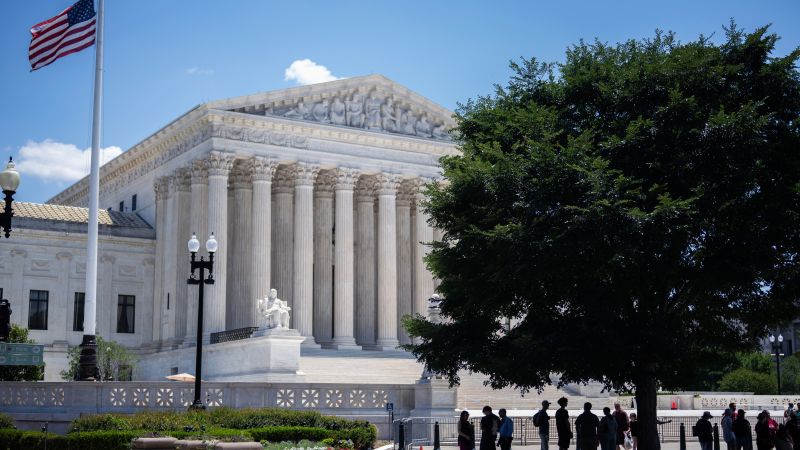
Supreme Court Rules: Police Must Obtain Warrant for Cellphone Location Data Sweeps
Police must obtain a warrant when – Police must obtain a warrant, the U.S. Supreme Court has ruled, reinforcing that law enforcement requires judicial approval before conducting large-scale collection of cellphone location data. In a landmark decision, the court emphasized that geofence warrants—used to gather location information from multiple users—qualify as searches under the Fourth Amendment. This ruling ensures that individuals’ movements are not automatically exposed without legal justification, marking a critical step in balancing privacy rights with investigative needs.
The Fourth Amendment and Digital Surveillance
Justice Elena Kagan’s majority opinion highlighted the importance of constitutional safeguards in the digital age. The 6-3 split revealed a divide among justices, with conservative dissenters arguing against the warrant requirement. Kagan contended that location data, which can reveal intimate details about a person’s habits and routines, deserves the same protection as traditional privacy expectations. “The Fourth Amendment must, as ever, protect against unjustified governmental intrusion on the privacy of the individual,” she wrote, underscoring the court’s commitment to preventing overreach.
The case, which centered on a 2019 bank robbery, illustrated how geofence warrants operate. When initial evidence stalled, police used the tool to query cell carriers for location data, pinpointing individuals near the crime scene. This process involved sifting through millions of records, with Google narrowing results to those within a 300-meter radius. While the warrant was valid, the court’s decision now mandates stricter scrutiny of such data collection methods in future cases.
Chatrie’s Case and the Legal Debate
Okello Chatrie, the defendant in the bank robbery, initially accepted the geofence warrant but later challenged its scope. His legal team argued that the procedure was too broad, allowing authorities to cast a wide net over public spaces like churches or political events. “The potential for abuse is breathtaking,” they asserted, noting that this method could track people’s movements without targeted suspicion. The case exposed a key question: does the mere use of location services by users equate to voluntary surrender of privacy rights?
The Richmond-based 4th Circuit Court had previously ruled against Chatrie, stating that location data collection was not a “search” under the Fourth Amendment. The court reasoned that users accept sharing their data as part of smartphone functionality. However, the Supreme Court’s reversal highlights growing concerns about the scale and precision of digital tracking, which updates every two minutes with three-meter accuracy. This detail underscores how easily individuals can be monitored without explicit consent.
Dissenting View: Alito’s Critique of the Ruling
Justice Samuel Alito, in his dissent, called the majority’s decision a “responsible escapade,” arguing that it unnecessarily complicates law enforcement procedures. He noted that the ruling does not affect the outcome of Chatrie’s case since a warrant was already obtained. “By refusing to review the one question that could have at least theoretically given Chatrie some hope of relief, the court carefully set the stage for its planned performance,” Alito wrote, framing the decision as a symbolic move rather than a practical solution.
“The court knows this and does not claim otherwise. Indeed, its ruling sends a message that privacy rights are secondary to the convenience of digital investigations.”
Alito’s critique reflects the broader tension between efficiency in policing and individual liberties, a debate that continues to shape modern surveillance practices.
Implications for Law Enforcement and Privacy Advocates
This ruling carries significant implications for both law enforcement and privacy advocates. For police, it means additional steps to secure warrants for location data sweeps, potentially slowing investigations. For citizens, it strengthens protections against unwarranted monitoring of their daily activities. The decision aligns with growing public awareness of digital privacy, as Americans increasingly rely on smartphones for everything from communication to navigation. The balance between security and freedom remains a central issue in the age of mass data collection.
The Supreme Court’s focus on the warrant requirement signals a shift toward greater judicial oversight in digital investigations. While the ruling may complicate efforts to gather evidence quickly, it ensures that privacy rights are not overlooked in the pursuit of justice. As technology evolves, the court’s decision sets a precedent for how location data is treated—a topic that will likely remain in the spotlight for years to come.
