
Trump is racing to finish his border wall. Here’s how he is planning to do it
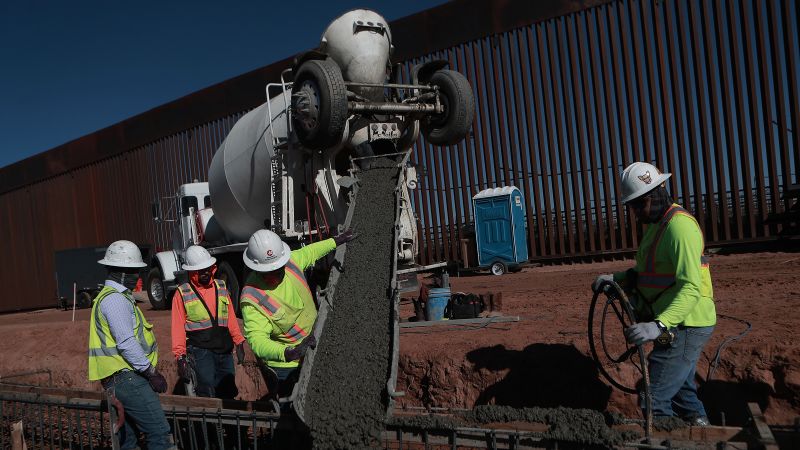
Trump’s Border Wall Initiative: A Race Against Time and Terrain
Trump is racing to finish his border – President Donald Trump has intensified efforts to finalize his vision of a comprehensive border wall system, aiming to complete the project by the conclusion of his term. This ambitious timeline hinges on the acquisition of private land along the U.S.-Mexico border, a process that has seen increased reliance on eminent domain. As the administration moves forward, legal teams are being deployed to secure necessary property rights, particularly in regions where land ownership is fragmented or not under federal control.
The Legal Push for Land Acquisition
The Department of Justice has ramped up its involvement in land seizures, with attorneys specializing in eminent domain being prioritized. This strategy underscores the challenges faced by federal agencies in specific border regions, such as Texas, where much of the land is privately held. A former Homeland Security official noted to CNN that the pace of land purchases has lagged behind construction rates, creating a pressing need to act swiftly. “The government is losing ground faster than it can acquire the required land,” they explained, highlighting the urgency of the situation.
Progress and Projections
The U.S.-Mexico border spans 1,954 miles, and officials estimate that by the end of the Trump administration, approximately 1,400 miles will be secured with physical barriers. Additional infrastructure will incorporate advanced technology, such as surveillance systems and sensor networks. To achieve this, the administration plans to construct around 775 miles of new primary walls by 2027 and hundreds more of secondary barriers by 2028. While current figures suggest steady progress, the scale of the undertaking remains daunting.
CBP Commissioner Rodney Scott recently emphasized that the project is “ahead of schedule and below budget,” citing federal funds allocated through Congress and the president’s $46.5 billion “big beautiful bill.” As of last year, about 644 miles of primary wall had been built, with 75 miles of secondary barriers in place. Since then, the agency has added roughly 80 miles of primary and 24 miles of secondary walls, according to CBP records. However, the remaining 695 miles of primary wall and 608 miles of secondary barriers require significant resources and coordination.
Strategic Priorities and Exceptions
Scott outlined that the primary wall will extend from San Diego to the Gulf of Mexico, with some gaps. This corridor includes areas where no prior barriers existed, making it a critical focus. He acknowledged that certain regions, like Big Bend National Park and the Black Gap Wildlife Management Area, will not see the construction of a 30-foot-high wall. These locations, characterized by rugged terrain, are deemed less critical for the project’s immediate goals.
Despite these exceptions, the administration remains committed to its goal. The plan involves building roughly 10 miles of barriers weekly in August, with the pace expected to increase as the year progresses. “They want to say they’re finished by the end of this administration,” the former Homeland Security official said, underscoring the political pressure to deliver results. The timeline also includes a phased approach, with construction proceeding on a “rolling basis” once land becomes available.
Legal Framework and Challenges
The use of eminent domain allows the government to take private land for public use, a legal tool that has become central to Trump’s strategy. While previous administrations relied on federal land for barriers, extending the wall requires securing additional properties. This has led to a surge in condemnation cases, with the Department of Justice filing 39 such cases during Trump’s second term. The Southern District of Texas, New Mexico, Arizona, and California are primary targets, as these states account for much of the contested territory.
Efforts to expedite the process have included waiving certain legal procedures, streamlining the acquisition of land. This approach, while controversial, aims to reduce delays and keep the project on track. The federal document reviewed by CNN highlights that “all real estate available for construction by June 2027” is a key milestone, though the exact number of miles to be completed by then remains fluid as contracts are finalized.
The Role of Technology and Reinforcement
Alongside physical barriers, the project emphasizes technological integration to bolster security. Approximately 535 miles of the border will feature advanced systems, including cameras, sensors, and fencing. This combination of infrastructure and innovation is designed to enhance monitoring capabilities and deter crossings. However, the challenge of acquiring land persists, even as construction speeds climb.
“The primary border wall — I’ve made a commitment to the president — will be done by the end of 2027,” Scott stated at a recent event, underscoring the significance of the timeline. His comments reflect the administration’s confidence in meeting its objectives, despite the complexities of land ownership and legal hurdles. The final phase of the project, including secondary barriers and technology, is projected to be completed by 2028, ensuring a more integrated system.
Reflections on the Process
While the numbers paint a picture of progress, the journey to complete the wall has been marked by logistical and political challenges. The reliance on eminent domain has sparked debates about land rights and federal authority, yet it remains a necessary tool for achieving the administration’s goals. As the project advances, the balance between speed and thoroughness will be crucial in determining its success.
“The process of acquiring privately owned land is complex, but the administration has made it a priority,” a spokesperson for the Department of Homeland Security told CNN. This focus has led to a more aggressive strategy, with teams actively engaging landowners to facilitate the process. The combination of legal action, financial investment, and a streamlined approach has positioned the project for completion, even as questions about its long-term impact remain.
Ultimately, Trump’s border wall initiative represents a significant undertaking, blending political ambition with practical execution. The administration’s ability to navigate legal and logistical obstacles will determine whether the goal of a fully secured border is achieved. As construction accelerates, the success of this effort will be measured not just by miles of walls, but by the effectiveness of the system in meeting the administration’s vision for border security.
With the timeline tightening and the stakes rising, the race to complete the wall by the end of Trump’s term is both a logistical and symbolic challenge. The project’s completion would mark a major milestone in the administration’s strategy to secure the U.S. border, even as debates over its methods and consequences continue to unfold.
