
The future of oil prices may depend on China
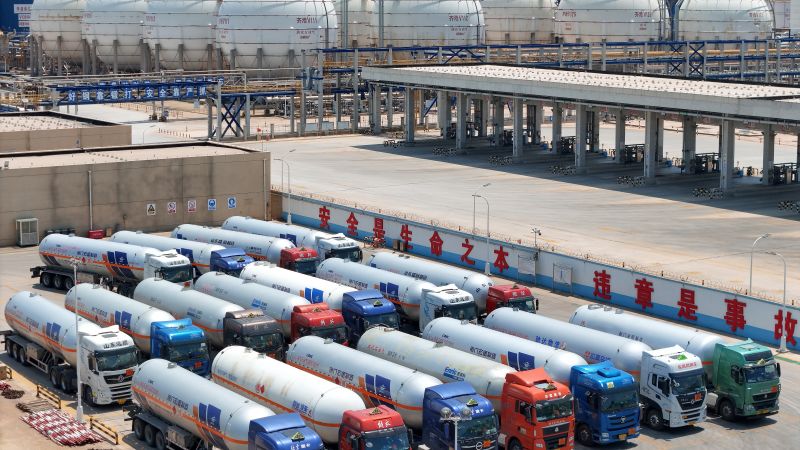
The Future of Oil Prices May Depend on China
The future of oil prices may depend – As geopolitical tensions in the Middle East escalate, the recent negotiations between the United States and Iran over the Strait of Hormuz have sparked renewed interest in the global oil market. However, the critical factor shaping the trajectory of prices may lie not in the talks between these two nations, but in the actions of a third country that has largely stayed out of the discussions: China. The world’s second-largest oil consumer, China, has taken decisive steps to stabilize its energy supply amid the war’s disruption of over 11 million barrels of oil per day. By adjusting import levels, leveraging strategic reserves, and accelerating the adoption of renewable energy sources, China has shielded its domestic economy from the worst of the price volatility.
China’s Strategic Measures to Stabilize Oil Demand
China’s proactive approach has been a game-changer for global markets. The nation has not only reduced its reliance on foreign crude by curtailing imports but also tapped into its extensive stockpiles to meet demand. These reserves, bolstered by low-cost oil from sanctioned suppliers like Russia and Iran, have provided a buffer against rising costs. Analysts note that China’s ability to maintain such reserves has softened the blow of the supply crisis, preventing a sharper spike in prices than initially feared.
At the same time, China’s push toward clean energy has further alleviated the pressure on oil consumption. The rapid growth of electric vehicle (EV) production, for instance, has reduced the need for fossil fuels. In fact, nearly half of all new passenger cars sold in China now run on alternative energy, according to international energy reports. This shift has cut daily oil demand by approximately 1 million barrels, creating a demand-side cushion that has balanced the supply-side shocks.
Analysts Highlight China’s Role in Containing Price Surges
Despite the war’s impact on global supply, oil prices have not surged as dramatically as some had anticipated. This is largely due to China’s market-stabilizing interventions. Daan Walter, a principal at Ember, an energy think tank, emphasized that China has acted as a key stabilizer for the Asian region, in turn protecting the global economy from more severe disruptions. “China has played a critical role here to buffer this for the rest of Asia… thereby buffering the global economy,” he said in a recent analysis.
Historical data also supports this view. In 1973, an embargo by Arab nations caused a 7% drop in global crude supply, leading to a 134% price increase. Yet, even with the current conflict impacting 14% of the world’s oil supply, prices have not risen to similar levels. Societe Generale analysts attributed this discrepancy to China’s “invisible hand” in rebalancing the market. Their research noted that China’s reduction of oil imports by 3 million barrels per day—equal to Japan’s entire crude demand—has been pivotal in keeping prices in check.
Brent Crude’s Volatility Amid Supply Concerns
Global oil benchmarks have mirrored China’s influence. Brent crude, the widely followed international price indicator, has seen dramatic fluctuations, with prices falling below $78 a barrel on Monday amid expectations of Hormuz’s reopening. This drop follows a period where Brent briefly hit a four-year high of $114 a barrel in early May. Analysts suggest that these swings are partly due to China’s ability to absorb excess supply and temper demand. However, the market remains uncertain, as the Strait’s reopening could lead to a surplus next year, according to the International Energy Agency (IEA).
The IEA’s latest report warns that the return of normal Middle Eastern production may trigger an oversupply of 4.7 million barrels per day next year. While this could provide relief to prices, it also highlights the delicate balance between supply and demand. “This may provide a welcome respite to the market and an opportunity to replenish depleted inventories, or to build new strategic reserves,” the IEA wrote in its analysis. The organization’s forecast underscores how China’s actions will continue to shape the outcome of this crisis.
The Rise of Electric Vehicles as a Demand Dampener
China’s energy transition is not just a response to the current crisis but a long-term strategy. The country’s booming EV market has played a significant role in reducing oil dependency. With one in every two new cars sold being an EV, the shift is already evident. Last year alone, China’s fleet of electric vehicles cut oil consumption by 1 million barrels per day, according to IEA estimates. This trend has eased the strain on global oil markets, offering a glimpse into a future where demand for crude oil may decline more rapidly.
David Fishman, a China energy specialist at the Lantau Group, called the EV boom “a wonderful release valve for the global crude market.” He added that while China’s ability to offset demand is impressive, its effectiveness depends on the sustainability of its stockpiles. “The thing that can’t be sustained forever is the stockpiles of crude,” Fishman said. “If prices weakened, you’d expect the first thing they do is start to stockpile again.” This suggests that China’s temporary measures may eventually give way to renewed price pressures as stockpiles deplete.
China’s Stockpiles and the Limits of Their Influence
China’s strategic reserves have been a cornerstone of its energy policy, but their impact is not without limits. Analysts note that the nation’s stockpiles, which now exceed 1 billion barrels, have been drawn down significantly since the war began. This has allowed China to stabilize its domestic supply, yet it also means that the country is now more vulnerable to price fluctuations. Janiv Shah, vice president of oil markets at Rystad Energy, explained that before the war, China had been building up its reserves, aided by low-cost oil from Russian and Iranian sources. Now, these reserves are being used to meet demand, creating a temporary but crucial buffer.
Additionally, China has implemented export controls on refined products such as diesel and gasoline to prioritize domestic needs. This has discouraged oil refiners from purchasing crude at higher prices, further softening the market. However, as the crisis eases, these measures may need to be adjusted. The IEA’s warning about potential oversupply next year suggests that China’s role in balancing the market could evolve. While the country has successfully mitigated short-term shocks, its long-term influence may depend on how quickly it can replenish reserves and adapt to changing global conditions.
Global Implications of China’s Energy Policies
The broader implications of China’s actions are clear: its energy policies are now a critical determinant of global oil prices. As the world grapples with the aftermath of the worst oil crisis in modern history, analysts stress that China’s ability to manage demand will be key. “China’s policy and consumption patterns will be pivotal for the market, regardless of how quickly the Strait of Hormuz reopens,” said one energy expert. This highlights the growing importance of China in shaping global energy dynamics.
With its strategic reserves dwindling and the EV market expanding, China is demonstrating a dual approach to energy security. Yet, the nation’s influence is not absolute. The IEA’s projections suggest that even with China’s efforts, the market will eventually stabilize as supply returns to normal. This could lead to a new era of energy balance, where China’s policies remain a vital component, but other factors, such as production levels and demand trends, will also play a role. As the crisis unfolds, the interplay between China’s actions and the global oil market will remain a focal point for investors and policymakers alike.
