
‘What ceasefire?’: In northern Israel, locals doubt an agreement can end the war with Hezbollah
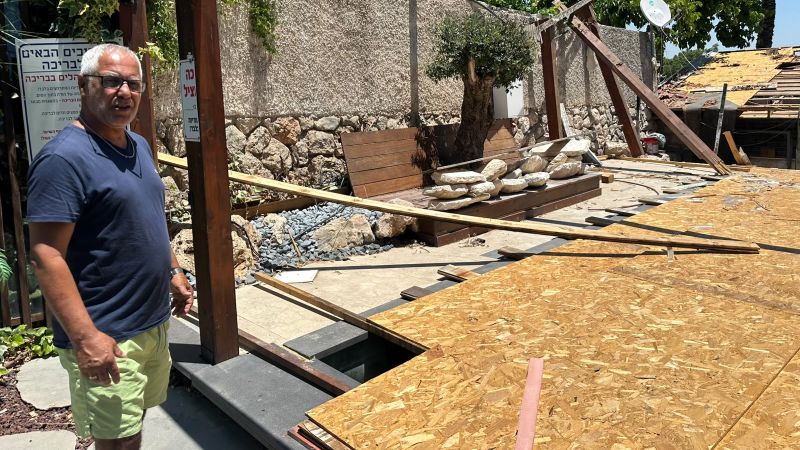
Residents in Metula Question Ceasefire’s Ability to End Hezbollah Conflict
What ceasefire – In the northern reaches of Israel, where the border with Lebanon stretches thin, Metula’s once-bustling streets now echo with silence. For weeks, Daniel Dorfman, the town’s longtime pizza shop owner, has watched his establishment fall into quiet, a stark contrast to its usual vibrancy. Two tables in the corner occasionally host a few customers, while the rest of the restaurant—and the town itself—remains eerily empty. Metula, a town with a history dating back over 130 years, was once dubbed “Europe” for its European-style architecture and bustling tourism industry. Its main thoroughfare, HaRishonim Street, was lined with hotels and restaurants, a testament to its past as a cultural hub. Yet, in recent months, the town has become a frontline in a war that shows no signs of abating.
A Ceasefire That Feels Like a Mirage
On Friday, the announcement of a new US-brokered ceasefire between Israel and Hezbollah sparked a wave of doubt among locals. The agreement, the latest in a series dating back to November 2024, has been met with sharp skepticism. “What ceasefire?” Dorfman remarked, his tone reflecting the frustration of a community that has endured relentless cross-border attacks. “Until yesterday, there wasn’t a single day without fire. We hear explosions, see drones, and feel the shrapnel overhead. I’ve lost track of how many times we’ve been promised a ceasefire—it’s always the same story.”
The town’s struggles mirror the broader challenges faced by residents in the region. Before the war, Metula housed around 2,000 people, but now, fewer than half have returned to their homes. Over 60% of the town’s buildings have been damaged, and the scars of conflict are visible in every corner. For decades, locals had grown accustomed to living in proximity to war, but the recent escalation—triggered by Iran-backed Hezbollah’s rocket strikes in October 2023—has shattered that complacency. The group’s attacks, aimed at supporting Hamas, have turned Metula into a symbol of the war’s unending toll.
The Ceasefire Talks and Their Limits
Amid the backdrop of ongoing hostilities, Israeli and Lebanese ambassadors are set to meet again in Washington for the fifth round of negotiations. However, Hezbollah remains absent from these talks, viewing them as a farce. An Israeli official told CNN that the country might offer a symbolic pullback as a gesture of goodwill to Lebanon’s government. Yet, for Metula’s residents, such gestures feel hollow.
“We don’t feel any ceasefires,” said Moti Aharon, a 58-year-old local who has witnessed decades of military escalation. His century-old home was struck twice, leaving the guesthouses and pool he built unusable. “The Americans don’t understand who they’re dealing with. They think they can talk to Iran with silk gloves, but this war isn’t about diplomacy—it’s about survival.” Aharon’s words underscore a growing disillusionment with peace talks, especially as the conflict has drawn Lebanon deeper into a regional struggle.
A History of Conflict and Resilience
Hezbollah’s resilience has been a defining feature of the war. Despite Prime Minister Benjamin Netanyahu’s claim in November 2024 that the group had been “pushed years back” by Israel’s military campaign, the latest fighting has demonstrated otherwise. The group’s attacks have not only intensified but have also dragged Lebanon into a broader regional conflict, forcing Israeli forces back into southern Lebanon. This mirrors the military strategy used from 1985 to 2000, when Israel maintained a security buffer zone in the area. That period ended after years of mounting casualties, a pattern that seems to be repeating today.
Since April 15, the Trump administration has brokered several ceasefire agreements between Israel and Lebanon. However, even as Washington celebrated diplomatic progress, the fighting persisted. The latest ceasefire, announced after months of relentless bombardment, has not yet quelled the violence. In fact, over the weekend, five Hezbollah soldiers were killed within 24 hours of cross-border fire, a reminder that the conflict remains volatile.
Political Tensions and Regional Implications
Iran has played a pivotal role in the war, framing the end of hostilities in Lebanon as a key condition for its own talks with Washington. This has created tension between the US and Israel, particularly as President Donald Trump and Prime Minister Benjamin Netanyahu have clashed over the pace of de-escalation. While US pressure has tempered Israel’s military operations, Netanyahu remains steadfast in his belief that troops must stay in Lebanon to ensure security. The current conflict, however, has exposed the limitations of such measures.
Lebanon’s health ministry reported over 4,000 deaths and more than a million displaced individuals as a result of the war. The Israeli military, meanwhile, confirmed 36 soldiers and four civilians were killed in the cross-border clashes. For Metula’s residents, these numbers are not abstract—they are the lived reality of a town that has become a microcosm of the war’s devastation. The town’s current predicament highlights the gap between diplomatic efforts and the ground-level impact of the conflict.
As the fifth round of ceasefire talks unfolds, the question remains: can a fragile agreement truly bring peace? For Daniel Dorfman and Moti Aharon, the answer seems to be no. The war has left them without a sense of normalcy, and their experiences reflect the broader struggle of communities caught between two nations. While the international community continues to push for resolution, the people of Metula and southern Lebanon remain skeptical, their lives shaped by a conflict that shows no signs of ending anytime soon.
