Clive Davis, monumental music producer and record industry titan, has died

Clive Davis, Music Industry Visionary, Passes Away at 94
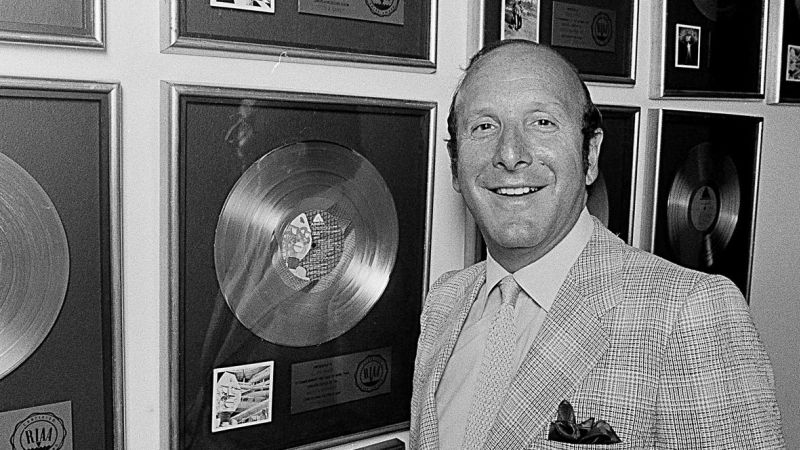
Clive Davis monumental music producer and record – Clive Davis, a revered figure in the music world renowned for shaping the careers of icons such as Janis Joplin, Whitney Houston, Billy Joel, and Carlos Santana, has died at the age of 94. His family confirmed the news through a social media post, while his publicist independently shared the update with CNN. Davis, often referred to as “the man with the golden ears,” left an indelible mark on the industry, blending artistry with business acumen across decades.
A Legacy of Discovery and Innovation
Known for his uncanny ability to spot raw talent, Davis’s career began in unexpected circumstances. Born in Brooklyn, he initially pursued a path in law, graduating from Harvard Law School before working as a lawyer for Columbia Records in 1960. By 1965, he had become the label’s top legal representative and was soon promoted to president, a position he held with an eye for both artistic and commercial success.
“I was thrust into it,” Davis told CNN in 2013. “Never knowing I had a natural ear and gift for music that,” he added, “would become the passion of my life.”
His first major breakthrough came in 1967 when he encountered Janis Joplin at the Monterey Pop Festival. Describing her as “not conventionally beautiful,” he was captivated by her electrifying stage presence, which he likened to “a body that seemed to vibrate with the modulations of her voice.” This encounter led to her signing with Columbia Records, marking the beginning of a career that would redefine rock and soul music.
Throughout the 1970s and ’80s, Davis’s roster expanded to include a tapestry of artists. Bruce Springsteen, Billy Joel, Carlos Santana, Chicago, Earth, Wind & Fire, and Aerosmith all found their footing under his guidance. His influence extended to Aretha Franklin, whose career saw a revival in the late 1980s with the release of “I Knew You Were Waiting (For Me)” in 1987—a duet with George Michael that propelled her back to the top of the Billboard Hot 100.
Whitney Houston’s rise to fame in the 1980s epitomized Davis’s ability to elevate emerging stars. Their partnership produced seven consecutive No. 1 hits, including “Saving All My Love for You” and “I Wanna Dance with Somebody (Who Loves Me).” Houston’s untimely death in 2012 deeply affected Davis, who recounted the moment he last saw her before her passing. “She was vital, optimistic, looking forward to the future,” he said in 2024, reflecting on their shared vision for new music.
From Scandal to Redemption
Despite his towering achievements, Davis’s career was not without turbulence. In 1973, he was ousted from Columbia Records amid accusations of misusing company funds for personal expenses. The scandal coincided with a federal probe into “payola” practices, though Davis was eventually cleared. Still, he faced tax evasion charges, which were resolved with five of six counts dropped.
“This virtually complete exoneration received nothing like the coverage of all the baseless charges, rumors, and guilt-by-association whispers that I had lived with since leaving Columbia,” Davis wrote in his 2013 memoir, “The Soundtrack of My Life.”
Undeterred, Davis founded Arista Records in the late 1970s, launching a new era of success. The label became a powerhouse, with hits from Alan Jackson and Brooks & Dunn in the 1980s and ’90s. His resilience in the face of adversity underscored his philosophy of survival in show business. “You’ve got to be a survivor,” he once remarked. “You’ve got to rise above cold periods, you’ve got to come back stronger.”
His mentorship extended beyond the studio. Bruce Springsteen, who credited Davis as a “close friend” in a social media tribute, shared how the producer’s support transformed his early career. “He treated me with the same respect and kindness as a 22-year-old nobody as he did after all my success,” Springsteen wrote, highlighting Davis’s unwavering dedication to artists regardless of their fame.
Even in his later years, Davis remained a pivotal force. He nurtured talents like Luther Vandross and Simon & Garfunkel, ensuring their legacies endured. His ability to adapt to changing musical landscapes—whether revitalizing Aretha Franklin’s sound or guiding the rise of pop stars—cemented his reputation as a shrewd yet passionate figure. The Brooklyn-born producer, who once admitted he never imagined his life would be centered on music, proved that the industry’s rhythms could be shaped by a single, determined vision.
The Man Who Shaped Pop Culture
From his early days as a lawyer to his status as a record industry titan, Davis’s journey was a testament to serendipity and perseverance. The 1967 Monterey Pop Festival, where he first saw Joplin perform, was just the beginning of a career that would span continents and genres. His partnerships with artists like Santana and Billy Joel not only launched their careers but also set the tone for an era of musical innovation.
While his work with Whitney Houston remains one of his most celebrated ventures, it was the combination of his talent scouting and business acumen that defined his legacy. Davis’s approach to music was both intuitive and strategic, blending emotional resonance with market savvy. He once described his process as “a dance between instinct and calculation,” a philosophy that guided him through decades of triumphs and challenges.
As the industry evolved, so did Davis. His role as a producer, label head, and mentor evolved alongside the tides of pop culture, ensuring he remained relevant through the late 20th and early 21st centuries. His influence extended beyond record sales, shaping the very fabric of how music was created, marketed, and celebrated. Even after his death, the echoes of his work continue to resonate in the careers of those he once guided.
Reflecting on his life, Davis’s family spoke of his dual legacy: a man who redefined music through his discoveries and a devoted family member whose kindness and generosity left an enduring impact. His passing marks the end of an era, but his contributions to the industry remain a cornerstone of its history. As the world mourns the loss of a legend, it also celebrates the indelible mark he left on every artist he touched.