
Why is baseball having a gay meltdown?
Why is baseball having a gay meltdown?
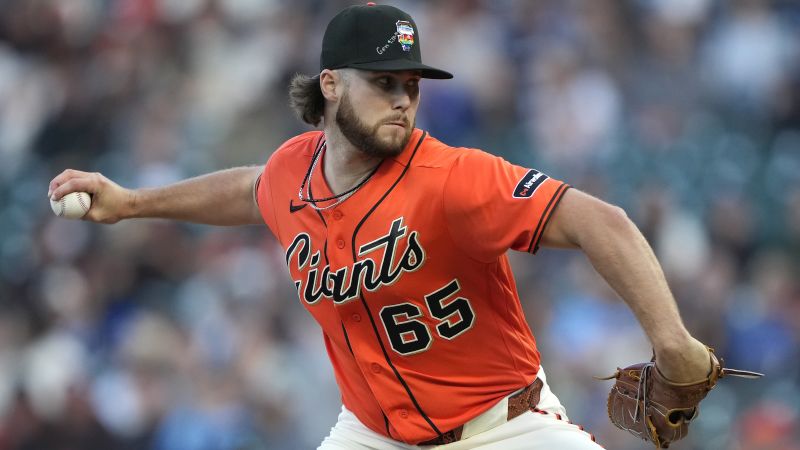
Why is baseball having a gay meltdown – Last Friday, San Francisco’s Giants staged a Pride Night at their home stadium, drawing attention from fans and critics alike. While most Major League Baseball (MLB) teams have embraced themed events to celebrate diversity and attract broader audiences, the Giants stood out by incorporating a rainbow motif into their players’ uniforms. Only one other team, the Los Angeles Dodgers, has adopted a similar approach, with both choosing to feature Pride-themed caps and jerseys. This decision was intended to symbolize inclusivity and provide a platform for LGBTQ+ fans, yet it sparked an unexpected controversy involving religious expression.
Twenty-nine of the thirty MLB teams have included Pride Nights in their seasonal programming, with the Texas Rangers being the sole exception. These events are typically designed to foster a sense of community and promote attendance by aligning with contemporary social values. However, the Giants’ choice to embed the rainbow emblem on their caps added a layer of visibility that some fans found provocative. The design was meant to reflect the team’s support for the LGBTQ+ community, but it also invited debate over the boundaries between symbolism and personal belief.
During the game, three Giants pitchers—among them starter Landen Roupp—chose to challenge the symbolic nature of the event by incorporating their own religious messages. Roupp inscribed “Gen 9:12-16” on his cap, referencing a Bible verse that describes the rainbow as a covenant between God and humanity. The other pitchers followed suit, adding similar scriptural references to their gear. Their actions were not merely symbolic; they were deliberate statements of faith, recasting the Pride imagery as a nod to divine promise rather than a celebration of human diversity.
“That’s just kind of something I believe in, and I stand firm in that, and I’m thankful we live in a country where, you know, we have the freedom to believe what we want … and express what we want,” Roupp told reporters after the game.
The players’ gestures did not go unnoticed. Major League Baseball (MLB) issued verbal warnings to them for violating the league’s uniform policy, which prohibits the display of nicknames or messages on apparel. While the rule is clear, the enforcement of it raised questions about the league’s role in regulating personal expression. Critics argued that the warnings were selective, targeting Christian players who used religious references while allowing others to promote secular or social justice messages without consequence.
Political figures quickly seized on the issue. Vice President JD Vance, in a post on X, remarked, “Trump won we don’t have to do this anymore,” suggesting the event’s symbolism was a burden under the current administration. Missouri Senator Josh Hawley also weighed in, accusing MLB of discrimination against Christian athletes. Yet, the league defended its actions, emphasizing that the warnings were not disciplinary and were consistent with past practices. “This routine verbal warning not to wear the hat in future games is not disciplinary and had absolutely nothing to do with the content of the message,” MLB stated in a follow-up.
The league clarified that similar warnings have been issued for other messages, such as “Dad,” “Happy Mother’s Day, I Love Mom,” and names of family members. These examples highlight a pattern of allowing players to express personal sentiments through their uniforms, even when the messages are not directly related to the team’s brand. The Giants and Dodgers had previously requested and received permission to use Pride-themed gear, and players on those teams had the option to wear their standard caps if they preferred. The controversy arose when the religious messages appeared to overshadow the event’s intended purpose.
Legal experts and advocacy groups have since questioned the fairness of MLB’s approach. Assistant Attorney General Harmeet K. Dhillon wrote a public letter to Commissioner Robert Manfred, urging the Equal Employment Opportunity Commission (EEOC) to investigate the matter. The letter cited federal law, which mandates that employers reasonably accommodate employees’ religious practices. “Federal law is clear: employers must modify their uniform requirements to reasonably accommodate their employees’ exercise of religion,” Dhillon noted. This legal angle adds weight to the argument that MLB’s uniform policy may need adjustment to respect players’ rights to express their faith.
The EEOC’s involvement has intensified scrutiny of the league’s actions. Florida’s Attorney General, James Uthmeier, announced a formal probe into whether MLB is engaging in religious discrimination by selectively enforcing its uniform rules. He pointed out that while the league has consistently warned players for messages like “Gen 9:12-16,” it has also permitted and even encouraged secular expressions without penalty. “We have given the same warning numerous times in the past to players for messages such as ‘Dad’ and ‘Happy Mother’s Day, I Love Mom,’” MLB noted, underscoring the inconsistency in enforcement.
Despite the backlash, no formal disciplinary action was taken against the pitchers. The league maintained that the verbal warnings were meant to remind players of the rules rather than penalize them for their beliefs. This leniency, however, has fueled accusations that the Giants’ decision to feature Pride Night caps was an invitation to challenge the policy, with the players’ religious expressions serving as a catalyst for the debate. The incident has reignited discussions about the balance between inclusivity and individual freedom in sports, particularly in the context of religious symbolism.
Looking back, the Tampa Bay Rays attempted to join the Giants and Dodgers in celebrating Pride Night with dedicated caps and patches in 2022. Five players opted out of the design, choosing to wear their regular uniforms instead. Their decision sparked criticism, prompting MLB to urge teams to avoid making uniforms central to Pride celebrations in subsequent years. The Giants and Dodgers, however, persisted with their approach, leading to the current situation. While the league insists its actions are fair, the controversy underscores the growing tension between institutional inclusivity and personal expression in professional sports.
The incident has also highlighted how Pride Night events can become flashpoints for broader ideological debates. For some fans, the rainbow on the cap is a powerful symbol of acceptance, while for others, it represents a shift toward secular values that may marginalize traditional beliefs. The players’ choice to integrate religious messages into the event has framed the discussion in terms of faith versus identity, with the Giants’ actions now at the center of a legal and cultural reckoning. As investigations proceed, the outcome may set a precedent for how sports leagues navigate the intersection of symbolism, freedom of expression, and religious rights in the future.
