
Uber and Wayve team up to launch driverless cars in London this summer
Uber and Wayve Team Up to Launch Driverless Cars in London This Summer
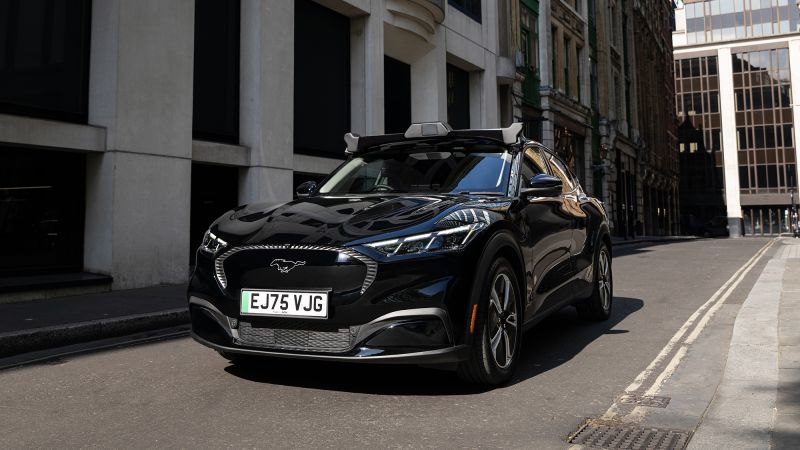
Uber and Wayve team up to launch – London is set to welcome autonomous vehicles for public transportation this summer, marking a significant milestone for the British capital. The collaboration between Uber and Wayve introduces a fleet of AI-powered cars designed to navigate one of the world’s most traffic-choked urban environments. This initiative not only signals a shift in urban mobility but also positions London as a testing ground for cutting-edge self-driving technology. The partnership aims to integrate Wayve’s advanced artificial intelligence systems with Uber’s existing infrastructure, offering a glimpse into the future of transportation.
A Global Expansion Begins in the UK
Wayve, a British startup, has been working to establish its presence in the global autonomous vehicle market. The upcoming launch in London is the first step in its international rollout, which is expected to expand to over a dozen cities by the end of the year. Among these, Tokyo will see the introduction of robotaxis later this year, underscoring the company’s ambitious vision. The decision to begin in the UK highlights the region’s favorable regulatory environment and its role in fostering innovation in AI-driven transportation.
Wayve’s vice president of operations, Kaity Fischer, emphasized the importance of the London launch. “We’re really excited to roll out this service and provide the public with a hands-on experience,” she said in a Monday interview with CNN. The company has been refining its technology on London’s intricate road networks since 2018, a period during which it has gathered valuable data on urban driving challenges. Fischer noted that the initial phase would involve a limited number of vehicles—“dozens, not hundreds”—to ensure a controlled and safe introduction to the market.
Safety First: Supervised Operations and Public Trust
Wayve’s approach prioritizes safety, with the first rides in London set to be monitored by trained Uber drivers. This hybrid model allows for real-time oversight while gradually transitioning to full autonomy. Fischer explained that the presence of human supervisors serves as a critical safety measure, enabling the company to demonstrate reliability and build consumer confidence. “It allows us to create a safety case… so that when we remove the drivers, we have a solid foundation,” she stated.
While no strict timeline has been set for fully autonomous operations, Fischer stressed that safety remains the top priority. The company’s phased rollout reflects a cautious strategy, balancing innovation with public apprehension. As self-driving vehicles become more prevalent in cities like New York and San Francisco, London’s adoption of this technology could serve as a benchmark for other European capitals.
Autonomous Vehicles in the Spotlight
The rise of self-driving cars has sparked renewed interest in their potential to transform transportation. However, recent reports have also raised questions about their safety. CNN recently investigated incidents involving Waymo, a subsidiary of Alphabet, and uncovered several close calls, including instances of vehicles running red lights and colliding with oncoming traffic. These events highlight the ongoing challenges of ensuring reliability in autonomous systems, even as they become more widespread.
Fischer defended the technology, arguing that autonomous vehicles contribute to safer streets. “The statistics speak for themselves,” she said. “These cars are never drowsy, never distracted, and have the ability to process visual data with greater precision than human drivers.” She acknowledged the importance of addressing public concerns but emphasized that the technology has evolved significantly since its early stages. “Back when Wayve was founded in 2017, no one imagined automotive companies would embed AI into vehicles,” Fischer reflected. “Now, the industry is catching up to what we’ve been building for years.”
Embodied AI: The Future of Mobility
Wayve’s technology represents a key advancement in the field of Embodied AI, a term used to describe artificial intelligence integrated into physical systems. Unlike some competitors, which retrofit autonomous features onto existing vehicles, Wayve designs its hardware directly into cars during the manufacturing process. This seamless integration allows the vehicles to adapt to real-world environments more effectively, according to the company’s website.
Rapid progress in AI and cloud computing has accelerated the development of such systems. Fischer noted that the growing public awareness of generative AI, exemplified by platforms like ChatGPT, has also influenced the adoption of autonomous vehicles. “The popularity of AI in general has helped people understand its capabilities,” she said. This trend has encouraged more companies to adopt Wayve’s model, which combines advanced machine learning with practical urban navigation solutions.
Legal Framework and Government Support
Wayve’s success in London is partly due to the UK government’s proactive stance on autonomous technology. The Automated Passenger Services framework has provided clear guidelines for deploying self-driving cars, easing regulatory hurdles. Fischer praised the legal environment, stating that the government’s investment in AI has been instrumental in creating an ecosystem where innovation can thrive. “The UK has really focused on building a robust AI infrastructure,” she said.
As the world grapples with the implications of autonomous vehicles, the UK’s approach offers a template for other nations. The government’s support extends beyond legislation, encompassing funding for research and development. This backing has enabled companies like Wayve to refine their systems, ensuring they meet the high standards required for public use. London’s role as a pilot city could influence broader policy decisions, particularly in the European Union, where regulatory frameworks are still being finalized.
Challenges and Opportunities Ahead
Despite the promise of autonomous vehicles, their implementation in London presents unique challenges. The city’s dense traffic, unpredictable pedestrian behavior, and complex road layouts require AI systems to be highly adaptive. Wayve’s technology must contend with these variables, which are not as prevalent in other cities where self-driving cars are already in use. Fischer acknowledged that the transition to full autonomy will take time, but she remains optimistic about the long-term benefits.
“The real-world testing we’ve done in London has been invaluable,” Fischer said. “It allows us to fine-tune our systems and address edge cases that might not be apparent in controlled environments.” This iterative process is crucial for developing reliable autonomous vehicles, particularly as they move from experimental phases to mass deployment. The partnership with Uber also brings a scalable infrastructure, ensuring that the service can grow without compromising safety standards.
With the launch imminent, London is poised to become a hub for autonomous innovation. The success of this initiative could set a precedent for other cities, demonstrating the viability of AI-driven transportation. As Wayve expands its operations, the company aims to balance technological progress with public trust, ensuring that the benefits of driverless cars are realized without overlooking the risks. This summer’s rollout marks the beginning of a new era in urban mobility, one that promises both challenges and transformative opportunities.
