
Israeli soldiers open fire on car in West Bank, killing 7-month-old baby
Israeli soldiers open fire on car in West Bank, killing 7-month-old baby
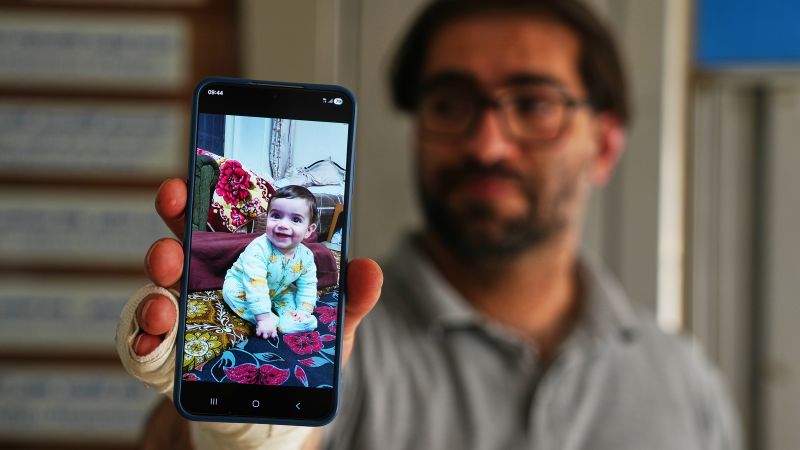
Israeli soldiers open fire on car – On Friday, Israeli military personnel shot at a vehicle in the occupied West Bank, resulting in the death of a 7-month-old Palestinian infant and injuries to his parents. The incident occurred near the city of Hebron, according to the Palestinian Ministry of Health. The ministry confirmed that the boy, named Sam Fahd Abu Haykal, was killed during the attack, while his mother and father sustained wounds. This marks another tragic event in the ongoing conflict, raising questions about civilian casualties in the region.
Family’s account of the attack
Sam Fahd Abu Haykal’s grandmother, Firyal Abu Haykal, shared her family’s experience with Reuters. She described the moment the bullet struck their car, stating that the event felt like a cruel twist of fate. “We are being harmed simply because we chose to remain in our homes,” she said, emphasizing the sense of helplessness. Her words highlight the emotional toll of such incidents on Palestinian families, who often face the threat of violence while going about their daily lives.
“The incident is unbelievable and unacceptable,” Firyal Abu Haykal told Reuters. “We are being harmed just because we decided to stay at our homes.”
The Palestinian Ministry of Health reported that the attack happened during a routine drive, with the family unharmed until the moment the gunfire struck. The boy’s parents were reportedly in the car with him, and the trauma of the event has left them shaken. Details about the exact timing and location of the shooting are still under investigation, but the family’s proximity to Hebron suggests the incident occurred in a contested area.
Israeli military’s response
The Israel Defense Forces (IDF) released a statement clarifying their actions. They claimed that soldiers had perceived the vehicle as moving toward them at an accelerated pace. According to the IDF, a single shot was fired at the car, which they believed posed a threat. The military acknowledged that the individuals injured were “uninvolved civilians,” indicating their intention to minimize harm. However, they have yet to provide a full explanation for the decision to open fire in this instance.
The incident is currently under review by the IDF, with officials examining the circumstances of the attack. This process may take time, but it is expected to shed light on whether the soldiers acted in self-defense or if the shooting was an unfortunate mistake. Meanwhile, the Palestinian community is calling for accountability, citing the growing frequency of such events in recent months.
History of similar incidents
Such attacks are not isolated occurrences. In March, Israeli soldiers shot dead four members of a Palestinian family, including two boys aged 5 and 7, during a late-night drive after breaking the daily Ramadan fast. The family was reportedly traveling near Hebron when the incident unfolded. Palestinian officials noted that the boys were unharmed until the gunfire struck, leaving the community in mourning.
This pattern of violence underscores the tensions between Israeli forces and Palestinian civilians in the West Bank. The March event, like the recent shooting, occurred in a region where military activity is frequent. The timing of these incidents—often during quiet hours or after religious observances—has drawn criticism from local and international observers, who argue that such moments are when civilians are most vulnerable.
Context and implications
The West Bank has seen a surge in military operations in recent years, with Israeli forces conducting raids and patrols in areas where Palestinian families reside. These actions are often justified as necessary for security, but they have led to increasing concerns about civilian casualties. The killing of Sam Fahd Abu Haykal and the earlier incident involving the Ramadan family have sparked debates about the proportionality of military responses and the impact on daily life.
Local activists and human rights organizations have highlighted the psychological and physical effects of these attacks on Palestinian communities. For many, the loss of a child is a devastating reminder of the risks associated with living in the occupied territories. The IDF’s statement that the soldiers “perceived” a threat adds complexity to the narrative, as it hinges on the interpretation of events and the speed at which decisions are made during high-pressure situations.
Global reactions and calls for action
International media and advocacy groups have since covered the incident, with some emphasizing the need for transparency in Israeli military operations. The grandmother’s account, combined with the IDF’s explanation, has fueled discussions about the balance between security and civilian protection. While the IDF maintains that their actions were justified, critics argue that the lack of clear evidence in such cases contributes to the perception of a disproportionate response.
Sam Fahd Abu Haykal’s death has also reignited debates about the use of lethal force in situations where non-lethal alternatives may have been available. The boy’s family described the attack as a sudden and devastating blow, with no warning or opportunity to flee. This has led to calls for a review of military protocols and an investigation into whether the soldiers acted appropriately under the circumstances.
Ongoing concerns and future outlook
As the investigation into the recent shooting continues, the focus remains on determining the exact cause of the incident. The IDF’s admission that the civilians were “uninvolved” adds a layer of accountability, but it does not fully address the emotional and social impact of the tragedy. For the Abu Haykal family, the loss of their son is a deeply personal and communal event, echoing the grief of other families who have faced similar losses.
The incident serves as a stark reminder of the human cost of military operations in the West Bank. While the Israeli government defends its actions as necessary for security, the repeated occurrence of such events raises important questions about the strategies employed and the measures in place to protect civilians. The broader implications of these attacks extend beyond individual cases, highlighting the need for greater dialogue and cooperation between the Israeli military and Palestinian residents in the region.
As the story develops, it is likely to become a focal point for discussions on accountability and the future of conflict resolution in the area. The combination of these two incidents—separated by months but sharing similar contexts—paints a picture of a conflict that continues to affect the most vulnerable members of society. The hope is that these events will lead to meaningful changes in how military actions are carried out and how civilians are treated in the line of fire.
