
Kim Jong Un is loving North Korean women’s soccer. What drives its remarkable success?
North Korea’s Women’s Soccer Triumph: A Blend of Leadership and Training
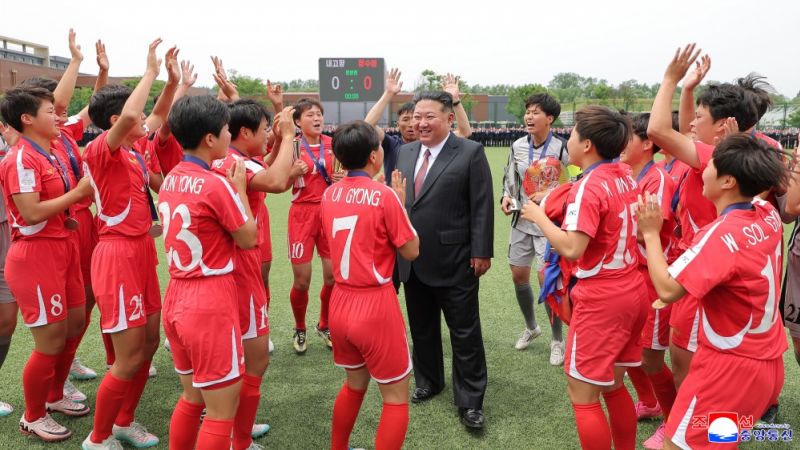
Kim Jong Un is loving North – North Korea’s women’s soccer team has captured global attention with its recent victory in the Asian Champions League, a continental title won on South Korean soil. The celebration was headlined by Supreme Leader Kim Jong Un, who stood beside the players as they raised the trophy, their emotional expressions mirroring the pride of the nation. This achievement marks the culmination of a long-standing success story for the team, which has already claimed dominance in under-17 and under-20 categories. The victory has sparked curiosity about the factors behind their meteoric rise, blending state-sponsored discipline with grassroots talent development.
The Rise of a Reclusive Powerhouse
The triumph of Pyongyang-based Naegohyang Women’s FC in the Champions League final, where they defeated Japan’s Tokyo Verdy 5-1, underscores their formidable presence in the sport. This win comes after a decade of strategic focus, with the team consistently outperforming rivals in regional and continental competitions. Despite North Korea’s isolationist policies, its women’s soccer program has become a symbol of national pride, often described as a “secret weapon” in the country’s efforts to project strength on the global stage.
“The loving care and benevolence of the respected Comrade Kim Jong Un has been instrumental in inspiring our players to achieve such remarkable feats,” stated a report by the official KCNA news agency, highlighting the regime’s role in nurturing talent.
Elite Academies and Systematic Development
At the heart of North Korea’s success is the Pyongyang International Football School, established in 2013 to align with Kim Jong Un’s vision of athletic excellence. This institution trains hundreds of young athletes, aged seven to 17, in a highly structured environment. The program emphasizes physical conditioning, technical skills, and tactical discipline, ensuring that each participant is molded into a competitive force. Coaches and players alike credit the academy for creating a pipeline of elite athletes who represent the nation in international tournaments.
One such standout is Kim Kyong Yong, the captain of Naegohyang. Her journey began over a decade ago, starting at the age of 10. Today, she leads her club to continental glory, a testament to the rigorous training regimen. Her presence on the field reflects the broader narrative of North Korean women’s soccer, where athletes are groomed from youth to become national icons. The team’s ability to compete with seasoned opponents, such as the under-17 squad that recently clinched the Asian Cup, demonstrates the effectiveness of their system.
Coaching and Cultural Dynamics
The team’s development has also benefited from international collaboration. In 2018, FIFA invited British coach Stephen Constantine to work with North Korean coaches, sharing modern training techniques and strategies. Constantine, now leading Rwanda’s men’s national team, noted the players’ physical toughness and work ethic. “North Korean teams are incredibly aggressive and hardworking,” he said. “They’ll run from the goal line to the 18-yard line with someone on their back, drop them, and then sprint to the other end—completely insane.”
While the players’ raw athleticism is evident, coaches acknowledge their technical and tactical gaps. To bridge these, elite academies have integrated advanced sports science data and studied world-class matches abroad. This approach, though unconventional, has allowed the team to adapt and refine their play, ensuring they remain competitive in high-stakes environments.
State Media and National Pride
North Korea’s state media plays a pivotal role in amplifying the success of its women’s teams, framing them as paragons of loyalty and dedication. After the Champions League victory, the team was celebrated as “trustworthy women” and “proud daughters of the motherland,” a narrative that reinforces the connection between sports and political ideology. Kim Jong Un’s personal investment in the program has also been highlighted, with officials attributing the team’s progress to his unwavering support.
Kim’s commitment to sports is part of a broader strategy to enhance the country’s international image. As the Unification Ministry in South Korea reported, the regime views athletic achievements as a tool to showcase its capabilities. The women’s team, in particular, has become a focal point of this effort, with its performances often seen as a reflection of the nation’s collective strength.
From Youth to Global Ambitions
The path to success for North Korean athletes begins in childhood, with early exposure to soccer shaping their careers. Many players, like Han Kwang Song—a forward for the men’s national team who briefly played in Italy—owe their talents to the state-controlled system. While some, such as Kwang Song, have ventured abroad, others remain dedicated to representing their homeland. This balance between domestic training and international experience highlights the program’s adaptability.
For the women’s team, the next major milestone is the Women’s World Cup in Brazil. The event offers a chance to elevate their status on the global stage, with many players already preparing for the challenge. “We still have room to grow in senior-level competitions, but this victory proves our potential,” Kim Kyong Yong remarked, accepting the Most Valuable Player award. “With continued effort, we aim to bring pride to our nation in the world’s most prestigious tournament.”
Technical Mastery and Discipline
Coaches and analysts note that the team’s tactical discipline is a key differentiator. Colin Bell, a former South Korean women’s national team manager, observed that the North Korean players execute simple sequences with precision. “Their football IQ is remarkably high for their age groups,” Bell said. “Every player runs with the same intensity and style, which creates a unified team dynamic.”
This focus on consistency and teamwork has allowed North Korea to compete with teams from more developed football nations. The under-20 squad’s Asian Cup victory, coupled with the senior team’s continental success, illustrates a growing trend of strategic investment in the sport. While challenges remain, the program’s ability to produce world-class athletes continues to surprise critics and admirers alike.
A Global Stage for North Korean Talent
North Korea’s women’s soccer program is not just about domestic victories; it aims to carve a niche on the global stage. The team’s achievements have been recognized by international bodies, with their performances often drawing comparisons to South Korea’s own successful women’s teams. This success has also inspired young athletes within the country, who aspire to follow in the footsteps of their predecessors.
As the Women’s World Cup approaches, the question remains: can North Korea’s athletes replicate their continental triumph on the world stage? With Kim Jong Un’s continued backing and the evolution of their training methods, the answer may lie in the combination of strict discipline, physical rigor, and a shared national identity. For now, the team’s journey serves as a compelling example of how a reclusive nation can thrive in a sport that demands both skill and determination.
