
Exclusive: Iran supreme leader’s adviser says talks deadlocked over $24 billion and warns of wider war
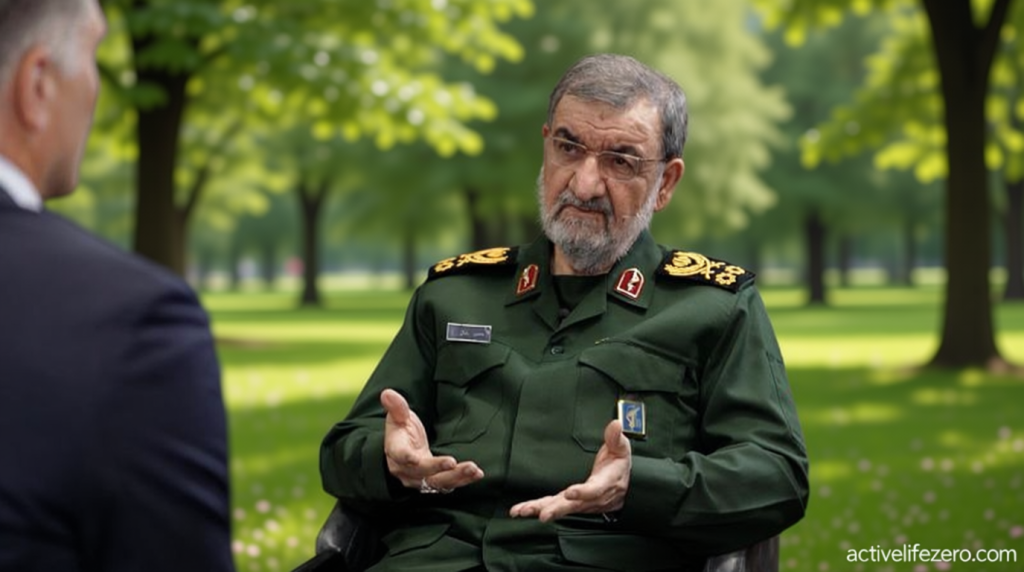
Exclusive: Iran Adviser Warns of Wider War Over $24 Billion Stalemate
Exclusive interview reveals Iran’s top military strategist, Mohsen Rezaei, as a key voice in the ongoing standoff with the United States. Rezaei, who serves as a close advisor to Supreme Leader Ayatollah Mojtaba Khamenei, emphasized the critical role of financial negotiations in preventing further escalation. In the interview, he stated that a peace deal hinges on the Trump administration releasing $24 billion in frozen Iranian assets. Without this concession, Rezaei warned that the U.S. could face a “dark corridor” of conflict, expanding the war beyond its current scope.
Negotiation Deadlock and Financial Demands
As negotiations between Iran and the U.S. have stalled, Rezaei made it clear that the responsibility for resolution lies with President Donald Trump. “The talks have reached a deadlock,” he said in the exclusive interview, stressing that Trump must take decisive action. The adviser outlined Iran’s demands, which include the immediate unfreezing of $12 billion and a second installment of $12 billion to be released later. This phased strategy aims to balance economic recovery with maintaining pressure on the U.S. to meet Iran’s conditions.
“The ball is in Trump’s court,” Rezaei reiterated, highlighting the urgency of the situation. His comments underscore Iran’s strategic patience, as the country waits for a breakthrough in talks that have yet to produce meaningful outcomes.
U.S. officials, however, remain wary of releasing funds early, fearing it could weaken their leverage against Iran. Trump’s insistence on a deal more favorable than the 2015 nuclear agreement has complicated discussions. The former president criticized past administrations for “handing over pallets of cash” to Iran, a phrase he used to describe the financial concessions made under Barack Obama. Rezaei echoed this critique, suggesting that Trump’s approach is aimed at avoiding any appearance of weakness in U.S. diplomacy.
Strategic Context and Regional Impact
Rezaei’s remarks come amid a 40-day conflict between the U.S. and Iran, which began in late February. During this period, Iran launched coordinated attacks across multiple countries, targeting military bases, energy facilities, and civilian infrastructure. The strikes included missile launches toward Diego Garcia, a U.S.-UK joint military site in the Indian Ocean. These actions demonstrated Iran’s military reach and its resolve to assert influence in the region, even as negotiations continue.
“Tehran’s retaliatory strikes have shown its ability to strike far beyond its borders,” Rezaei stated. “This war is a defining moment for the Islamic Republic, proving its strength against adversaries.”
With a background as a military commander during the Iran-Iraq War, Rezaei has long been a driving force in Iran’s security policies. He led the Islamic Revolutionary Guard Corps (IRGC) from 1981 to 1997, shaping its evolution into a strategic pillar of Iran’s defense. His recent comments in the exclusive interview reflect a blend of ideological conviction and pragmatic calculation, as he positions Iran to defend its interests both militarily and diplomatically.
Iran’s Postwar Vision and Strategic Goals
Rezaei outlined Iran’s long-term objectives, focusing on securing control over the Strait of Hormuz—a critical chokepoint for global oil trade. He framed the current conflict as the nation’s first major military success in its 47-year history, drawing parallels to the victory over Saddam Hussein’s Iraq. “This is the first time Iran has emerged victorious in wars, while in previous conflicts it has always been on the defensive,” he said, reinforcing the significance of the current standoff.
“If the negotiations collapse, the world will recognize Iran’s strategic capabilities,” Rezaei warned. “Our land forces are a powerful asset, and we are ready to defend them with force.”
The Supreme Leader, Khamenei, has remained in the background since sustaining injuries from an Israeli strike that killed his father on the conflict’s first day. Despite this, Rezaei’s presence in the exclusive interview signals his strong influence within Iran’s decision-making process. His insights provide a window into the country’s future moves, especially as regional tensions persist and the U.S. grapples with the implications of its stalled diplomacy.
