
Zelensky needles Putin in personal letter calling for face-to-face peace talks
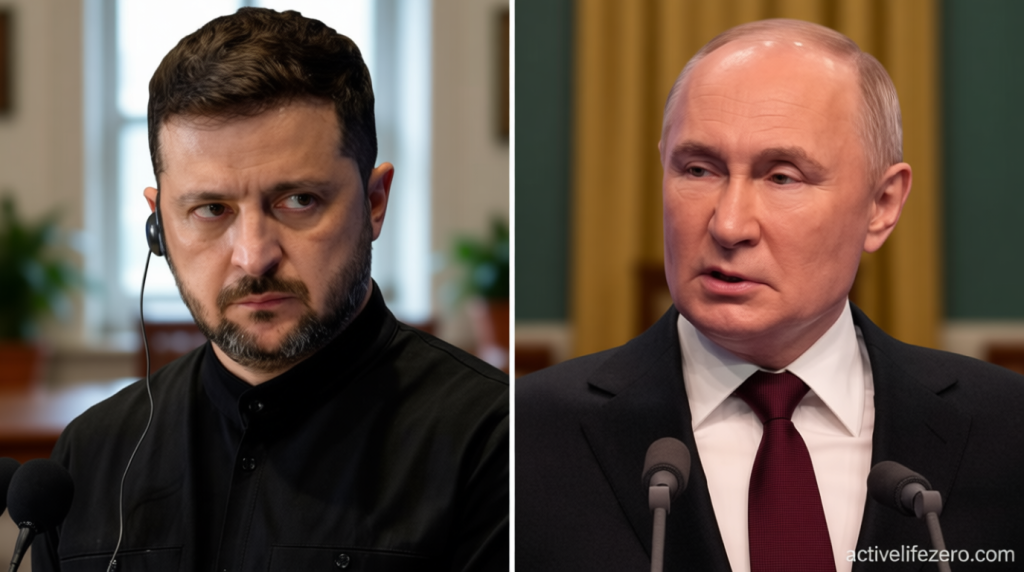
Zelensky’s Direct Appeal to Putin for Peace Talks
Zelensky needles Putin in personal letter – Ukrainian President Volodymyr Zelensky has penned a personal letter to Russian President Vladimir Putin, directly challenging him to enter face-to-face peace negotiations. The letter, released during Putin’s participation in the St. Petersburg International Economic Forum, aims to address the growing unease among Russia’s business leaders regarding the war’s economic and social toll. By targeting Putin’s leadership, Zelensky underscores the urgency of resolving the conflict before international attention shifts elsewhere, emphasizing the need for immediate dialogue.
The War’s Impact on Russia’s Economy and Public Sentiment
As the war drags on, its effects are increasingly felt across Russia. In his letter, Zelensky pointed out that the economic strain has sparked internal dissent, with even high-ranking figures questioning the war’s sustainability. German Gref, head of Sberbank, remarked that Russia’s economy is “already a miracle” under current conditions, highlighting the challenges faced by the Kremlin. This sentiment aligns with broader concerns that the war is not only straining resources but also eroding public confidence in Putin’s leadership.
“Russians are finally becoming less comfortable with this reality – with the fact that the war is bringing more and more negative consequences to Russia.”
Zelensky’s Strategic Push for Negotiations
While Ukraine has not yet secured a decisive victory, it has gained momentum in key frontline regions, allowing it to maintain pressure on Russian forces. Zelensky stressed that peace should not be postponed until global focus wanes, urging immediate action. He warned that waiting for international attention to return to Europe could delay a resolution, as the US continues to prioritize other conflicts like the one in Iran. This call for direct engagement reflects Ukraine’s growing confidence in its ability to shape the terms of the dialogue.
Putin’s Response and the Path Forward
Putin, though open to negotiations, framed the situation as requiring mutual concessions. During the forum, he reiterated his stance on territorial gains, while Zelensky emphasized the need for a full ceasefire. The two leaders’ exchange highlights the delicate balance between diplomacy and military strategy. Zelensky’s proposal to hold talks in a neutral third country aims to create an environment conducive to compromise, a move that could signal a turning point in the conflict.
“We see that the United States is fully focused on the issue of Iran, and it would be wrong to simply wait until the war in Europe returns to the center of its attention.”
Context and Implications for the Conflict
The letter arrives at a critical juncture, with the war entering its third year and showing signs of stagnation. Zelensky’s personal approach seeks to humanize the conflict, appealing to Putin’s sense of domestic responsibility. Analysts suggest this could be a strategic move to counter the Kremlin’s narrative of Western hostility, positioning Ukraine as a proactive force in peace efforts. The timing of the letter, coinciding with the economic forum, adds a layer of political symbolism, linking the war’s impact to Russia’s own economic interests.
A Growing Divide in Russian Leadership
Despite the Kremlin’s outward determination, internal debates over the war’s cost are intensifying. Deputy Prime Minister Alexander Novak claimed the economy is “in a state of controlled cooling,” but this contradicts the views of figures like Gref, who see the situation as precarious. Zelensky’s letter appears to be a calculated attempt to bridge this divide, urging Putin to consider the broader implications of continued conflict. The message also signals that Ukraine is ready to negotiate, even as it maintains its military position.
