
Trump makes it easier to fire 8,000 federal workers
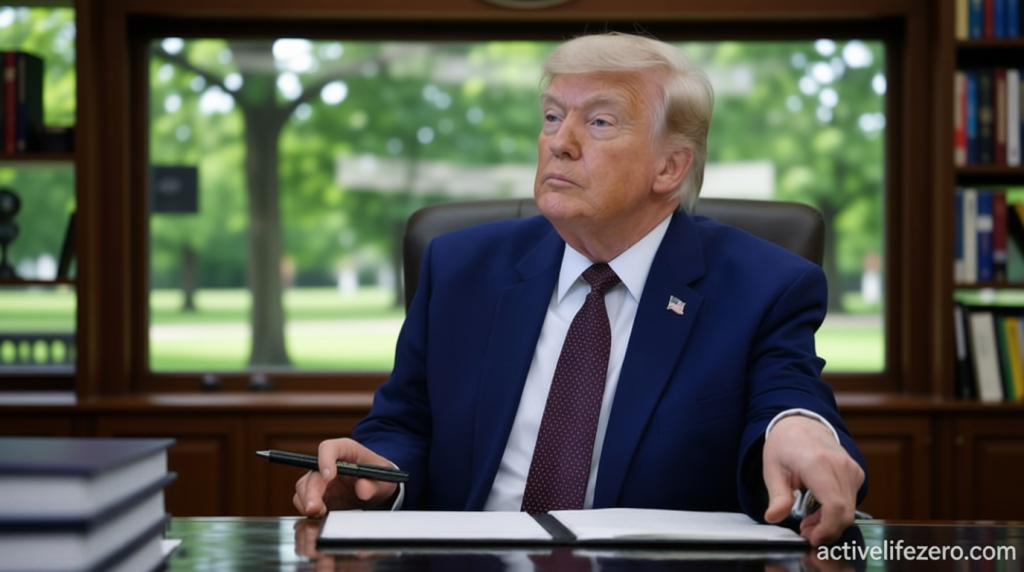
Trump’s Executive Order Expands At-Will Employment for Federal Workers
Trump makes it easier to fire 8 – On Wednesday, President Donald Trump unveiled an executive order that significantly alters the employment status of approximately 8,000 senior federal workers, transforming them into at-will employees. This change eliminates longstanding civil service safeguards, allowing agencies to terminate these individuals for poor performance, misconduct, or failure to align with presidential priorities without the need for extensive procedural steps. The move marks another step in Trump’s ongoing campaign to reshape the federal workforce, which he has repeatedly criticized as a bureaucratic obstacle to his policy agenda.
A New Framework for Federal Employment
The order introduces a revised classification system, redefining high-level policy roles under a new designation: “Schedule Policy/Career.” This category encompasses positions such as directors, chiefs of staff, senior advisors, and policy analysts, as well as those involved in shaping regulations and determining recipients of federal grants. By reclassifying these roles, the administration argues that agencies can now act more swiftly to hold employees accountable for their responsibilities. According to a White House fact sheet, “Agencies can remove employees in Schedule Policy/Career for poor performance, misconduct, corruption, or subversion of Presidential directives without lengthy procedural hurdles that often prevent accountability.”
Democrats and labor advocates have raised concerns about the potential for political bias in this shift. They argue that the new framework could enable the White House to exert greater control over federal personnel, potentially sidelining experts who challenge the administration’s decisions. The Office of Personnel Management (OPM) finalized the rule establishing this designation in February, signaling its approval of the change. While the order applies to roughly 8,000 workers, its broader implications extend to the entire federal workforce, as it sets a precedent for reclassifying other roles under similar terms.
Reviving a Policy from the Previous Administration
The initiative builds on efforts initiated during Trump’s first term, when he introduced a separate classification called “Schedule F” to restructure federal employment. That order was intended to reduce the influence of unions and streamline decision-making, but it faced legal challenges and was later reversed by President Joe Biden. Trump quickly reinstated the policy when he returned to the presidency, framing it as a necessary correction to previous administrations’ approaches to governance.
Under the new system, federal employees in Schedule Policy/Career positions are no longer protected by the civil service system’s tenure guarantees. This means they can be dismissed at any time, provided their removal aligns with the administration’s goals. Critics, however, warn that this change could lead to a more politicized workforce, where loyalty to the president outweighs professional expertise. “When government experts can be fired without cause, it’s not just federal workers who are harmed — it’s the people across the country who rely on these essential services every day,” said Skye Perryman, CEO of Democracy Forward, which filed a lawsuit against the policy.
The Broader Impact on Federal Workforce Management
Trump’s administration has long advocated for a more flexible approach to federal employment, emphasizing the need for accountability and efficiency. In addition to the executive order, the Trump team has proposed requiring all federal workers to sign non-disclosure agreements (NDAs) as part of their broader strategy to limit dissent within the government. These NDAs aim to prevent employees from sharing information that could be perceived as critical of the administration, further consolidating control over the workforce.
Supporters of the policy argue that it empowers agencies to respond more effectively to changing priorities. “This is very much about accountability,” stated Scott Kupor, director of the Office of Personnel Management, during a press briefing. “It’s also about a restoration, in our mind, of the democratic process.” Kupor added that the revised system allows for quicker adjustments to staffing needs, ensuring that federal agencies can maintain agility in executing their missions.
However, the move has sparked legal battles, with multiple lawsuits challenging its constitutionality. The designation of Schedule Policy/Career is currently under review by courts, which are examining whether it undermines the civil service system’s protections. Legal experts note that the change could weaken the independence of federal employees, making them more susceptible to political pressure. “The civil service system was designed to insulate government operations from partisan influence,” said one legal analyst. “By removing these protections, the administration is creating a workforce that may prioritize policy outcomes over public service.”
Historical Context and Future Implications
The shift to at-will employment for federal workers has roots in the Trump administration’s broader reforms. During his second term, the president has directed agencies to reduce their staff sizes, often citing the need for fiscal responsibility. These cuts have targeted positions deemed redundant or aligned with opposing viewpoints, furthering the narrative of a politically motivated workforce. The new executive order extends this philosophy by reclassifying key policy roles, which critics argue could lead to a system where political loyalty is rewarded with job security.
While the OPM finalized the rule in February, the implementation process has been gradual, with agencies expected to adjust their hiring and firing practices over time. The impact of this policy could be felt across various departments, including the Department of Homeland Security, the Environmental Protection Agency, and the Department of Education, where senior officials are now more vulnerable to removal. This change also aligns with Trump’s previous actions, such as his 2017 order to create Schedule F, which aimed to reduce the influence of unions and make federal employment more malleable.
Proponents of the policy highlight its potential to streamline operations and enhance responsiveness to executive directives. They argue that the civil service system, while historically effective, has become slow to adapt to modern challenges. “The federal workforce must be able to act quickly to address national emergencies and policy shifts,” said a senior White House official. “This change ensures that agencies can make decisions without being bogged down by bureaucratic red tape.”
Despite these arguments, opponents warn of the long-term consequences for federal governance. They point to the risk of politicizing essential services, such as public health, transportation, and social programs, where decisions are often made by experts rather than political appointees. “When government professionals are subject to arbitrary removal, the quality of public services could suffer,” said another legal expert. “This is not just about efficiency — it’s about preserving the integrity of the civil service system.”
Challenges and Criticisms
The lawsuit brought by Democracy Forward is one of several challenging the new designation, with plaintiffs arguing that it violates the civil service system’s constitutional protections. They claim the policy disproportionately affects policy-makers who may have different ideological perspectives from the current administration. “This is a clear attempt to undermine the independence of the federal workforce,” Perryman stated. “It allows the president to remove individuals who may not support his agenda, regardless of their performance or expertise.”
Additionally, labor unions have expressed frustration over the erosion of job security for federal workers. The National Federation of Federal Employees, for example, has criticized the move as a threat to the stability of the public sector. “Federal workers have traditionally been protected by tenure rules that ensure fair treatment,” said a union representative. “Now, they can be fired at will for reasons that may not be tied to their work, which creates a climate of fear and uncertainty.”
As the policy takes effect, its effects on federal operations will be closely watched. Some analysts predict that it may lead to a more politically aligned workforce, while others believe it could foster innovation by encouraging employees to take risks. Regardless of the outcome, the change represents a significant shift in how the federal government manages its personnel, with implications that extend beyond the immediate 8,000 affected workers.
With the new classification system in place, the Trump administration has positioned itself as a leader in modernizing federal employment. However, the debate over its merits continues, as both supporters and critics weigh the balance between accountability and the preservation of institutional independence. As the lawsuits progress and the policy is implemented, the future of federal employment may hinge on whether this approach strengthens or weakens the system designed to serve the public interest.
