
‘The arteries of modern civilization’: The US and allies take action to protect seabed cables
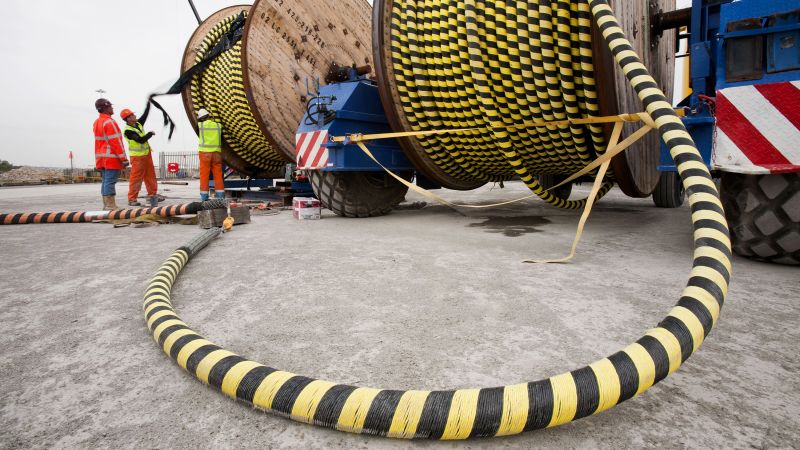
‘The arteries of modern civilization’: The US and allies take action to protect seabed cables
The arteries of modern civilization – Undersea cables and energy pipelines, vital to global connectivity and energy distribution, are facing increasing risks of sabotage and disruption. In response, the United States, Australia, and the United Kingdom have announced plans to advance their joint defense initiatives through the AUKUS pact. This trilateral agreement, signed during a summit of defense ministers in Singapore, will see the deployment of new unmanned undersea vehicles by 2027. These systems are designed to enhance surveillance and response capabilities in critical maritime zones.
Threats from Global Powers
The alliance aims to counter growing concerns about the vulnerability of underwater infrastructure to attacks by Russia and China. Analysts warn that these nations are actively targeting key cables to weaken Western economies and communications networks. Additionally, the Persian Gulf’s shallow waters have become a focal point for potential threats, as Iran may seek to exploit the region’s dense data routes. Australia’s Defense Minister, Richard Marles, described the seabed as a strategic battlefield, stressing the need for stronger measures against vessels suspected of covert operations.
“The seabed is a battlefield,” Marles stated during the Singapore meeting, highlighting the urgency of securing subsea infrastructure. He emphasized that undersea internet cables, which he called “the arteries of modern civilization,” are being severed at an alarming rate. Island nations like Australia, with their strategic locations, are particularly at risk.
While the U.S. has criticized European allies for underinvesting in defense, it has maintained collaborative efforts with both continents. President Donald Trump previously lambasted European partners for not supporting freedom of navigation in the Gulf. However, the U.S. continues to work with allies on developing advanced technologies, including drones, to strengthen maritime security. These tools will improve reconnaissance and strike capabilities, as well as enhance superiority in anti-submarine and anti-surface warfare.
Global Network Vulnerability
Undersea cables form the backbone of international communication, with around 570 existing lines and an additional 80 planned to carry 95% to 99% of global intercontinental data. Fiber optic cables transmit terabits of information per second, far surpassing the capacity of satellites. Meanwhile, networks of green energy cables are expanding across oceans, linking continents in an increasingly interconnected world.
Recent intelligence reports reveal heightened activity by Russian forces. Last month, the UK confirmed tracking three Russian submarines in the north Atlantic, secretly monitoring undersea cables. Defence Secretary John Healey warned that such actions would not be ignored. “We see your activity over our cables and pipelines,” he said, adding that any attempt to damage them would face severe consequences. The UK’s parliamentary inquiry last year underscored fears of infrastructure attacks, noting the country’s limited readiness to recover from such incidents quickly.
“Every international payment, every cross-border trade executed in milliseconds, every flow of data between businesses here in the UK and markets overseas – all travel along the seabed,” said Telecoms Minister Liz Lloyd. Her comments reflect the critical role these networks play in sustaining economies and digital ecosystems.
Experts warn that the geopolitical tensions since Russia’s full invasion of Ukraine in 2022 have intensified threats to undersea cables. Incidents in the Baltic Sea, where Russian forces damaged gas pipelines and internet lines, demonstrate the real-world impact of these disruptions. The alliance’s new unmanned systems are expected to address these vulnerabilities, providing real-time monitoring and rapid intervention in contested areas.
Strategic Importance of Undersea Infrastructure
The expansion of AI data centers worldwide has further underscored the need for secure undersea networks. Countries like Saudi Arabia and the United Arab Emirates are investing heavily in these facilities, relying on fiber optic cables to deliver data services to global markets. However, the Gulf conflict has delayed projects such as Meta’s 2Africa Pearls, a major subsea cable system spanning 45,000 kilometers. The disruption highlights how regional instability can threaten even the most critical international infrastructure.
AUKUS’s focus on undersea drones is part of a broader effort to safeguard these networks. The program will integrate cutting-edge sensors and weapons systems, enabling the three nations to detect and neutralize threats swiftly. US Defense Secretary Pete Hegseth described the vehicles as adaptable, capable of supporting undersea operations and maintaining maritime dominance. This includes countermeasures against mines and submarines, which are increasingly used to target cables.
Russia’s Main Directorate of Deep Sea Research has been developing specialized submarines for surveillance missions, as reported by CNN. These vessels, operating in secret, are believed to gather intelligence on undersea cables and energy lines. European intelligence agencies have also raised alarms about the role of Russia’s shadow fleet of oil tankers in potential sabotage efforts. The alliance’s response includes a hybrid naval force that combines traditional and modern technologies to deter such activities.
Future of Maritime Defense
As the digital age accelerates, the security of undersea cables has become a top priority. The AUKUS initiative represents a shift toward proactive defense, leveraging technological innovation to protect vital supply lines. Marles stressed that the threat level has reached a new high, with attacks on subsea infrastructure occurring at unprecedented frequency. This has forced nations to rethink their strategies, integrating undersea drones into both military and commercial operations.
Analysts note that the AUKUS pact could set a precedent for future collaborations. By pooling resources and expertise, the three countries aim to create a unified response to maritime challenges. The use of autonomous systems allows for 24/7 monitoring, reducing the risk of undetected attacks. As the world becomes more reliant on undersea cables for everything from financial transactions to energy distribution, the alliance’s efforts are crucial in ensuring stability.
With the rise of global data dependencies, the stakes of undersea cable security have never been higher. The U.S., UK, and Australia are positioning themselves at the forefront of this effort, using advanced technology to defend against both state and non-state actors. The success of these initiatives will depend on their ability to adapt to evolving threats, from cyberattacks to physical sabotage. As the maritime domain becomes more contested, the alliance’s unmanned systems may play a defining role in shaping the future of global connectivity.
