
Artists are bailing on a Trump-backed concert series for America’s 250th. Now he’s hosting his own ceremony
Artists Withdraw from Trump-Backed 250th Concert Series
Artists are bailing on a Trump – Trump’s political influence has sparked a wave of artist departures from a concert series celebrating America’s 250th anniversary. Prominent performers have distanced themselves from the event, which was originally organized by the Trump-aligned Freedom 250 group. Now, President Donald Trump is stepping in as the main attraction, hosting his own opening ceremony to replace the lineup. The shift has raised questions about the event’s neutrality, with critics arguing that the political angle has overshadowed its cultural purpose.
The Disappearance of Key Performers
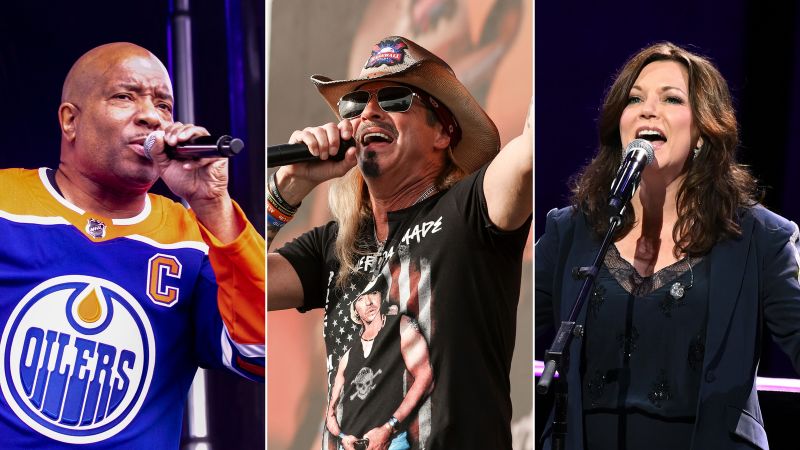
Several high-profile artists, including the Commodores, Martina McBride, Morris Day and the Time, Bret Michaels, and Young MC, have pulled out of the concert series. These performers were initially scheduled to take the stage on the National Mall in Washington, D.C., from June 25 through July 10. They claim to have been misled about the event’s political nature, with some expressing frustration over the lack of transparency. “I was presented with an opportunity to perform at a nonpartisan event but that turned out to be misleading,” wrote Martina McBride in an Instagram post.
Freedom 250 and Trump’s Political Agenda
The Freedom 250 initiative, a White House project launched by executive order, seeks to create Trump-driven alternatives to the events planned by the nonpartisan America250 organization. The concert series has been criticized for favoring legacy acts with strong ties to the former president, such as Vanilla Ice and the Commodores. These performers, all managed by Universal Attractions, share a booking agent, Jeff Epstein, who has faced scrutiny for aligning the event with Trump’s vision. The shift has fueled debates about whether the event remains a genuine celebration of national history or a platform for political messaging.
Trump has openly criticized the artists who withdrew, calling them “getting the yips” and suggesting he could replace them. In a social media post, he wrote, “We should have a giant MAKE AMERICA GREAT AGAIN RALLY, for 250, instead of having overpriced singers, whose music is boring, and yet who do nothing but complain.” He later urged the event to “cancel it,” signaling his dissatisfaction with the current direction. The backlash from performers has been swift, with many accusing the organizers of a political bait-and-switch strategy.
Young MC, a rapper known for his past support of Trump, joined the criticism, labeling the event as a “bait-and-switch.” “The artists were never told about any political involvement with the event,” he stated, emphasizing the lack of clarity. Bret Michaels, a former contestant on “The Celebrity Apprentice,” also expressed concerns, noting that the event had evolved into something more divisive. “Unfortunately, what was presented to us as a celebration of our country has become something much more partisan,” he wrote in an Instagram post. Michaels revealed that his team has received threats related to their potential participation in the event.
The Real Milli Vanilli, a group of vocalists who provided the voices for the 1990s duo, has also criticized the Trump-backed event. Jodie Rocco, one of the original singers, was surprised to see Milli Vanilli listed as a performing act. “I was shocked that Milli Vanilli was a listed act,” she told the Associated Press. Despite their own history of controversy, the group remains committed to the event, with Fab Morvan set to perform using his own voice. This has sparked further debate about the event’s credibility and its alignment with Trump’s goals.
Interior Secretary Doug Burgum defended the Freedom 250 events on Sunday, stating that Trump’s involvement is “very appropriate.” When asked about accusations of partisanship, he told CNN’s Dana Bash on “State of the Union,” “The president’s presence adds a unique dimension to the celebration of our nation’s history.” However, the controversy surrounding the artist exodus continues to cast doubt on the event’s ability to maintain a balanced narrative as it moves forward.
