
Curfew established around Newark ICE facility after days of protests
Curfew Established Around Newark ICE Facility After Days of Protests
Curfew established around Newark ICE facility – Residents of Newark, New Jersey, are now subject to a nightly curfew surrounding Delaney Hall, a federal immigration and customs enforcement (ICE) detention center that has become the focal point of recent demonstrations. The measure was enacted in response to rising tensions and the risk of escalating violence, as reports indicated multiple arrests and the discovery of weapons during the protests. The curfew, which began at midnight on Sunday, will remain in effect from 9 p.m. to 6 a.m. each night until further notice, according to a city statement.
Mayor Ras J. Baraka issued a statement early Sunday, emphasizing the urgency of the situation. “Due to the worsening conditions at Delaney Hall and the heightened need for police presence, we’ve taken immediate steps to ensure the safety of the community,” he said. The mayor highlighted that the protests have seen aggressive confrontations between demonstrators and law enforcement, with several individuals detained during the clashes. The decision to impose the curfew comes after a tense encounter outside the facility on Saturday night, where protesters and officers faced off again.
Escalating Clashes and Law Enforcement Response
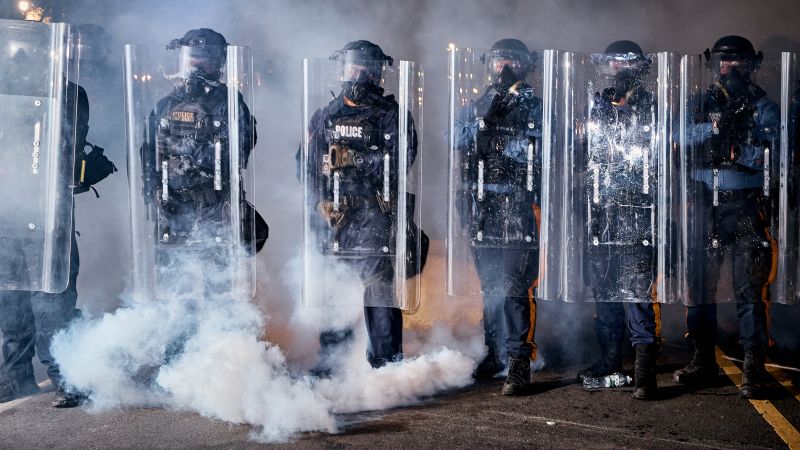
On Saturday night, a group of protesters surged toward the area reserved for police, attempting to breach barriers and engage in direct confrontation. “A large number of demonstrators took bold actions to advance into the zone controlled by law enforcement, leading to a breach of the perimeter,” said Attorney General Jennifer Davenport. The incident was captured on video, showing mounted officers moving through the crowd as tear gas was deployed. Protesters used discarded chairs and other debris to ignite a fire in the street, adding to the chaos.
Earlier in the day, law enforcement had deployed officers on motorcycles to manage the gathering, while metal barricades were set up to separate pro-ICE supporters from anti-ICE demonstrators. The division between the two groups has been a recurring feature of the protests, which have drawn attention to the facility’s alleged mistreatment of detainees. Despite the measures, tensions remained high, prompting the arrival of a SWAT team in full riot gear, supported by officers from nearby police departments and the New Jersey State Police. “The protest remained peaceful and organized throughout the day,” noted State Police Lt. Colonel David Sierotowicz during a news conference.
Allegations of Inhumane Conditions
Protesters have gathered outside Delaney Hall for several days, demanding improvements to the conditions reported by detainees. The facility, which houses 1,000 individuals, has faced accusations of subpar treatment for months. Lawmakers and advocates have cited specific issues, including spoiled food and deplorable living conditions. During a cabinet meeting earlier this week, Homeland Security Secretary Markwayne Mullin addressed these concerns, arguing that the hunger strikes led by detainees were motivated by personal preferences rather than systemic cruelty.
“There was only a small group of people refusing to eat because they wanted their ethnic group’s, or their ethnic-right, food,” Mullin stated. However, Alex Minogue, an attorney representing detainees at Nova Law Group, countered this claim. “Many detainees have been fed food containing worms, and I wouldn’t agree that this is an ‘ethnic choice’—they simply don’t want to eat worms,” Minogue told CNN on Saturday. This exchange underscored the disagreement over the severity of the conditions and the administration’s stance on the issue.
State Police Take Over Public Safety Operations
On Friday, New Jersey officials announced that state police would assume responsibility for public safety outside Delaney Hall, replacing ICE agents. The move was intended to “reduce the temperature” of the ongoing demonstrations, which have at times turned violent. “Our primary goal is to protect the public while addressing the concerns raised by the community,” said Acting Assistant Secretary Lauren Bis in a statement. She accused “sanctuary politicians” of spreading false narratives that fueled the unrest.
Bis argued that detainees at Delaney Hall are provided with three meals a day, access to medical care, and full due process, dismissing claims of inhumane treatment as exaggerated. In contrast, New Jersey Representative Rob Menendez, who has visited the facility firsthand, described the conditions as “inhumane” and criticized the lack of adequate healthcare for detainees. “The administration can continue to release press statements, but they should come to the facility themselves and see what’s really happening,” Menendez said during a Saturday interview with CNN.
Broader Context of the Protests
The protests at Delaney Hall have drawn support from various groups, including some “national extremist organizations,” according to Governor Mikie Sherrill. While she did not name the specific groups involved, the presence of these entities has added another layer of complexity to the situation. As the demonstrations continue, officials have called for a balance between addressing the detainees’ grievances and maintaining order in the community.
Delaney Hall has become a symbol of broader debates over immigration policy in the United States. The facility’s conditions have sparked discussions about the treatment of individuals in detention, with critics arguing that the current system prioritizes efficiency over compassion. Meanwhile, supporters of ICE maintain that the agency is doing its best to manage the influx of detainees while upholding legal standards.
Protesters have been vocal about their demands, with some calling for immediate changes to the facility’s operations. The addition of a second full-time doctor for detainees, as mentioned by Menendez, has been noted as a small step toward improving conditions. However, he stressed that more needs to be done to address the underlying issues. “We need sustained pressure on the Trump administration to ensure that the treatment of detainees at Delaney Hall meets the standards expected of a humane system,” Menendez added.
Public Safety and the Role of Law Enforcement
As the protests persist, the focus on public safety has intensified. Law enforcement has faced criticism for its handling of the demonstrations, with some arguing that the use of force was excessive. Others, however, contend that the measures were necessary to prevent violence. The curfew, along with the deployment of additional officers and barricades, reflects an effort to manage the situation while safeguarding both protesters and residents.
Despite the measures, the protests continue to draw crowds, with some individuals expressing frustration over the conditions. The hunger strike during Memorial Day weekend, which saw hundreds of detainees protest against poor food and living conditions, remains a flashpoint for the ongoing conflict. “The situation escalated quickly during the weekend, and it’s been a challenge to keep things under control since,” said a spokesperson for the city’s police department. The combination of public discontent and the presence of national groups has created a volatile environment around the facility.
With the curfew in place and the state police stepping in to manage operations, the situation is under closer scrutiny. The hope is that these actions will de-escalate tensions and allow for a more constructive dialogue between advocates and the federal agency. However, the protests have shown no sign of abating, as the community continues to demand accountability and reform.
Legacy of the Delaney Hall Protests
As the days of demonstrations pass, the Delaney Hall protests have become a focal point in the national conversation about immigration policy. The facility’s conditions, the role of law enforcement, and the presence of external groups have all contributed to the intensity of the protests. While the curfew and state police intervention aim to bring stability, the underlying issues—such as the quality of food, healthcare access, and the treatment of detainees—remain unresolved.
Public figures, including Menendez and Bis, have used the protests to highlight their respective positions. Menendez’s firsthand account of the conditions has lent credibility to the claims of inhumane treatment, while Bis has defended ICE’s actions, asserting that the detainees are well-cared for. The debate over Delaney Hall’s operations is now a microcosm of the larger political divide on immigration, with each side using the situation to reinforce their narrative.
As the protests continue, the community watches closely to see how the situation will evolve. The curfew, combined with the state police’s increased presence, represents a pivotal moment in the ongoing struggle to balance security with civil liberties. Whether these measures will ease tensions or further inflame them remains to be seen, but one thing is certain: Delaney Hall has become a battleground for the future of immigration policy in the United States.
