
A violent volcanic eruption may have revealed a new weapon to tackle a potent planet-heating gas
Volcanic Eruption Unveils Unexpected Methane-Reducing Mechanism
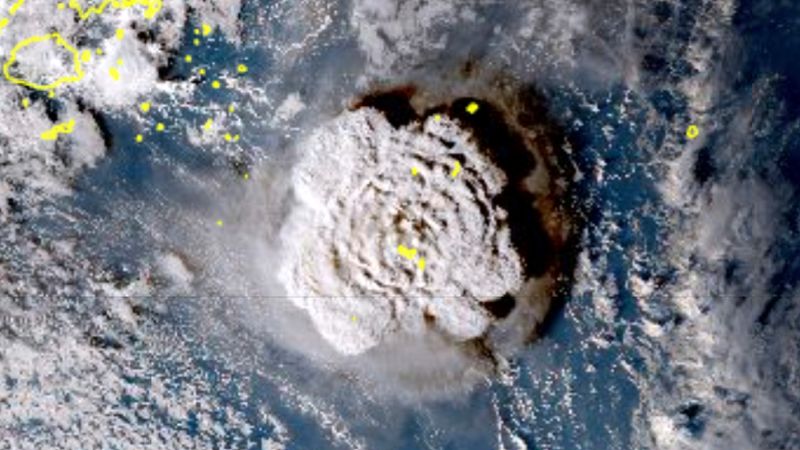
A violent volcanic eruption may have – One of the most dramatic volcanic events in recent history occurred in January 2022 when the Hunga Tonga-Hunga Ha’apai volcano, located in the South Pacific, erupted with unprecedented force. The explosion sent a towering plume of ash, steam, and gases soaring over 40 miles into the atmosphere, generating a shockwave that circled the Earth twice. This natural phenomenon not only created a massive tsunami and a sonic boom but also triggered a surprising scientific revelation: the eruption might have demonstrated a previously unknown method for countering one of the most potent greenhouse gases, methane.
A Powerful Natural Event
The eruption’s energy was staggering, releasing power equivalent to hundreds of times that of the Hiroshima nuclear bomb. Such intensity is rare, and the event’s aftermath included both immediate physical impacts and long-term atmospheric changes. Scientists examining satellite data from the eruption discovered an unusual chemical process that could have significant implications for climate change mitigation. This process, observed for the first time in a volcanic plume, involved the breakdown of methane—an outcome that challenges existing assumptions about how this gas is removed from the atmosphere.
According to the study, the volcanic plume contained an unexpected abundance of formaldehyde. This molecule typically forms when methane is oxidized in the atmosphere, but its presence in such high concentrations after the eruption suggested something more complex was at play. The researchers, led by Maarten van Herpen, a physicist and executive director at Acacia Impact Innovation, noted the discovery was “unexpected.” Van Herpen, who is a co-author of the study, explained: “We found a huge cloud of formaldehyde that should normally not be there.” The implication was clear: the eruption had initiated a mechanism that not only emitted methane but also rapidly decomposed it.
The Role of Iron-Based Particles
The process appears to mirror one previously identified in the Atlantic Ocean. In that case, Saharan dust mixing with salt spray over the ocean created small iron-based particles. When sunlight interacts with these particles, it generates chlorine atoms that break down methane. The Hunga Tonga-Hunga Ha’apai eruption, however, produced a different set of conditions. The plume contained an estimated amount of salty water vapor sufficient to fill 58,000 Olympic-sized swimming pools. This unique combination of volcanic ash and seawater vapor may have acted as a catalyst for similar chemical reactions in the stratosphere.
Van Herpen emphasized that the study’s findings reveal a critical insight: “It has emitted methane and then destroyed these emissions through the particles in the plume.” The researchers tracked the formaldehyde cloud for 10 days, noting that its persistence indicated continuous methane breakdown. Since formaldehyde typically dissipates within hours, its extended presence in the plume suggested that the chemical process was ongoing. This led to an estimate that the eruption released approximately 330,000 tons of methane, with around 900 tons being destroyed daily in the aftermath.
Matthew Johnson, a chemistry professor at the University of Copenhagen and co-author of the study, described the discovery as “new—and completely surprising.” He added that the same iron-based particle mechanism observed over the Atlantic might have been activated in the volcanic plume, offering a natural model for artificial methane reduction. “The same process that occurs in the troposphere could be replicated in the stratosphere,” Johnson said, highlighting the potential for geoengineering applications.
Methane’s Climate Impact
Methane is a critical component of the Earth’s climate system, far more effective than carbon dioxide at trapping heat over a 20-year period. It is responsible for roughly a third of current global warming, and its atmospheric concentration has more than doubled in the last two centuries. Despite its short atmospheric lifetime—compared to carbon dioxide, which can linger for hundreds of years—methane is often seen as a key target for climate action. Reducing its levels could yield rapid benefits in slowing global temperature rise.
The discovery of this natural process could provide a valuable tool for combating methane emissions. If scientists can harness the same chemical reactions observed in the volcanic plume, they might develop methods to neutralize methane at its source. For instance, injecting iron-based particles into the atmosphere over the ocean could mimic the effects seen in the eruption, potentially accelerating the breakdown of methane. This approach, however, requires further validation and understanding of its long-term consequences.
Expert Perspectives on the Study
While the findings are promising, some scientists caution against overinterpretation. Pete Edwards, an atmospheric chemist at the University of York not involved in the research, noted that the study’s reliance on formaldehyde observations to infer the methane breakdown mechanism remains “very difficult” to confirm. “The use of only formaldehyde observations to infer a mechanism, although novel, does not help address the known uncertainties within our current understanding of atmospheric chemistry,” Edwards told CNN.
Edwards also raised concerns about the application of this process in geoengineering. The study focused on the stratosphere, but methane removal strategies would need to operate in the troposphere, where environmental conditions differ significantly. “The impacts would be difficult to predict,” he said, adding that the method could have “potential unintended consequences on climate, air pollution, and ecosystem health.” Emily Dowd, a climate scientist at the University of Leeds, echoed these sentiments, emphasizing the need for more research before drawing definitive conclusions.
Implications for Climate Solutions
Despite these uncertainties, the study’s authors believe their findings open new avenues for climate intervention. The process observed in the volcanic plume demonstrates how natural phenomena can create conditions that accelerate methane decay. If replicated, such methods could be used to target emissions in specific regions, reducing their contribution to global warming. Van Herpen suggested that this could be a game-changer, particularly for industries reliant on methane production, such as agriculture and fossil fuel extraction.
“This eruption showed us that nature itself can act as a methane scavenger,” van Herpen said. “It’s a reminder that there are still unexplored mechanisms in the atmosphere that could be leveraged to combat climate change.” The study underscores the importance of monitoring natural events for insights into climate solutions. While the immediate effects of the eruption were destructive, the long-term implications of its chemical byproducts could be transformative. As scientists continue to analyze the data, they hope to refine their understanding of this process and its potential for scalable climate applications.
In conclusion, the Hunga Tonga-Hunga Ha’apai eruption has provided a rare opportunity to observe methane’s behavior in extreme conditions. The discovery of a natural mechanism for its breakdown highlights the interconnectedness of geological and atmospheric processes. While further research is needed to confirm the findings and assess their practical use, the study represents a significant step forward in the fight against one of the most powerful greenhouse gases.
