
Robots are redefining the war in Ukraine – and forcing Russia onto the back foot
Robots are redefining the war in Ukraine – and forcing Russia onto the back foot
Robots are redefining the war in Ukraine – In the shadows of eastern Ukraine, a new kind of warfare is unfolding. The sound of a drone’s whirring blades, the flicker of a thermal camera, and the sudden flash of an explosion mark the beginning of an operation that once required hundreds of soldiers. Now, it’s carried out by machines, their operators far removed from the chaos below. This shift from human-centric combat to robotic precision has turned the tide for Ukraine, offering a lifeline in the face of persistent shortages and uncertainty over Western support.
The conflict has reshaped how battles are fought. Where once Ukrainian forces relied on boots on the ground, they now deploy unmanned systems to conduct missions. A recent assault in Avdiivka, once a hotspot of brutal urban warfare, was executed with six drones targeting Russian positions. The entire operation was monitored from a control room, with commanders directing the strike via live feeds. This approach has allowed Ukraine to bypass the dangers of direct engagement, leveraging technology to maintain momentum against a weary Russian adversary.
A New Era of Remote Engagement
Since the war began, Ukraine has embraced automation as a strategic necessity. The Third Assault Brigade’s “NC13” unit, for instance, has calculated that 164 attacks would have required 2,300 troops in the past. Now, with robots and drones, the same objective can be achieved with fewer personnel. The loss of human life has also been drastically reduced—what once meant sacrificing half a unit is now averted by unmanned systems.
President Volodymyr Zelensky highlighted this transformation in April, announcing the first successful capture of a Russian stronghold through robotic means. He noted that since January, these machines have executed 22,000 missions, a figure that underscores their growing role in the conflict. For Ukraine, the robotic army has become a symbol of resilience, enabling them to strike without the physical toll of traditional warfare.
“Silent Death” and the Psychology of War
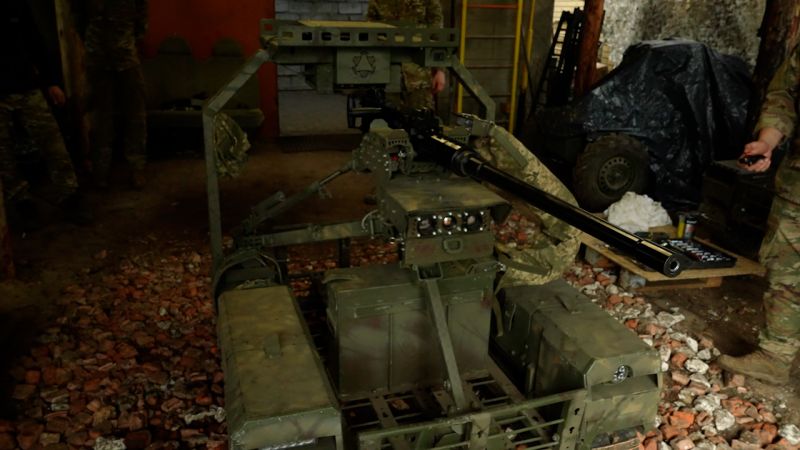
Behind the scenes, the robots are known to Russian troops as “silent death.” Each unit, mounted on a four-wheel chassis and packed with explosives, operates with eerie precision. They are nearly undetectable until their final approach, often surprising defenders with a sudden, blinding blast. The psychological impact is profound—Russian soldiers now face an invisible threat that demands new tactics and rapid responses.
One such unit’s mission began with a stumble over debris, its wheels struggling to maintain traction. From a drone’s vantage point, the first explosion sent a mushroom cloud of white heat into the air, a visual testament to the precision of the strike. This pattern repeated as more robots advanced, their coordinated movements designed to confuse and overwhelm the enemy. The goal: to create a distraction that allows others to slip behind enemy lines and strike critical targets.
From Brute Force to Technological Ingenuity
The evolution of warfare in Ukraine has been driven by necessity. A smaller population, battered by years of Russian aggression, has forced the country to rethink its strategies. The Third Assault Brigade’s commander, Mykola “Makar” Zinkevych, reflects on this transformation. “War was once about skill and discipline,” he says. “Now, technology dictates the outcome.” He acknowledges that the era of human-centric combat is fading, replaced by a new reality where machines carry the burden of battle.
For Bar, the deputy commander of the NC13 unit, the change is both revolutionary and sobering. “I couldn’t even imagine such a thing back then,” he recalls, speaking of his time in Donbas. “But if we had this equipment earlier, more of my comrades might have lived.” The robots, he explains, are not just tools—they are a lifeline, reducing the risk of death and injury in high-stakes operations.
The Human Brain Behind the Machine
While the robots do the heavy lifting, their success hinges on human ingenuity. Gora, a 22-year-old embedded hardware and software engineer, is one of the unsung heroes of this shift. “The key is not the vehicles,” she asserts, “but the minds that plan and coordinate them.” Her role involves ensuring seamless communication between drones, operators, and repair teams, a task that requires both technical expertise and strategic foresight.
Gora, who was just 18 when the war started, grew weary of Russian drone strikes disrupting life in eastern Kyiv. She saw an opportunity to contribute beyond the battlefield, leveraging her IT skills to support the front lines. “This is the new frontline,” she says, describing the control hub where robots are assembled and repaired. The space buzzes with activity, a far cry from the quiet nights she once knew.
Strategic Implications for Russia
The psychological and tactical advantages of Ukraine’s robotic forces are taking a toll on Russia. A report from the British spy agency GCHQ revealed that the death toll among Russian troops has surpassed 500,000, a figure that highlights the scale of the disruption. Ukraine’s policy of targeting 35,000 Russian soldiers monthly is forcing Moscow to recruit from previously stable demographics, including urban workers and middle-class citizens.
Operators face their own challenges, as seen when a drone’s signal was intercepted. “The Salamander 6 has been spoofed,” one commander warned, signaling the need for adaptive strategies. These issues underscore the ongoing arms race between Ukraine and Russia, where innovation and resilience are as crucial as firepower. Despite setbacks, the robotic forces remain a cornerstone of Ukraine’s strategy, a testament to the country’s ability to pivot in the face of adversity.
As the war continues, the balance between human and machine grows more intricate. Ukraine’s reliance on automation reflects a broader trend in modern conflict, where technology is redefining not just how wars are fought, but who they are fought by. The robots, with their silent approach and devastating impact, are more than just weapons—they are a symbol of Ukraine’s ingenuity and determination. In a world where the front lines are now virtual, the question remains: can Russia keep up with the pace of change?
Survival has always been the mother of invention, and Ukraine’s robotic army is a direct result of that principle. The country’s early adoption of drone technology and mass production of precision weapons has given it a strategic edge, even as the war strains its resources. This evolution is not without its costs—new challenges, new risks—but it has already saved thousands of lives and altered the course of the conflict. The future of warfare in Ukraine is no longer defined by the number of troops, but by the speed of innovation and the adaptability of those who control it.
