
Roland Garros: A visual guide to the 125th edition of the iconic clay court grand slam
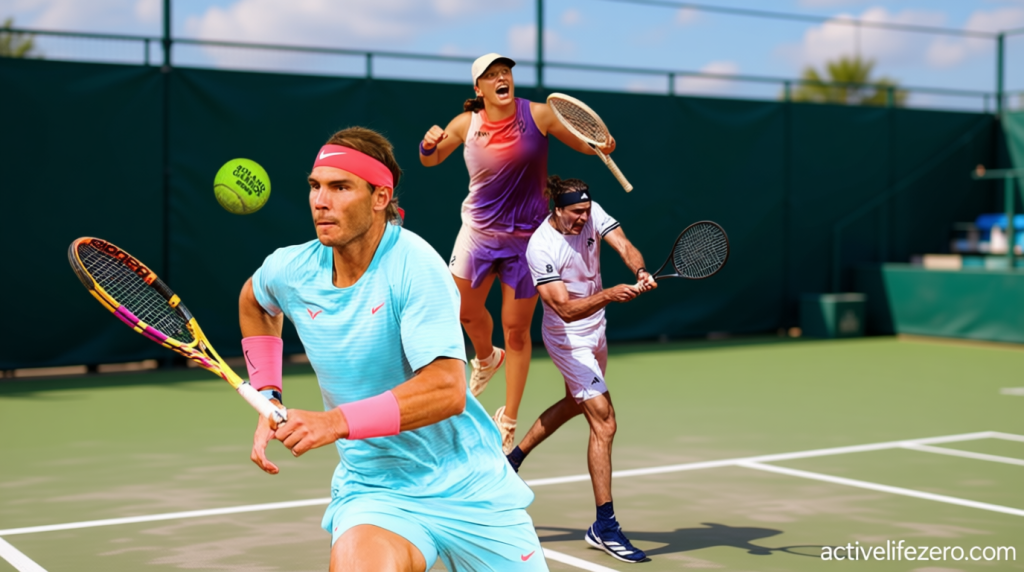
Roland Garros: A Visual Guide to the 125th Edition of the Iconic Clay Court Grand Slam
Roland Garros – As the season transitions into late spring, the anticipation for one of tennis’ most storied events reaches a fever pitch. The French Open, often dubbed the “Roland Garros” tournament, returns to the forefront of the sporting calendar, drawing fans from across the globe. For many, this year’s 125th edition promises to be a pivotal chapter in the storied history of the competition. Yet, the opening week has already brought unforeseen challenges, with the absence of top-tier players altering the dynamics of the event.
The Tournament’s Evolution and Legacy
Although the French Open traces its roots back to 1891, when it was initially known as the “French Clay-Court Championships” and restricted to French competitors, the event evolved significantly over the decades. In 1925, the tournament officially expanded its horizons, welcoming foreign players and solidifying its status as a global spectacle. The iconic arena that now hosts the championships was constructed in 1927, specifically for France’s defense of its Davis Cup title. It was named after Roland Garros, a pioneering aviator who perished in World War I, a tribute that underscores the event’s deep cultural ties.
Today, Roland Garros remains one of the four Grand Slam tournaments, alongside Wimbledon, the US Open, and the Australian Open. Unique among these, it is the only event played on clay, a surface that has shaped the game in distinctive ways. While the red clay is often romanticized, its composition reveals a more nuanced reality: clay constitutes only a minor part of the court’s surface. The distinctive hue is achieved through a thin layer of crushed red bricks, a detail that highlights the blend of tradition and modernity in tennis infrastructure.
Challenges on the Red Dust
Playing on clay demands a unique set of skills and strategies, setting it apart from grass or hard courts. The surface is renowned for its physical toll, as it slows the ball’s pace, leading to extended rallies and increased movement. This creates a grueling environment where players must endure long, intense matches, sometimes stretching to five sets. The phrase “clay court chess” aptly describes the tactical nature of the game, where a single well-placed shot can set up a decisive outcome several points later.
For players like Novak Djokovic, mastering clay remains a formidable task. Even after a triumphant performance at the Paris Olympics, where he secured his first post-Golden Slam victory on clay, Djokovic acknowledged the surface’s demands.
“It’s a very demanding surface,” he remarked. “We all know how tricky it is to play on clay; compared to the other surfaces, you always have to expect an extra one or two shots, balls coming back.”
This perspective reflects the challenges that have long defined the tournament’s appeal.
While the 125th edition begins, questions linger about who will emerge victorious. Two-time champion Carlos Alcaraz, known for his explosive power and adaptability, is sidelined due to a wrist injury, leaving the door open for contenders such as Casper Ruud or Sasha Zverev. The heatwave gripping Europe has further intensified the competition, with high temperatures impacting players’ stamina and strategy. This year, the conditions even played a role in the unexpected upset of world No. 1 Jannik Sinner, who fell to Juan Manuel Cerúndolo in a surprising match.
Equal Pay and the Grand Slam Landscape
One of the most significant developments in recent years has been the push for equal prize money across all Grand Slam events. While the US Open pioneered this initiative in 1973, awarding men and women equal pay for the first time, the trend has since evolved. The Australian Open followed in 1984, though it reverted to favoring men in 1996 before reinstating equal distribution in 2001. Roland Garros took a bold step in 2006, implementing equal payouts, and Wimbledon soon joined the movement in 2007.
For the 2026 edition, the prize pool has reached unprecedented levels, with a record-breaking €61.7 million (approximately $71.8 million) allocated to the tournament. The singles champions—men and women—will each receive €2.8 million (around $3.3 million), a figure that marks a historic milestone for the French Open. This financial commitment not only reflects the tournament’s growing prestige but also its commitment to fairness, ensuring that the competition remains a benchmark for equality in sports.
Despite the prominence of clay courts, hard courts still dominate the schedules of both the ATP and WTA tours. This year, the ATP Tour features 19 clay court events, while the women’s calendar includes 12. However, hard courts remain the preferred surface for most competitions, including those in the United States. The physical demands of clay, combined with its unique bounce and grip, make it a favored choice for certain players, yet its popularity is outpaced by the versatility of hard courts in modern tennis.
The King of Clay and a New Era
Among the champions who have defined the French Open, Rafael Nadal stands as an unparalleled force on clay. With his mastery of the surface, Nadal has become synonymous with Roland Garros, securing an astonishing 14 titles and cementing his legacy as the “King of Clay.” His ability to adapt to the surface’s nuances—such as the high bounce and heavy topspin—has made him a formidable presence in the game’s most iconic event.
Yet, the 125th edition of the tournament presents new narratives. As the competition unfolds, fans will be watching closely for the emergence of new stars or the resurgence of familiar faces. The heatwave, Alcaraz’s absence, and the tactical intricacies of clay play all contribute to a unique blend of unpredictability and tradition. Whether it’s a breakthrough for Casper Ruud, a return to form for Novak Djokovic, or a historic first win for a rising contender, Roland Garros continues to captivate with its blend of history and high-stakes competition.
With more than a week of matches remaining, the tournament is poised to deliver unforgettable moments. From the first serve to the final point, every rally on the red clay carries the weight of legacy and the promise of new beginnings. As the world’s oldest tennis tournament, Roland Garros remains a testament to the enduring appeal of the sport, where the challenges of the surface and the spirit of competition converge in a celebration of tennis at its most enduring.
