
CMAT calls out body shamers following BBC Radio 1 Big Weekend set
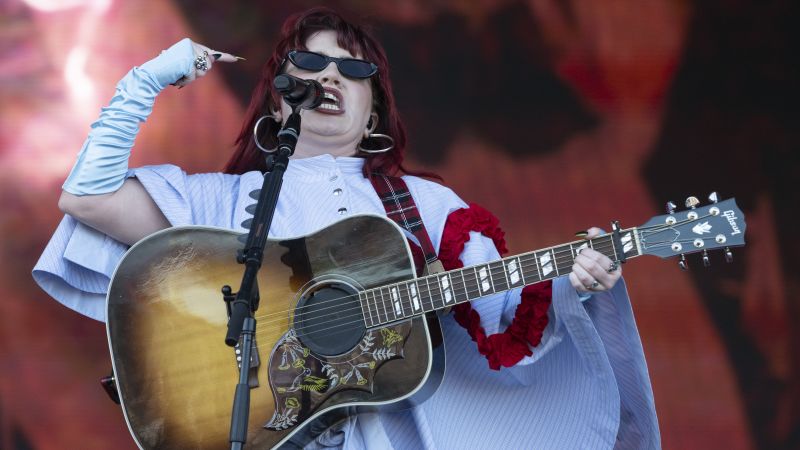
CMAT Confronts Body Shaming Amid Social Media Criticism
CMAT calls out body shamers following – Irish artist CMAT, whose full name is Ciara Mary-Alice Thompson, has voiced her emotional turmoil after enduring relentless body shaming following a live performance at BBC Radio 1’s Big Weekend in Sunderland, northern England. The singer-songwriter, known for her bold musical style and candid personality, shared her reflections on Instagram, revealing the profound impact of online criticism on her mental well-being. In a heartfelt post, she expressed her “deep sadness” over being targeted for her body shape and emphasized the ongoing struggle she faces in a world that often prioritizes appearance over talent.
CMAT, who has been making waves in the music scene with her unique blend of pop and R&B, described the experience of being constantly mocked online as a source of “no relief.” She recounted her recent decision to uninstall Instagram, TikTok, and X from her phone, stating that this move was crucial for protecting her mental health. However, she now feels compelled to step back into the spotlight and address the issue directly. “It is literally so boring for me, a gorgeous genius, to keep having to yap on about how horribly I am treated because of my body,” she wrote in a candid Instagram caption. Her frustration is compounded by the fact that her fame has only intensified the scrutiny she faces, leaving her unable to escape the cycle of negativity.
Public Backlash and the Pressure of Success
CMAT’s recent appearance at BBC Radio 1’s Big Weekend sparked a wave of online abuse, with critics taking to social media to mock her figure. The singer shared screen captures of a particularly harsh comment from a fan known as Front Row Feels, which she said encapsulated the “deep sadness” she has been feeling. In the post, the blogger criticized the way CMAT’s performance was received, noting that despite her music addressing the cruelty of body shaming, the audience continued to focus on her appearance. “She wrote the song about the cruelty. She explained the cruelty. She stood on stage singing directly about the cruelty. And the machine just kept going anyway,” the writer lamented, highlighting the disconnect between her message and the public’s reaction.
The anonymous blogger also pointed out a stark contrast in how other female artists were treated during the same event. While CMAT faced harsh criticism, artists like Olivia Dean and Zara Larsson received more supportive responses. “Their comment sections were not warzones,” the fan wrote, adding that these performers were “granted a level of grace and basic humanity that was completely denied to CMAT.” This disparity has amplified CMAT’s sense of being unfairly judged, particularly as her career gains momentum.
Defending Her Body and Her Voice
In a further statement on Instagram, CMAT clarified that her body is not a symbol of defiance but rather a natural part of her identity. “I simply have a body, one that I would of course like to change in order to fit in and avoid all of this abuse, but I have had extreme difficulty in doing so,” she explained. The artist emphasized that she does not choose to be brave; instead, she is forced to endure the criticism as part of her journey in the spotlight. “I don’t get a say in whether or not I want to be brave, I simply have to sit here and take it,” she added, reflecting on the emotional toll of constant judgment.
Despite the challenges, CMAT remains “very very happy and grateful” for her work. However, she admitted that her success is increasingly overshadowed by the fact that she would “enjoy it so much more if I was thin.” This sentiment underscores the broader societal pressure on women to conform to specific beauty standards, even as they achieve professional milestones. Her song “Take a Sexy Picture of Me,” released last year, had already tackled this issue, calling out the way women are criticized for their looks. The track became a rallying point for those who resonate with her perspective on body image and self-acceptance.
CMAT’s post has garnered widespread attention, with over 60,000 likes and comments from fans and industry figures alike. Among the supporters was BBC Radio presenter Lauren Laverne, who praised the artist’s courage. “Sometimes it feels like so little has changed in the past 20 years. It’s infuriating. You are brave—not because of anything to do with how you look, but for how you use your voice,” Laverne remarked. This validation has been a source of comfort for CMAT, who hopes to inspire others facing similar struggles.
Meanwhile, singer Sophie Ellis Bextor echoed CMAT’s frustrations, stating that she hadn’t realized “how little things have changed” in the industry. “You are blazing a brilliant trail and young girls (and old women like me) look to you as someone being brilliant and completely true to yourself,” she added, celebrating CMAT’s boldness. These endorsements from fellow artists and public figures have reinforced CMAT’s resolve to continue speaking out against body shaming, even as the online backlash continues to grow.
The incident has sparked a wider conversation about the treatment of women in the entertainment industry, where appearance often takes precedence over talent. CMAT’s experience is not isolated, as many artists have faced similar challenges. Her willingness to confront the issue head-on has positioned her as a vocal advocate for body positivity, using her platform to challenge societal norms. In doing so, she has not only defended her own right to exist in the industry but also highlighted the systemic nature of the problem that affects countless women.
As the digital landscape continues to amplify public scrutiny, CMAT’s story serves as a reminder of the importance of resilience and self-expression. Her words resonate with those who have felt marginalized by beauty standards, offering both validation and a call to action. By sharing her experiences, she has managed to turn a personal struggle into a collective movement, encouraging others to embrace their authenticity without fear of judgment. The support she has received from peers and the public suggests that her message is gaining traction, and that the fight against body shaming is far from over.
In a world where social media often dictates public perception, CMAT’s courage to address the issue has been a powerful statement. Her journey highlights the intersection of personal identity and professional success, demonstrating how societal pressures can shape an artist’s experience. As she continues to navigate this landscape, her voice remains a beacon of strength for those who feel unseen and undervalued. The hope is that her advocacy will inspire a shift in how women are perceived, both in the music industry and beyond.
Ultimately, CMAT’s post is a testament to her determination to reclaim her narrative. While the criticism has been intense, she remains focused on her art and her message, refusing to let the negativity define her. Her story is a reminder that body shaming is not just a personal issue but a cultural one, one that requires ongoing dialogue and change. As she continues to perform and speak out, she is paving the way for a more inclusive and accepting environment for women in the spotlight.
