
Blue Origin rocket explodes during ground test
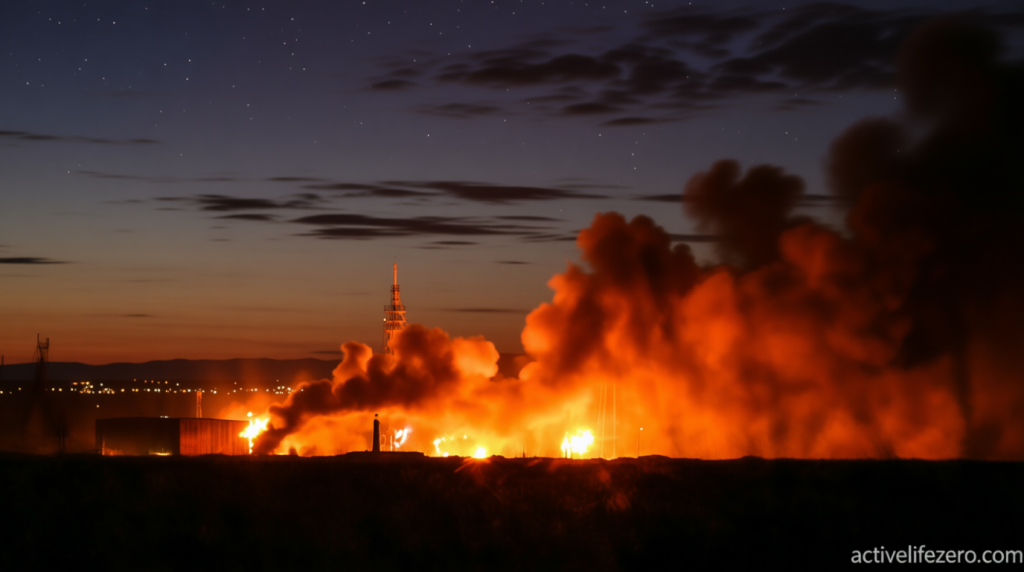
Blue Origin Rocket Explodes During Ground Test
Blue Origin rocket explodes during ground – On Thursday, May 28, 2026, a Blue Origin New Glenn rocket encountered an unexpected issue during a ground test, as revealed by the company on X. The incident occurred at Cape Canaveral Space Force Station in Florida, with video footage capturing the rocket’s explosion on its launchpad. While the footage shows a dramatic event, Blue Origin confirmed that all personnel involved were accounted for and unharmed. “It’s too early to know the root cause, but we’re already working to find it,” said Jeff Bezos, the company’s founder, in a separate X post. “Very rough day, but we’ll rebuild whatever needs rebuilding and get back to flying. It’s worth it.”
The anomaly occurred during a static fire test, a routine procedure to simulate launch conditions. This marks the second setback for the New Glenn program, following a failure during its third flight on April 19, 2026. The FAA launched an investigation into the incident, which the agency clarified was not part of its licensed operations. “The FAA is aware that the Blue Origin New Glenn vehicle experienced an anomaly during a static fire test on the pad in Cape Canaveral, Florida around 9 p.m. local time on May 28,” the agency stated to CNN. “This test was not within the scope of FAA licensed activities. There was no impact to air traffic. Please contact Blue Origin for more information.”
Previous Mission Highlights Mixed Results
During the April 19 mission, the rocket’s first stage booster successfully landed on a seafaring barge, a feat that Blue Origin celebrated. However, the upper portion — or second stage — of the rocket failed to deliver its payload, AST SpaceMobile’s BlueBird 7 satellite, to a safe orbit. This mishap raised questions about the rocket’s reliability, though the company emphasized its commitment to refining the system. The fourth mission, originally planned to launch 48 satellites to join Amazon’s Leo broadband constellation, was postponed following the latest anomaly.
“Spaceflight is unforgiving, and developing new heavy-lift launch capability is extraordinarily difficult,” remarked NASA chief Jared Isaacman on X, acknowledging the incident at Launch Complex 36. “We will work with our partners to support a thorough investigation of this anomaly, assess near-term mission impacts, and get back to launching rockets.” The US Space Force added that range officials are collaborating with Blue Origin and its partners to determine the exact cause of the explosion. “The Eastern Range serves as a Department of Defense test and training range supporting critical development, testing, evaluation, and launch activities that advance national security and space capabilities,” the agency stated. “These operations often involve developmental systems and emerging technologies, and the nature of such testing carries inherent risk, including the potential for anomalies.”
Reusability Goals and Industry Competition
Blue Origin’s New Glenn rocket was designed with reusability in mind, a key strategy to reduce the cost of space launches. This concept mirrors SpaceX’s approach with its Falcon rockets, where successful booster landings allow for refurbishment and repeated use. The company spent over 10 months fine-tuning the vehicle to ensure a reliable recovery system, which was reportedly executed flawlessly during its second launch in November 2025. That mission also carried a significant payload: NASA’s Escapade mission, aimed at sending a spacecraft on a complex journey to Mars.
Despite the success of the November 2025 flight, the recent explosion has cast a shadow over Blue Origin’s ambitions. The company’s third flight in April 2026, which saw the first stage booster land safely, was met with cautious optimism. However, CEO Dave Limp acknowledged the disappointment of losing AST SpaceMobile’s satellite, which was a critical component of the mission. “While we are pleased with the nominal booster recovery, we clearly didn’t deliver the mission our customer wanted, and our team expects,” Limp wrote on X at the time. “Early data suggest that on our second GS2 burn, one of the BE-3U engines didn’t produce sufficient thrust to reach our target orbit.”
Blue Origin’s focus on reusability is part of its broader strategy to challenge SpaceX’s dominance in the commercial spaceflight sector. The company’s space tourism rocket, New Shepard, has been a flagship for suborbital flights since 2021, with customers ranging from celebrities to wealthy enthusiasts. However, in January 2026, Blue Origin announced a two-year pause on New Shepard flights to prioritize the development of human lunar landers. This shift underscores the company’s commitment to advancing heavy-lift capabilities, even as it grapples with the latest setback.
Experts suggest that the explosion could delay New Glenn’s return to flight, though the company remains optimistic about its long-term prospects. The FAA’s involvement in the investigation highlights the regulatory oversight required for such complex systems. While the anomaly during the static fire test was not linked to active FAA licensing, the agency’s statement reaffirms its role in monitoring safety protocols. The US Space Force also emphasized that such risks are inherent in testing cutting-edge technologies, a necessary step for progress in space exploration.
Blue Origin’s journey to operationalize the New Glenn rocket has been marked by both triumphs and challenges. Its debut flight on January 16, 2025, was hailed as a success, though it fell short of a bonus goal: guiding the first-stage booster to a safe landing on a seafaring platform. The failure to reignite the engines during that attempt was later attributed to technical issues. Yet, the company has since made strides, with the November 2025 launch showcasing the potential of its reusable systems. The recent explosion, while a setback, serves as a reminder of the high stakes involved in developing next-generation launch vehicles.
Industry Implications and Future Outlook
The incident has sparked discussions about the reliability of Blue Origin’s technology and its ability to compete with SpaceX. Analysts note that while the New Glenn program faces challenges, its focus on reusability could offer cost advantages in the long run. The recent explosion, though disruptive, does not necessarily signal the end of the company’s efforts. Blue Origin has a history of overcoming technical hurdles, and its team is already working to identify solutions.
“The explosion was a critical moment, but it’s part of the learning process,” said a spokesperson for Blue Origin, reflecting on the event. “We’ve already begun analyzing data from the test and will share updates as soon as possible.” The company’s emphasis on transparency and collaboration with regulators and partners suggests a proactive approach to recovery. Meanwhile, the FAA and NASA continue to monitor developments, ensuring that safety remains a top priority.
As the space industry accelerates, Blue Origin’s progress with New Glenn is closely watched. The rocket’s potential to carry satellites and cargo to orbit positions it as a key player in expanding global connectivity and scientific research. The recent anomaly, while a setback, highlights the complexities of spaceflight and the importance of rigorous testing. With continued investment and innovation, the company aims to regain momentum and fulfill its mission to reduce the cost of space access for both commercial and governmental clients.
Rebuilding and Redefining the Path Forward
Blue Origin’s response to the explosion underscores its resilience in the face of adversity. The company’s founder, Jeff Bezos, has consistently framed setbacks as opportunities for improvement. “We’ve had a tough week, but our team is already working on the next steps,” Bezos stated in a follow-up post. “This is a temporary hiccup in our journey to make space more accessible.” The explosion, while visually striking, is seen as a manageable issue rather than a catastrophic failure.
With the New Glenn program at a crossroads, Blue Origin is likely to refocus its efforts on stabilizing the rocket’s performance. The fourth mission, which was intended to test the vehicle’s capability to deploy 48 satellites, now faces an uncertain timeline. However, the company’s track record of innovation and its strong partnerships with NASA and the FAA provide a foundation for recovery. As the team works to identify the cause of the anomaly, the broader space industry remains invested in Blue Origin’s progress.
For now, the focus is on restoring confidence in the New Glenn rocket. The company’s ability to address the recent incident will determine its next steps in the competitive race to develop reusable launch systems. While the explosion is a setback, it also serves as a catalyst for further refinement and testing. Blue Origin’s commitment to pushing the boundaries of space exploration, despite the challenges, aligns with its long-term vision of making space travel more routine and affordable. The path forward may be bumpy, but the company’s determination to rebuild and launch again remains unwavering.
