
A timeline of US strikes on boats that have killed at least 195
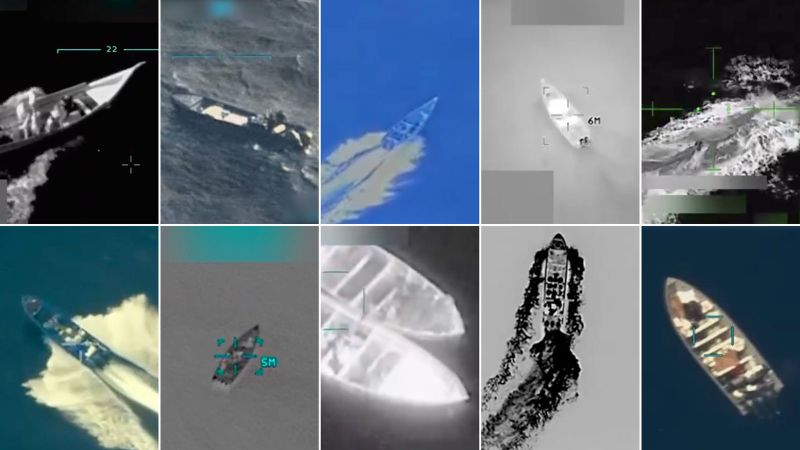
A Timeline of US Strikes on Boats That Have Killed at Least 195
Operation Targeting Drug Trafficking Vessels
A timeline of US strikes on boats – The United States military has conducted a series of strikes against suspected drug trafficking boats, resulting in the deaths of 195 individuals and the destruction of 61 vessels. These actions, as revealed by official statements and CNN’s examination of search and rescue operations, are part of a broader effort to disrupt the flow of narcotics into the country. The campaign has seen multiple incidents over the past year, with varying outcomes in terms of casualties and survivors.
According to recent reports, the most recent strike occurred on May 27, targeting a vessel believed to be carrying drug smugglers. This operation followed a similar attack on December 30, where the US Coast Guard initiated a search for survivors who had abandoned the ship in international waters. The search was suspended on January 2, leaving eight individuals unaccounted for. Despite these efforts, at least 11 people are presumed dead after no trace of them was found in the aftermath of the strikes.
The military has also launched search operations on several other occasions, including October 27, January 23, and February 9. In each instance, the Coast Guard was notified of potential survivors, yet the searches were ultimately halted without confirming the presence of any individuals. Notably, following the strike on April 11, the Coast Guard was alerted to a survivor who had managed to escape the wreckage. This prompted the activation of the search and rescue system, as per military directives. Subsequent strikes on May 8 and May 26 saw similar notifications, with one and two survivors respectively, though their identities and locations remain unclear.
Legal Justification and Controversy
Under the Trump administration, the US has framed these operations as part of an “armed conflict” with drug cartels, beginning with the first strike on September 2. Officials have described the individuals killed as “unlawful combatants,” arguing that they pose a direct threat to national security. This classification allows the military to justify lethal actions without requiring judicial review, based on a classified Justice Department finding.
“The United States is now engaged in an armed conflict against drug cartels, with the first strike marking the beginning of this effort,” stated a senior military official. “Those targeted are considered unlawful combatants, and the military has the authority to take lethal action in self-defense.”
However, this legal rationale has sparked debate among lawmakers and human rights organizations. Some members of Congress have raised concerns about the absence of public evidence linking the struck boats to narcotics or their affiliation with cartels. Critics argue that the administration’s approach may bypass due process, allowing for targeted killings without formal charges or trials. This contrasts with the policy of interdiction that was previously followed, which focused on apprehending suspects rather than eliminating them.
The Trump administration has not released details about the cargo aboard the vessels, nor has it provided proof of their connection to organized drug networks. This lack of transparency has led to questions about the effectiveness and proportionality of the strikes. Advocacy groups have pointed out that without clear evidence, the operation risks being perceived as a broader campaign against migrant communities or innocent civilians.
Operational Impact and Safety
Despite the high number of casualties, military officials have confirmed that no US service members have been injured or killed in the process. This assurance has been repeated in several updates, emphasizing that the strikes were carried out with precision to minimize collateral damage. The Coast Guard, which plays a critical role in these operations, has been responsible for coordinating search efforts and recovering survivors from the water.
Following the December 30 incident, the Coast Guard suspended its search after the initial days of operation. The decision was based on the absence of further signs of life, though the agency acknowledged that eight individuals remained at large. Similarly, in the strikes on April 11, October 27, and May 8, the Coast Guard was kept informed of survivors but was unable to locate them in the subsequent days. These suspensions highlight the challenges of conducting search and rescue missions in remote oceanic regions.
Context and Public Response
The US military’s campaign against drug trafficking boats has drawn mixed reactions from the public and international observers. While some support the effort as a necessary measure to combat drug-related crime, others have criticized it as an expansion of military power in the absence of a declared war. The administration’s justification hinges on the idea that these vessels are part of a larger network of illicit activity, which it claims poses an existential threat to American borders.
Advocates for the policy argue that the strikes are a form of preemptive action, similar to counterterrorism operations. They point to the high volume of drug shipments arriving via maritime routes as evidence of the campaign’s urgency. However, opponents have raised concerns about the potential for civilian casualties, especially given the lack of information about the boats’ occupants. The absence of public records on the number of suspected traffickers or the amount of drugs intercepted has further fueled skepticism.
As the campaign continues, the balance between security and due process remains a key point of contention. The use of classified intelligence to justify lethal strikes has been a focal point of criticism, with some lawmakers calling for greater oversight. Meanwhile, the military has maintained that its actions are consistent with international law and necessary to protect national interests. The Coast Guard, working alongside naval forces, has been central to these operations, aiming to rescue survivors while supporting the broader strategic goals of the administration.
Updates and Ongoing Efforts
This story has been updated with additional reporting, reflecting the evolving nature of the operation. The latest developments include further strikes and ongoing investigations into the impact of these actions. As the US continues its efforts to disrupt drug trafficking, the outcomes of these missions will be closely watched by both domestic and international audiences. The combination of military precision and search and rescue operations underscores the dual objectives of this campaign: to neutralize threats and to recover those who may have been spared.
With the timeline of strikes extending into late 2025, the question of whether these actions are part of a long-term strategy or a short-term response to drug-related crises remains open. The administration has emphasized that the strikes are a proactive measure to prevent the influx of narcotics, but the effectiveness of this approach will depend on the ability to sustain it without drawing accusations of overreach or human rights violations.
In summary, the US military’s campaign against drug trafficking boats has resulted in significant casualties and the destruction of multiple vessels. While the administration maintains that these strikes are essential to combat drug smuggling, the lack of transparency and the classification of suspects as combatants have sparked ongoing debate. The Coast Guard’s role in search and rescue efforts adds a layer of humanitarian concern to the military’s strategic objectives, creating a complex interplay between security and human rights in the execution of these operations.
