
Donald Trump is working to protect himself from being prosecuted once he leaves office
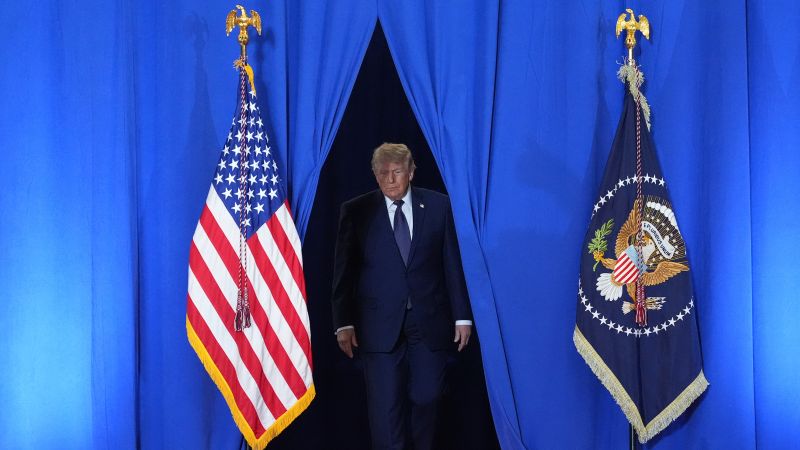
Donald Trump is working to protect himself from being prosecuted once he leaves office
Donald Trump is working to protect – President Donald Trump has unveiled a controversial strategy to safeguard himself and his allies from potential legal challenges after his time in the White House. Central to this plan is the establishment of an “anti-weaponization fund,” a mechanism designed to insulate key figures from investigations by federal and non-federal entities. This move underscores a broader effort to consolidate executive authority, weaken institutional oversight, and prioritize self-preservation over accountability, according to legal analysts and political observers.
By leveraging a legal dispute with the IRS, Trump has created a framework that not only shields his administration from scrutiny but also extends protections to his personal and business interests. The agreement, which emerged from a lawsuit Trump initiated, has sparked debate over its scope and implications. Legal experts argue that its broad definitions could allow Trump to evade not only tax-related probes but also investigations into his conduct dating back to his presidency. This expansion of executive power reflects a deliberate shift in how authority is wielded, with critics warning of a potential erosion of checks and balances.
Trump’s administration has been actively dismantling post-Watergate safeguards that once constrained presidential influence. These efforts include undermining congressional oversight, attacking the independence of government watchdogs, and repurposing legal tools to favor allies. By aligning with the conservative Supreme Court, the administration has accelerated the consolidation of power within the executive branch. “The current administration is not just expanding presidential authority—it’s centralizing it,” remarked Gregg Nunziata, executive director of the Society for the Rule of Law. “This represents a significant departure from the checks that were in place during the Nixon era.”
The anti-weaponization fund, which allocates nearly $1.8 billion, is seen as a pivotal element of Trump’s strategy. Its language is deliberately crafted to block government claims against the president or his associates, effectively creating a shield against legal action. The Department of Justice (DOJ) has framed the fund as a response to “lawfare,” a term used to describe the misuse of legal processes to target political opponents. “This fund was created to specifically address claims of lawfare and ensure accountability for those unfairly targeted,” a DOJ spokesperson told CNN. The statement also cited the illegal leaking of Trump’s tax returns as justification for the deal, arguing that previous administrations had used law enforcement to pursue political adversaries.
Details of the agreement reveal a complex settlement between the DOJ and Trump’s legal team. The deal, which includes a tax amnesty for the president, his business, and family, was finalized with an addendum published days later. This addendum clarifies that the agreement covers audits and claims related to Trump’s conduct before May 19, the date of the original deal. Acting Attorney General Todd Blanche, who signed the agreement, emphasized that both sides in the negotiation had compromised. “Every settlement involves trade-offs,” Blanche stated. “In this case, the IRS agreed to dismiss a $10 billion case brought by Trump, in exchange for waiving past audits of his tax records.”
While the DOJ insists the fund focuses on civil matters rather than criminal ones, its provisions could significantly limit future investigations. The term “lawfare” is defined in the agreement with broad criteria, encompassing any government action that appears to target Trump or his allies. This has raised concerns among legal scholars about the potential for abuse. “The definition of lawfare here is so expansive that it could encompass almost any investigative effort,” said Adam Zimmerman, a professor at the University of Southern California Gould School of Law. “It’s not just about preventing tax probes—it’s about neutralizing a wide range of checks on executive power.”
Trump’s actions have been described as a recalibration of the political landscape, where norms and traditions are being redefined to favor his interests. The president has taken steps to reward loyalists, even those implicated in wrongdoing, and to stifle dissent through legal means. “This administration is using the government as a tool to punish enemies and reward friends,” Nunziata added. “It’s a clear example of how power is being concentrated and weaponized.”
The shift in presidential authority is part of a larger trend that began during Trump’s first term. By exploiting judicial rulings and institutional weaknesses, his team has been able to reshape the boundaries of executive influence. For instance, the Supreme Court’s support for expanded presidential powers has enabled Trump to bypass traditional checks, such as congressional oversight and independent agency scrutiny. This has allowed him to maintain control over key aspects of governance, even as his tenure nears its end.
Legal experts warn that the anti-weaponization fund could set a precedent for future administrations. “If this agreement is allowed to stand, it could signal a new era where presidents are granted broad immunity from legal scrutiny,” Zimmerman said. “This undermines the very principles that were established after Watergate to ensure transparency and accountability.” The fund’s provisions, however, are not limited to tax issues. They could be applied to a range of investigations, including those into Trump’s business dealings, campaign finances, or alleged misconduct during his presidency.
Meanwhile, the DOJ’s defense of the agreement highlights a focus on civil enforcement rather than criminal prosecutions. The spokesperson argued that the fund is a necessary response to the “weaponization” of legal processes, citing the illegal leak of Trump’s tax returns as a catalyst. “The previous administrations used law enforcement to pursue political targets relentlessly,” the spokesperson noted. “This fund ensures that the government can address such issues without being perceived as biased.”
Despite these arguments, critics argue that the fund’s language is deliberately vague, allowing for selective enforcement. “The term ‘lawfare’ is used to justify blocking investigations that might expose Trump’s actions, but it lacks a clear legal definition,” Nunziata pointed out. “This could enable the administration to dismiss legitimate claims while shielding itself from accountability.”
As the political climate shifts, the anti-weaponization fund serves as a symbol of Trump’s commitment to insulating himself from future scrutiny. Its implications extend beyond his immediate term, potentially reshaping the legal landscape for future presidents. The deal exemplifies a strategy where presidential power is not only expanded but also protected, even in the face of widespread legal and political opposition.
Experts suggest that the fund’s creation is part of a long-term vision to reduce the effectiveness of investigations. “This is about ensuring that no future administration can hold Trump accountable for past actions,” Zimmerman said. “It’s a strategic move to secure immunity and maintain influence.” The agreement, while controversial, reflects a growing trend of using legal mechanisms to consolidate power, a practice that could redefine the balance between the executive and other branches of government.
Ultimately, the anti-weaponization fund represents a significant step in Trump’s efforts to safeguard his legacy. By leveraging legal tools and expanding executive authority, he has created a framework that may limit the ability of future investigators to challenge his actions. The deal, though framed as a compromise, is seen by many as a calculated maneuver to insulate himself from the consequences of his presidency.
