
Search to recover 9 missing employees to resume after deadly chemical tank rupture in Washington
Search to Recover 9 Missing Employees to Resume After Deadly Chemical Tank Rupture in Washington
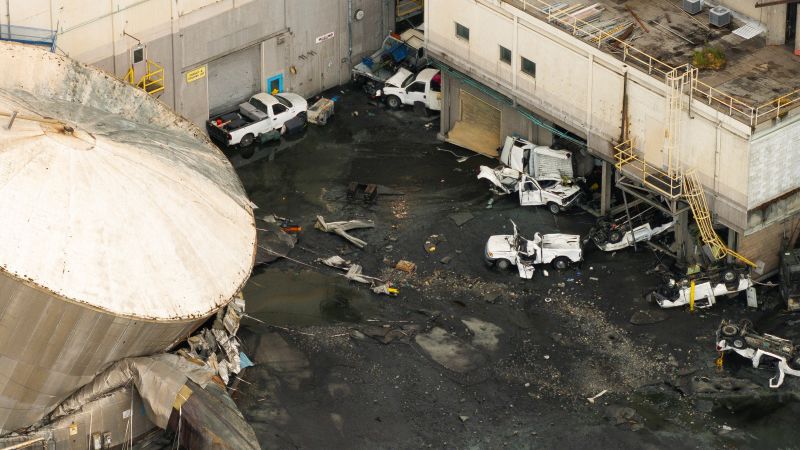
Search to recover 9 missing employees – One day after a catastrophic chemical tank rupture at a paper manufacturing plant in Washington state, search teams are preparing to resume their efforts to locate nine individuals still unaccounted for. The incident, which occurred at the Nippon Dynawave Packaging Co. facility in Longview, resulted in at least one fatality and nine injuries, prompting a high-stakes operation to recover those missing. Fire officials confirmed that the recovery process will restart on Wednesday following stabilization of the site and resolution of safety hazards.
Chemical Tank Collapse and Immediate Aftermath
The rupture happened around 7:30 a.m. Tuesday, when a 900,000-gallon chemical tank containing a hazardous mixture known as white liquor exploded. This substance, used in the paper-making process to break down wood chips, is highly caustic and can cause severe burns upon contact with skin. At least 90,000 gallons of the material remained inside the damaged tank, officials noted, creating a dangerous environment for first responders.
“At the moment, we are not aware of any rescues that are yet to be made,” said Scott Goldstein, a Cowlitz County fire official. “The tank remains unstable, and there’s a risk it could collapse on its own, endangering those still in the area.”
During the initial response, emergency crews faced significant challenges due to the unstable structure and potential exposure to corrosive chemicals. The tank’s rupture released about 500,000 gallons of liquid, which mixed with water from a broken fire main. This combination is now contained on-site, according to Goldstein, though the area remains hazardous.
Community Safety and Environmental Concerns
Authorities have advised residents to avoid the vicinity of the plant, particularly the dikes and ditches between Washington Way and Prudential Boulevard, to prevent contact with the spilled chemicals. While there is no immediate threat to the surrounding community, the environmental impact is being closely monitored. Officials reported an initial spike in pH levels in nearby waterways and have shut down dike system pumps to limit contamination.
PeaceHealth St. John Medical Center initially treated nine patients from the scene, including one who succumbed to injuries and four others transferred to other facilities. The injured suffered a range of conditions, from minor to severe, including chemical burns, eye irritation, and respiratory issues. Three of the patients were later discharged, with one remaining in stable condition, as confirmed by the hospital’s spokesperson.
Broader Context of Industrial Incidents
The accident in Longview is part of a pattern of industrial mishaps across the U.S. in recent months. In Southern California, a similar crisis unfolded last week when a chemical tank overheated, threatening a catastrophic explosion. Tens of thousands of residents were evacuated as a precaution, but the risk was mitigated when a crack in the tank released pressure, preventing a full-scale blast.
Earlier this year, a chemical leak at a West Virginia facility killed two people and injured over a dozen others. The Associated Press reported that the incident involved nitric acid and another substance, highlighting the dangers of industrial chemical storage. A month before that, an explosion at a Tennessee explosives plant claimed 16 lives, with the blast registering as a 1.6 magnitude earthquake. This event underscored the potential for industrial accidents to have widespread consequences, even beyond the immediate area.
Additionally, in Pennsylvania, a US Steel plant experienced an explosion that injured more than 10 workers, including one trapped in rubble. These incidents collectively illustrate the growing concerns about safety protocols in industrial settings. The Nippon Dynawave collapse has reignited discussions about the need for stricter oversight and emergency preparedness in chemical storage facilities.
Details of the Incident and Ongoing Investigations
While the exact cause of the tank rupture remains under investigation, officials have not ruled out equipment failure or human error as contributing factors. The plant, located in Longview approximately 50 miles north of Portland, Oregon, and 130 miles south of Seattle, produces pulp for paper products and paperboard used in packaging. The implosion occurred as part of a larger sequence of events that began with the tank’s structural compromise.
Goldstein emphasized that the decision to halt recovery efforts Tuesday evening was driven by the need to ensure the safety of first responders. “The tank could have fallen at any moment, putting rescuers at risk of exposure to corrosive materials,” he explained. These chemicals, which are integral to the paper-making process, can cause severe damage if inhaled in concentrated forms or come into contact with the skin.
Despite the dangers, the recovery operation is set to continue on Wednesday. Fire officials reported that local, regional, and state agencies have collaborated with plant staff to reinforce the site, making it safer for crews to enter. This teamwork has been critical in addressing the immediate risks and preparing for the next phase of the search.
The National Transportation Safety Board and the Occupational Safety and Health Administration are expected to investigate the incident further. Their focus will include analyzing the chemical mixture’s properties, reviewing the plant’s maintenance records, and assessing the emergency response procedures. CNN has sought comments from Nippon Dynawave Packaging Co. to gain more insight into the event and its causes.
As the investigation unfolds, the incident has raised questions about the safety of industrial operations in the Pacific Northwest. The combination of high chemical volumes and the proximity of the plant to residential areas has prompted calls for improved safety measures. Goldstein noted that the recovery efforts will not only aim to find the missing employees but also to evaluate the facility’s readiness for future emergencies.
Meanwhile, the broader community remains on alert, with local authorities monitoring the situation closely. While the immediate danger has been contained, the incident serves as a reminder of the potential risks associated with large-scale industrial facilities. The efforts to stabilize the site and recover survivors have been a coordinated response, reflecting the complexity of such disasters and the importance of collaboration among agencies.
