
What’s in the proposed deal that could end the US-Iran conflict?
What’s in the proposed deal that could end the US-Iran conflict?
What s in the proposed deal – Iran and the United States have taken steps toward finalizing a deal that could transform the temporary ceasefire into a more permanent resolution. Both countries are currently engaged in discussions about a “memorandum of understanding,” which aims to outline a plan for addressing all unresolved tensions. However, the agreement remains in the early stages, as noted by US Secretary of State Macro Rubio during his visit to India. “We’re either going to have a good agreement or we’re going to have to deal with it another way,” he stated, highlighting the stakes involved in reaching a final settlement.
The Path to a Lasting Ceasefire
Although the details of the memorandum are still unclear, its core purpose is to halt ongoing hostilities and provide a framework for future negotiations. The agreement would also include measures to gradually restore the Strait of Hormuz, a critical waterway for global oil trade, to pre-conflict conditions. A senior administration official told CNN that the proposed framework grants the parties 60 days to finalize the key terms of the deal. This phase would focus on resolving Iran’s nuclear program, a major point of contention between the two nations.
“We’re either going to have a good agreement or we’re going to have to deal with it another way,” said US Secretary of State Macro Rubio during his visit to India on Monday.
Rubio emphasized that the memorandum could serve as a foundation for lasting peace. He mentioned that Iran would be required to engage in a time-bound negotiation on nuclear matters, a move he described as “a real significant time limited negotiation.” This approach, he argued, would prevent Iran from acquiring nuclear weapons and ensure it divests its stockpile of highly enriched uranium, which he refers to as “nuclear dust.” The official added that the strait’s reopening would be contingent on Iran’s compliance, with the blockade easing in proportion to its adherence to the terms.
“The important part of how this is structured is, if Iran doesn’t perform, they don’t get anything. No dust? No dollars. As the Strait opens, the blockade loosens proportionately,” said a senior administration official.
The memorandum’s structure is designed to enforce accountability. If Iran fails to meet its commitments, the US would withhold economic benefits, such as lifting sanctions. This principle of “trust but verify” has been amplified to create a more robust system of checks and balances. The agreement’s success hinges on both sides demonstrating flexibility and commitment to long-term cooperation.
Iran’s Stance and Differing Interpretations
Iranian officials and state media have offered alternative perspectives on the deal’s implications. Foreign Ministry spokesman Esmail Baghaei asserted that while “understandings on a large portion of the issues under discussion” have been reached, it is premature to declare an agreement finalized. “To say this means an agreement is about to be signed — no one can make such a claim,” he noted, underscoring the ongoing nature of negotiations.
“We have reached understandings on a large portion of the issues under discussion. But to say this means an agreement is about to be signed — no one can make such a claim,” said Foreign Ministry spokesman Esmail Baghaei on Monday.
President Donald Trump, meanwhile, has expressed cautious optimism. In a social media post on Sunday, he stated that the US would not rush into a deal, insisting it would be “good and proper” and not a repeat of the Obama administration’s agreement. “If I make a deal with Iran, it will be a good and proper one, not like the one made by Obama,” he wrote, arguing that the previous deal had “given Iran a clear and open path to a Nuclear Weapon.”
“If I make a deal with Iran, it will be a good and proper one, not like the one made by Obama,” Trump said in a post on Truth Social on Sunday, claiming the prior agreement allowed Iran “a clear and open path to a Nuclear Weapon.”
Despite these differences, the potential deal includes Iran’s commitment to not pursue nuclear weapons and to enter negotiations on reducing its stockpile of highly enriched uranium. A person familiar with the discussions confirmed that Iran would also agree to pause any new enrichment activities. However, the specifics of how the stockpile would be managed remain to be determined in the next phase of talks.
Strait of Hormuz and Control Dynamics
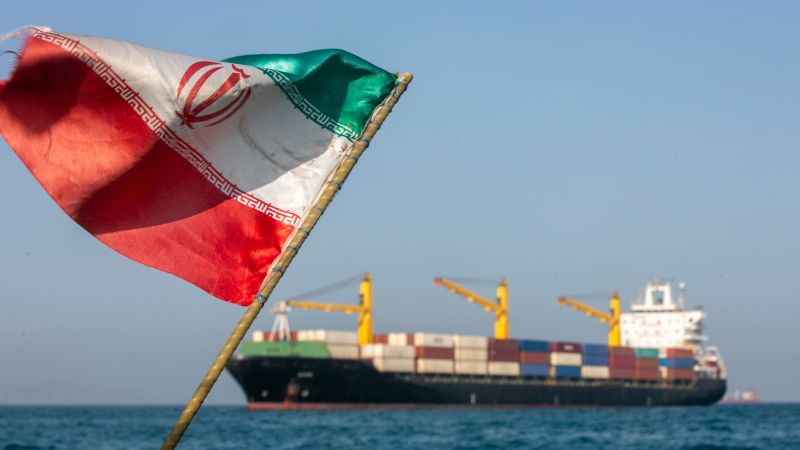
The management of the Strait of Hormuz is a central issue. Trump claimed in a social media post on Saturday that the strait would reopen under the memorandum. Yet, multiple Iranian media outlets, including those aligned with the hardline Islamic Revolutionary Guard Corps (IRGC), reported that Iran would retain oversight of the waterway. According to these reports, the strait would be opened over 30 days, allowing shipping to return to pre-war levels.
“The strait is already open, but coordination with Iranian relevant authorities must happen to ensure safe transit,” said an Iranian source who spoke to CNN on Sunday.
Tehran has slightly softened its position on tolls for ships navigating the strait. Foreign Ministry spokesman Esmail Baghaei stated on Monday that the country is not seeking to collect tolls but is providing “navigation services plus necessary measures to protect the environment of the Strait of Hormuz.” This suggests Iran aims to balance economic and strategic interests, allowing commercial traffic to resume while maintaining greater control over the region’s maritime activities.
Meanwhile, the US has insisted on maintaining its blockade of Iranian ports until the agreement is finalized. In a Sunday post, Trump clarified that the blockade would “remain in full force and effect” until a certified and signed accord is reached. This move signals the US’s determination to ensure Iran adheres to all terms before lifting sanctions, a step that could significantly impact Iran’s economy.
Broader Implications and Timeline
The proposed agreement is not only about ending the current conflict but also about reshaping the future of US-Iran relations. By addressing Iran’s nuclear program and securing its commitment to reduce enrichment, the deal could pave the way for renewed diplomatic engagement. The 60-day period for finalizing key deal points is seen as a critical window for both sides to negotiate terms that satisfy their respective interests.
Iran’s insistence on coordinating the strait’s management with Oman highlights its desire for regional partnerships. Baghaei mentioned that the plan would establish “a mechanism to ensure the safe passage of ships,” a step that could involve Oman as a mediator. This approach may help Iran maintain a degree of influence over the waterway while aligning with US demands for transparency and security.
As the talks progress, the outcome will depend on how both nations navigate their competing priorities. For the US, the deal offers an opportunity to stabilize the region and ease economic pressures, particularly as gasoline prices have surged ahead of the midterm elections. For Iran, it represents a chance to alleviate sanctions and secure its strategic interests. The memorandum, while not a complete resolution, marks a significant step toward achieving a more enduring peace.
