
Pope Leo warns of AI fueling warfare in first major theological document
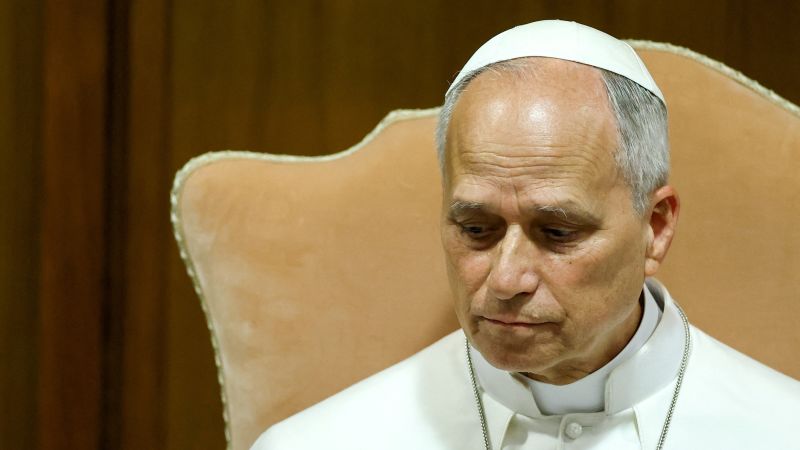
Pope Leo XIV’s Encyclical on Artificial Intelligence: A Call for Ethical Governance
Pope Leo warns of AI fueling – In a groundbreaking theological document, Pope Leo XIV has issued a stern warning about the role of artificial intelligence in modern warfare, emphasizing the urgent need for ethical oversight. This encyclical, titled *Magnifica Humanitas* (“Magnificent Humanity”), marks the first major text of his papacy and underscores the Church’s evolving stance on technology’s impact on society. The pope argues that AI, while a powerful tool, risks exacerbating global tensions if not guided by moral principles, urging a reexamination of how humanity interacts with its creations.
Human Dignity and the Ethical Imperative
Central to the encyclical is the assertion that artificial intelligence should not be controlled solely by a select few, but rather by systems that prioritize the “grandeur of humanity.” Pope Leo XIV highlights the need for AI to serve as a means of enhancing life, not diminishing it, and calls for its application in warfare to be governed by “the most rigorous ethical constraints.” This focus on human dignity reflects a broader concern about how technological advancements might erode the intrinsic value of individuals and communities.
While the encyclical primarily addresses AI, it extends to examine deeper societal challenges. The pope suggests that the encyclical is not merely a technical analysis but a moral reflection on the crises shaping the world. He stresses that the Church’s role is to name these issues and inspire collective action, ensuring that progress aligns with justice and compassion.
“The construction of a world in a state of perpetual conflict is an evil and must be named for what it is,” the pope writes.
This sentiment echoes his critique of the “just war” theory, which he deems outdated in the face of contemporary warfare. According to Pope Leo, the traditional doctrine—rooted in four conditions for justifying conflict—now fails to account for the complexities of modern warfare. He argues that military force should be reserved for “self-defense in the strictest sense,” and that the Church must reevaluate its support for violence in light of AI’s potential to escalate conflicts.
A New Vision for Social Justice
The pope also frames social justice through a lens of migration and refugee care, asserting that the treatment of displaced people serves as the “litmus test” for fairness in a rapidly changing world. He acknowledges the Church’s historical role in legitimizing slavery and expresses regret for its delayed condemnation of systems that dehumanize. This admission underscores a commitment to addressing past injustices while advocating for a future where technology enhances, rather than undermines, human solidarity.
Pope Leo XIV has positioned peace-making as a central theme of his papacy, and his encyclical reinforces this mission. He warns that the unchecked use of “force, violence and weapons” can lead to “disastrous consequences for civilian populations,” urging leaders to consider the broader humanitarian impact of AI-driven military strategies. By linking technology to the moral fabric of society, he challenges both governments and corporations to act responsibly.
“Humanity possesses far more effective and capable tools for promoting human life and resolving conflicts, such as dialogue, diplomacy and forgiveness.”
Reimagining the “Tower of Babel” in the AI Era
In a biblical metaphor, Pope Leo XIV draws parallels between AI and the ancient tale of the Tower of Babel. He warns that the technology could enable humanity to “make a name” for itself through centralized power, potentially creating a new form of division. The story, he explains, serves as a caution against plans that “dominate and ultimately dehumanize,” advocating instead for a collaborative approach that values diverse perspectives.
This vision aligns with the encyclical’s call for principles guiding AI development. Key among these are equitable resource distribution, the preservation of human dignity, and a commitment to environmental stewardship. The pope stresses that AI must not only be a tool for efficiency but also a vehicle for fostering social harmony and ecological balance. By integrating these values, he aims to ensure that technological progress remains a force for unity rather than fragmentation.
Collaboration with Tech Leaders: A Bold Move
Pope Leo XIV’s decision to personally present the encyclical to the world at the Vatican represents a departure from tradition. Historically, encyclicals were delivered to bishops and cardinals, but this act signals a desire to engage a wider audience. The encyclical was released alongside Chris Olah, a co-founder of Anthropic, an AI company embroiled in legal disputes with the Trump administration over its military applications. Olah, who has consulted with 15 religious leaders on AI’s societal implications, echoed the pope’s concerns, stating that the technology’s influence “goes far beyond scientific questions” and touches on “human flourishing and what a good world looks like.”
Leo XIV’s collaboration with Olah highlights a bridge between theology and innovation. The pope emphasizes the importance of a community “engaged and trying to push this (AI) in a good direction,” which he believes can counteract the technology’s more harmful trajectories. By involving secular experts, he seeks to blend faith with reason, ensuring that AI’s development reflects both spiritual and practical wisdom.
The Broader Context of Encyclicals
As an encyclical, *Magnifica Humanitas* joins a growing trend of papal letters addressing global challenges. Following Pope Francis’s *Laudato Si’* on environmental protection, Leo XIV’s text expands the Church’s influence to include artificial intelligence. This shift reflects the urgency of the issue, as AI becomes increasingly integrated into daily life and decision-making processes. The pope’s encyclical is seen as a landmark for his papacy, aiming to inspire Catholics and people of goodwill to embrace a shared vision of progress.
The 235-page booklet, released with the support of Olah, serves as a manifesto for a future where AI is guided by ethical and spiritual values. Pope Leo XIV describes his responsibility as “entrusted to look upon another huge transformation with eyes of faith, with lucidity of reason, with openness to mystery and with cries of the poor and the earth resounding in my heart.” This holistic approach positions AI as a mirror of human values, challenging its creators to reflect on their moral obligations.
Leo XIV’s encyclical is not without controversy. His criticism of the “just war” theory has drawn attention, particularly following remarks by US Vice President JD Vance, who cautioned the pope against overreaching in theological matters. Despite this, the pope maintains that the Church must take a proactive stance on issues like AI’s role in warfare, arguing that religious language can illuminate moral truths in conflict resolution.
The encyclical’s release coincides with a global debate on the ethics of AI. As nations grapple with the implications of autonomous weapons and data-driven decision-making, Pope Leo XIV’s message offers a moral compass. His insistence on “robust legal frameworks, independent oversight, informed users and a political system that does not abdicate its responsibility” underscores a comprehensive strategy for harnessing AI’s potential while mitigating its risks.
In a world increasingly shaped by technology, Pope Leo XIV’s *Magnifica Humanitas* stands as a testament to the Church’s adaptability. By addressing AI’s role in warfare, migration, and environmental ethics, the encyclical invites a rethinking of how humanity defines progress. As the pope declares, the future of AI must be one that honors the dignity of all people and safeguards the planet for generations to come.
