
Tulsi Gabbard is resigning as director of national intelligence
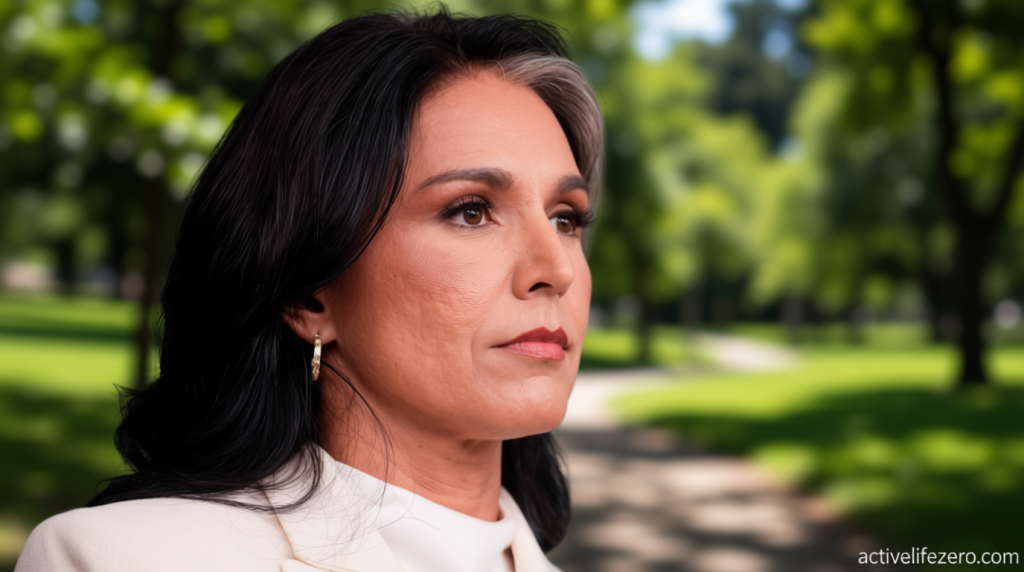
Tulsi Gabbard Announces Resignation as Director of National Intelligence
Tulsi Gabbard is resigning as director – On Friday, Tulsi Gabbard, the Director of National Intelligence, revealed her intention to step down from the position, effective June 30, 2026. Her decision comes in response to her spouse’s recent diagnosis with cancer, a development she described as a pivotal moment in her personal and professional life. In a letter to President Donald Trump, Gabbard emphasized the necessity of her departure, framing it as a compassionate choice to support her husband through this critical period.
Personal Reasons for Resignation
“Unfortunately, I must submit my resignation, effective June 30, 2026,” Gabbard wrote, addressing Trump directly. “My husband, Abraham, has recently been diagnosed with an exceptionally rare type of bone cancer. He faces significant challenges in the coming weeks and months. At this time, I must step away from public service to be by his side and fully support him through this battle.” The letter underscores her commitment to her family, highlighting how her husband’s condition has become the central reason for her exit from the administration.
Gabbard’s decision was not made lightly. She expressed that her husband has been a steadfast source of strength throughout their eleven years of marriage, enduring deployments to East Africa on a Joint Special Operations mission, political campaigns, and now her tenure in the role. “His strength and love have sustained me through every challenge,” she wrote. “I cannot in good conscience ask him to face this fight alone while I continue in this demanding and time-consuming position,” she added, underscoring the emotional toll of balancing her responsibilities with her family’s needs.
White House Response and Transition Planning
President Trump swiftly acknowledged Gabbard’s resignation, lauding her contributions and expressing confidence in the interim leadership. “Her wonderful husband, Abraham, has been recently diagnosed with a rare form of bone cancer, and she, rightfully, wants to be with him, bringing him back to good health as they currently fight a tough battle together,” Trump stated on Truth Social. He further noted that Gabbard had “done an incredible job, and we will miss her,” signaling both appreciation and a recognition of the importance of her role.
According to a senior administration official, the White House had been aware of Gabbard’s plans to resign for several weeks. However, she had been denying rumors of her departure until two weeks prior. This denial was later followed by her formal announcement, which took place during a meeting in the Oval Office. The official source confirmed that Gabbard had delivered the letter in person, marking the official end of her tenure as the nation’s intelligence chief.
Gabbard’s exit will leave a gap in the Cabinet, following the recent departures of several other high-profile officials. This includes Homeland Security Secretary Kristi Noem, Attorney General Pam Bondi, and Labor Secretary Lori Chavez-DeRemer, all of whom were removed or resigned under Trump’s administration. Despite these changes, Gabbard expressed her dedication to ensuring a seamless transition, stating, “While we have made significant progress at the ODNI — advancing unprecedented transparency and restoring integrity to the intelligence community — I recognize there is still important work to be done.”
Controversies and Conflicts with the White House
Gabbard’s time in office has been marked by moments of discord, particularly regarding the U.S. military actions against Iran. Months before the conflict escalated, internal White House officials had grown increasingly critical of her messaging, viewing it as inconsistent with the administration’s narrative. These tensions came to a head in June 2025, just days before the U.S. launched strikes on Iranian nuclear facilities. CNN reported that multiple individuals within the West Wing had expressed disillusionment with Gabbard’s performance, with Trump himself seeing her as “off message” on the Israel-Iran conflict.
Trump’s frustration reached a peak when Gabbard posted a video warning that the world was “closer to the brink of nuclear annihilation than ever before.” In the clip, she criticized the political elite and warmongers for stoking fear and tensions between nuclear powers. This statement was perceived by the White House as a veiled critique of Trump’s support for Israel’s attacks on Iran. The video’s timing—just days before the U.S. military strikes—added to the perception that Gabbard was challenging the administration’s rationale for the conflict.
Following the strikes, Trump publicly rebuked Gabbard’s testimony to Congress, where she asserted that Iran was not actively pursuing a nuclear weapon. “I don’t care what she said. I think they were very close to having it,” he remarked to reporters, signaling his skepticism of her claims. The same day, Trump authorized the strikes, codenamed Operation Midnight Hammer, which targeted Iran’s nuclear infrastructure. This move underscored the administration’s urgency in addressing what it deemed an imminent threat from Iran.
Timeline of Events and Gabbard’s Role
After the war between the U.S. and Iran began in February of this year, Trump and his advisors sought to justify the conflict by emphasizing Iran’s nuclear program as a growing menace. However, Gabbard’s prepared remarks to the Senate Intelligence Committee a month later contradicted this narrative. She stated, “As a result of Operation Midnight Hammer (in June), Iran’s nuclear enrichment program was obliterated. There has been no efforts since then to try to rebuild their enrichment capability.”
Notably, Gabbard did not read the entire prepared statement during the congressional hearing, a detail that raised questions about her preparedness and consistency. When pressed on the omission, she explained that it was due to the “time being run,” a cryptic remark that hinted at the pressures she faced in balancing her duties with the ongoing war. This instance highlighted the friction between Gabbard’s perspective and the administration’s broader strategy, particularly in the context of the Iran conflict.
Despite these challenges, Gabbard maintained that her work at the ODNI had contributed to progress in transparency and the restoration of integrity within the intelligence community. Her resignation, however, marks the culmination of a period of tension, both personally and professionally. As the acting director, Aaron Lukas will now take on the responsibility of overseeing the agency during this transition, a role that will require navigating the aftermath of Gabbard’s leadership and the shifting dynamics within the administration.
The decision to resign reflects a broader pattern of leadership changes under Trump, who has frequently reshaped his Cabinet to align with his evolving priorities. Gabbard’s departure adds to this trend, symbolizing the administration’s willingness to adapt its strategy in response to both internal and external pressures. Her focus on personal responsibility and family, however, highlights a moment of prioritization that contrasts with the high-stakes political maneuvering that has characterized her time in office.
As the intelligence community moves forward without its former director, the legacy of Gabbard’s tenure will be scrutinized. Her commitment to transparency and her ability to address the complexities of the Iran conflict will remain key points of discussion. While her resignation is rooted in personal circumstances, it also underscores the challenges faced by officials in maintaining alignment with the executive branch’s objectives amid rapidly changing geopolitical landscapes.
