
Inside the epicenter of the Ebola outbreak in DRC as the virus spreads
Inside the Epicenter of the Ebola Outbreak in DRC as the Virus Spreads
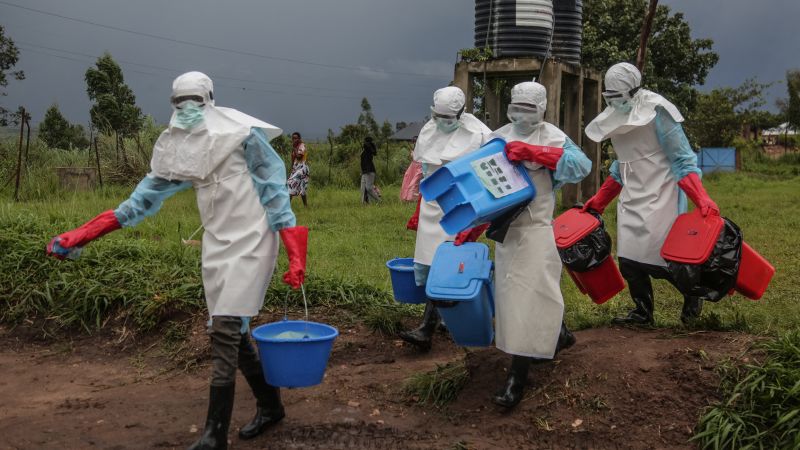
Inside the epicenter of the Ebola – In the heart of the Democratic Republic of Congo (DRC), where the latest Ebola outbreak has taken root, Hélène Akilimali is taking every possible measure to shield herself from the virus. A cocoa seller in the eastern region, she insists on wearing a face mask at all times in public, a precaution she says is vital in an environment where the virus is already widespread. Yet, despite her efforts, her work often places her in close proximity to others who may not share her vigilance. “Ebola is a real disease,” Akilimali asserts, emphasizing that misinformation and a lack of awareness are contributing to preventable deaths. “People need to stop deluding themselves,” she adds, highlighting how myths and casual attitudes toward the virus are undermining containment efforts. When asked about her customers, Akilimali admits that while she ensures her own safety, she has little control over their behaviors. “You’re not going to chase them away,” she says, acknowledging the struggle to convince locals of the virus’s severity.
Community Doubts and the Spread of Misinformation
Residents in Ituri and North Kivu, the two provinces hardest hit by the outbreak, describe a situation where skepticism and confusion are widespread. Many initially dismissed the virus as a hoax, but as the toll of deaths rose, attitudes began to shift. Élie Ilunga, a Bunia resident and local advocate, recalls the turning point. “At first, we thought it was a joke,” he says, noting how the sight of people succumbing to the illness forced the community to confront the reality. “Now, we see it’s real.” His words reflect a growing awareness, though he remains concerned about the persistence of myths. “Those who doubt are perhaps those who haven’t experienced this death yet or whose families haven’t been affected,” Ilunga explains, adding that he has taken personal steps to protect his household, such as setting up a washbasin at home. His actions underscore the urgency of combating misinformation and fostering trust in the affected regions.
Global Health Response and Regional Risk
The World Health Organization (WHO) has sounded the alarm, estimating that at least 177 fatalities are linked to the ongoing DRC outbreak. To date, nearly 750 suspected cases have been reported, with the virus spreading from its rural origins to urban centers like Bunia and Goma. This geographic expansion has raised concerns about the potential for the epidemic to intensify. Neighboring Uganda has also been impacted, recording five confirmed cases and two deaths, according to recent updates. Despite these developments, the WHO has maintained that the global risk remains low, though the regional risk has been elevated to “high.” On Friday, the organization upgraded the risk level in DRC to “very high,” citing the prolonged circulation of the virus before its detection. “The case numbers are expected to keep increasing, given the time the virus has been active,” the WHO warned, underscoring the challenges of an early response.
Local authorities in Ituri have faced a crisis of public trust, as tensions erupted when relatives of an Ebola victim attempted to retrieve the body from Rwampara Hospital. The incident, which occurred on Thursday, led to a protest that culminated in the burning of two hospital tents. “The relatives tried to take the body by force,” a local politician recounted to CNN, highlighting the community’s frustration with the healthcare system’s handling of the outbreak. In response, officials imposed restrictions on public gatherings and banned wakes, fearing that traditional mourning practices could accelerate transmission. The WHO has previously noted that touching the deceased during funerals poses a significant risk, as the bodies of Ebola victims are highly infectious in the early stages of illness. A community mobilizer from Bunia pointed to local customs, such as mourners touching the corpse, as potential contributors to the virus’s spread. These practices, deeply rooted in cultural traditions, now stand in stark contrast to the scientific measures needed to curb the outbreak.
Challenges in the Conflict Zone
The DRC’s eastern regions, where the outbreak is concentrated, are not only vulnerable due to their geographic location but also because of ongoing conflict. An estimated two million displaced people inhabit these areas, creating complex conditions for disease containment. Health infrastructure in the region has long been underfunded, exacerbating the challenges of responding to the epidemic. “Healthcare resources are scarce, and the situation is compounded by the virus’s strain, which currently lacks an approved vaccine or treatment,” said a local official. This combination of factors has left health workers struggling to implement effective protocols. Meanwhile, aid organizations have pointed to the impact of recent funding cuts. The dismantling of the U.S. Agency for International Development (USAID) and reductions in U.S. financial support have been cited as barriers to a robust response. However, a State Department official has dismissed these claims, stating that the Trump administration’s changes have not impeded global efforts.
Amid these challenges, humanitarian groups are working tirelessly to provide essential supplies and services. Greg Ramm, the DRC country director for Save the Children, described the situation after his recent visit to Ituri Province. “Our teams are collaborating with local authorities to deliver basic supplies like disinfectant and chlorine to clinics,” he said, stressing that these measures are crucial for infection control. Yet, he also highlighted the financial constraints. “Humanitarian funding is far less than it was a couple of years ago,” Ramm noted, emphasizing that the response is now a matter of catching up. “It’s about getting infection prevention measures into place,” he added, underscoring the need for immediate action. The situation remains precarious, with the virus continuing to move through densely populated areas and communities increasingly aware of its dangers.
Building Trust and Strengthening Infrastructure
Dr. Tedros Adhanom Ghebreyesus, the WHO Director-General, has called for greater community engagement, stating that “building trust in the affected communities is critical to a successful response.” His remarks came in the wake of the hospital fire, which underscored the need for improved communication and coordination. “We are committed to ensuring essential services are maintained and strengthened,” Tedros said, highlighting the organization’s efforts to support local health systems. However, the task is formidable. In addition to the logistical hurdles, the lack of vaccines and treatments for the virus adds another layer of complexity. “The strain driving this outbreak has no approved cure,” said a health official, emphasizing that containment efforts rely heavily on public compliance with safety measures.
As the virus continues to spread, the focus remains on balancing traditional practices with modern medical protocols. While funerals remain an important cultural ritual, health workers are urging families to adopt safer alternatives. “We need to educate people about the risks while respecting their customs,” said one medical professional, reflecting the dual challenge of addressing both fear and cultural resistance. In Bunia, where the disease has reached urban areas, the community is slowly adapting. “We’ve seen a shift in behavior,” Ilunga remarked, noting that more families are now following hygiene guidelines and avoiding close contact during mourning periods. Yet, the path to full compliance is not without obstacles. Some residents still question the virus’s impact, while others struggle to access necessary resources. “It’s a race against time,” Ramm said, warning that delays in response could lead to a larger crisis. The situation in the DRC serves as a stark reminder of the delicate interplay between public health and cultural practices in the fight against infectious diseases.
With the outbreak evolving rapidly, the stakes have never been higher. The WHO’s assessment of the regional risk as “high” and the DRC’s “very high” risk level signal an urgent need for coordinated action. Health officials are working to contain the virus through a combination of education, improved sanitation, and strict quarantine measures. Yet, the battle is not just against the virus but also against entrenched skepticism. “People are now realizing the severity, but it’s still a long road to trust,” said a local health worker. As the virus moves through the region, the community’s response will be pivotal in determining the outbreak’s trajectory. The situation in the DRC underscores the importance of addressing misinformation, strengthening health infrastructure, and fostering collaboration between local and international efforts. Until these challenges are overcome, the fight against Ebola will remain a test of resilience and adaptability in one of the world’s most volatile regions.
