
‘Defund then abolish’: A leading Democrat in Wisconsin governor’s race urged abolishing police
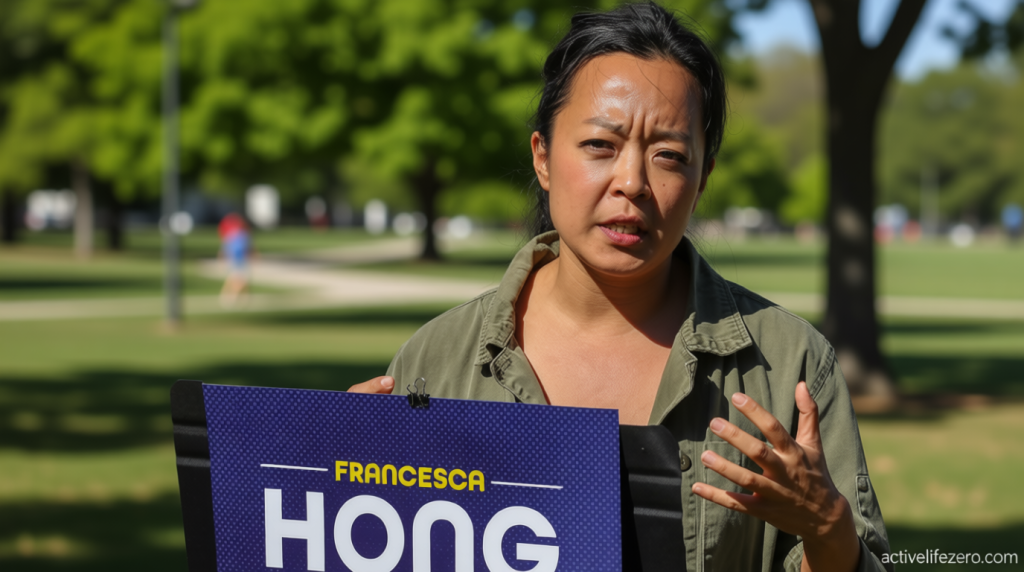
Francesca Hong’s Bold Stance on Police Abolition Challenges Democratic Consensus
Defund then abolish – As the Democratic primary race for Wisconsin governor intensifies, Francesca Hong, a 37-year-old state representative and democratic socialist, has emerged as a notable figure with a distinct approach to law enforcement reform. Unlike many of her party’s candidates, who have since softened their positions on defunding police, Hong has consistently championed the idea of abolishing police departments. Her stance, rooted in a broader critique of systemic inequities, has sparked debate within the party and drawn scrutiny from opponents who see it as a potential liability in a key battleground state.
A Shift from Defunding to Abolition
Years after mayors in Democratic-leaning cities initially embraced calls to defund police departments, Hong has taken a more radical position. In 2020, she posted on X, emphasizing that “defunding the police as a first step towards abolishing the police” is essential to dismantling structures of oppression. By 2021, her message had evolved, with her arguing that “police exist to uphold white supremacy. Defund then abolish. Reform can’t be an option.” This progression has positioned her as a leader within the democratic socialist movement, though it has also set her apart from other Democrats who have recalibrated their rhetoric in recent years.
Despite her firm commitment to abolition, Hong has not erased her earlier posts. A CNN KFile analysis of her social media activity, interviews, and public statements reveals a consistent thread: her advocacy for police abolition remains unaltered. While she acknowledges the importance of public safety, she questions whether current police spending is “optimal or efficient.” In a statement to CNN, she said, “While I envision a world where public safety is not synonymous with law enforcement, I recognize that this paradigm shift is a very long term vision and my focus is building systems of care for now and for our future.”
The Democratic Primary Field
Hong is vying for the Democratic nomination against a field that includes Lt. Gov. Sara Rodriguez, former Lt. Gov. Mandela Barnes, Milwaukee County Executive David Crowley, and state Sen. Kelda Roys. According to a Marquette Law School poll released in March, she and Barnes are the only candidates in double digits, with Hong at 14% and Barnes at 11%. A significant portion of potential Democratic voters—65%—remain undecided, highlighting the challenges in aligning with her progressive platform.
Her campaign has faced scrutiny, particularly after past comments on the defund police movement became a focal point for critics. In 2022, Mandela Barnes’ Senate bid was slowed by his early support for reducing police funding, first reported by CNN. At the time, Barnes’ campaign asserted that he “does not support abolishing ICE or defunding the police.” Yet Hong, who has not walked back her calls for abolition, maintains that her views are part of a “wider conversation around police abolition,” grounded in her belief that the existing system is failing communities.
Broader Democratic Reckoning
The defund the police movement gained momentum during the 2020 election, but its impact on the Democratic Party has been mixed. After underperforming in House races, the party’s leaders have sought to distance themselves from the most radical elements of the movement. House Speaker Nancy Pelosi, for example, declared in 2022 that “defund the police is dead,” signaling a shift toward more moderate messaging. This trend has extended to other states, where candidates like Abdul El-Sayed in Michigan have removed posts advocating for police defunding to align with broader party goals.
Even in cities traditionally associated with progressive values, such as Los Angeles and New York, some leaders have retreated from the “abolish” rhetoric. In Los Angeles, mayoral challenger Nithya Raman recently stated that the city “shouldn’t lose more cops,” while in New York, Zohran Mamdani explicitly told voters, “I am not defunding the police.” These adjustments reflect a growing effort within the Democratic Party to balance social justice goals with electability, particularly in states where the political landscape is more polarized.
Republicans have capitalized on this divide, framing Democrats as too radical to address public safety concerns. This week, Senate Republicans advanced the Secure America Act, a measure aimed at funding ICE and Border Patrol, while warning that “defund the police” Democrats pose a threat to national security. In Wisconsin, the GOP has already begun leveraging Hong’s past statements, portraying her as an extreme left candidate who could alienate voters in a state known for its conservative leanings.
Hong’s Political Journey and Symbolic Adjustments
Francesca Hong’s political career began in 2020 when she launched a campaign for a Wisconsin State Assembly seat representing parts of Madison. Her background as a former chef and restaurant owner, which was heavily emphasized during her campaign, became a strategic asset as the culinary industry struggled during the pandemic. By aligning her identity with the economic challenges faced by small businesses, she gained traction in a competitive race.
However, her political strategy has also involved symbolic shifts. For years, her Twitter bio listed her location as “Occupied Ho-Chunk Land,” acknowledging the Indigenous peoples whose territory includes much of Wisconsin. In March 2023, she updated her bio to simply read “Wisconsin, USA.” This change, while subtle, has been interpreted by some as an effort to appeal to a broader audience, though Hong explained to CNN that she occasionally revises her social media profiles to reflect evolving priorities. She noted that her focus is on “building systems of care” while maintaining her long-term vision for police abolition.
Her campaign’s emphasis on systemic change has drawn both support and criticism. While some view her as a trailblazer pushing for transformative policies, others argue that her stance could jeopardize her chances in a state where public safety is a critical issue. As the primary race unfolds, Hong’s ability to reconcile her progressive ideals with the practical demands of winning over a diverse electorate will be central to her campaign’s success.
Ultimately, Hong’s position on police abolition represents a broader ideological rift within the Democratic Party. Her unyielding support for the movement, contrasted with the cautious approaches of other candidates, underscores the challenges of balancing radical reform with political viability. As Wisconsin voters prepare to make their choice, the question remains: will her bold vision resonate, or will it become a hurdle in the race for the governor’s office?
