
Bodies of two Italian divers recovered from sea cave in Maldives
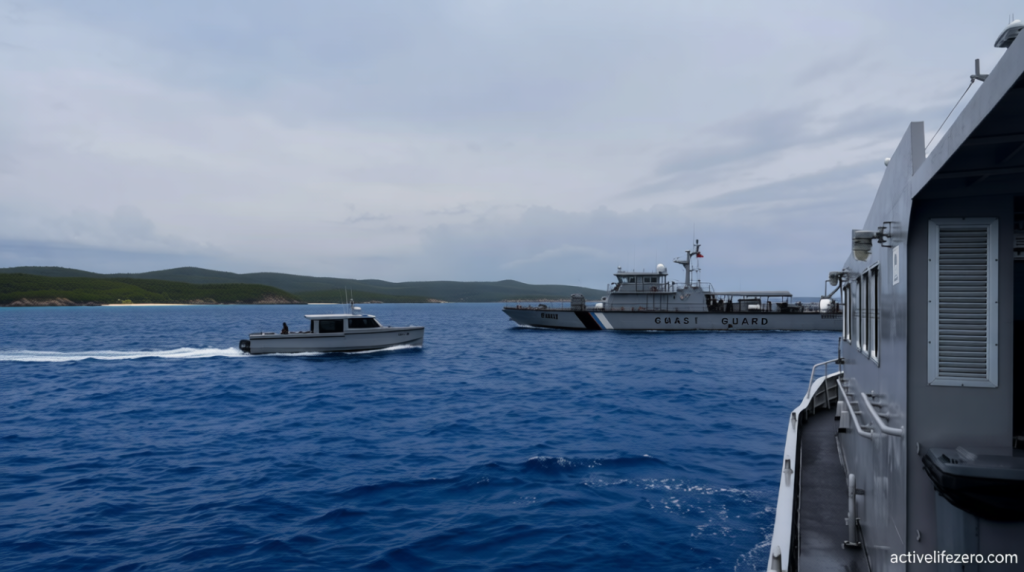
Bodies of two Italian divers recovered from sea cave in Maldives
Bodies of two Italian divers recovered – Two Italian divers were found in the third chamber of a submerged sea cave in the Maldives on Tuesday, officials confirmed, as search teams work to locate the final two bodies of those missing during a recent underwater expedition. The discovery marks progress in the ongoing efforts to retrieve the remains of the four others still unaccounted for, following a series of tragic events that have tested both the resilience of rescuers and the limits of deep-sea exploration.
Five Italians had perished while exploring the Vaavu Atoll caves last week, sparking a coordinated search operation involving multiple nations. The mission, which initially aimed to recover the bodies, faced a setback when a military diver died during a second attempt to access the cave, highlighting the perilous nature of underwater operations at such depths. Authorities attributed the incident to decompression sickness, a condition that occurs when divers ascend too quickly, causing dissolved gases in the blood to form bubbles.
“The two bodies—male and female—were located in the deepest section of the cave and are being transported to the mortuary in Malé by police,” said Mohamed Hussain Shareef, the Maldives’ government spokesperson. He emphasized the challenges of navigating the cave’s treacherous terrain, which remains a focal point for the search teams.
Earlier in the week, the Italian government had enlisted three Finnish divers from the Divers Alert Network (DAN), a global scuba safety organization, to assist in the recovery. These specialists, known for their expertise in deep-sea missions, were deployed to support the operation. According to Maldivian state media, the collaboration between the Italian and Maldivian teams underscored the international response to the tragedy.
On Thursday, the body of Gianluca Benedetti, a diving instructor, was recovered from the cave’s entrance, bringing the total number of recovered individuals to three. The four others who died included Monica Montefalcone, an ecology professor at the University of Genoa; her daughter, Giorgia Sommacal; Federico Gualtieri, a marine biologist; and Muriel Oddenino, a researcher. The incident has left families and colleagues in shock, with emotional accounts shared from Italy as the search for closure continues.
Following the initial losses, a sixth diver opted to stay out of the water, citing safety concerns. This decision added another layer of complexity to the mission, as the remaining team members had to balance urgency with caution. The search was temporarily halted over the weekend after Sgt. Mohamed Mahudhee, 43, died during a second dive into the cave on Saturday, raising questions about the risks involved in such operations.
The Vaavu Atoll cave, where the fatalities occurred, measures 200 meters in length and plunges 70 meters below the surface—a depth equivalent to that of a 20-story building. The legal recreational diving limit in the Maldives is 30 meters, meaning the team ventured well beyond safe parameters. “The cave’s extreme conditions make every mission a high-stakes endeavor,” Shareef explained, noting that the confined space and unpredictable currents contribute to the danger.
As the search resumed on Monday, divers reported finding the bodies of the four Italians in the cave’s deepest section. The decision to retrieve two bodies on Tuesday and two on Wednesday was based on logistical considerations and the need to manage the recovery process carefully. The Italian divers, who had gone missing early Thursday, were part of a group that had been exploring the area for several days. Their disappearance had prompted immediate action from local authorities and international partners.
The incident has drawn attention to the broader risks of deep-sea exploration. Decompression sickness, also known as “the bends,” is a common cause of fatal accidents in diving, particularly when divers operate at depths exceeding 30 meters. Medical experts warn that even with advanced training and equipment, the pressure of the ocean can pose significant threats to divers’ health. Shareef highlighted that the cave’s depth and the time spent underwater were contributing factors to the tragedy.
With the two bodies now recovered, the focus shifts to the remaining two, whose identities and locations are still being determined. The search teams, equipped with specialized gear and trained in deep-sea recovery, continue their work in the challenging environment. Local media has reported that the Maldives National Defense Force is working closely with Italian and Finnish experts to ensure the operation is conducted safely and efficiently.
The loss of life has sparked discussions about safety protocols in underwater exploration. While the legal limit for recreational diving is 30 meters, some teams push further, often relying on technical diving equipment and rigorous training. “This event is a stark reminder of the risks involved,” Shareef added, urging increased awareness of decompression procedures and environmental conditions before future expeditions.
As the bodies are brought to the capital for identification, families in Italy are preparing for the emotional toll of the tragedy. The four Italians who died are being remembered as pioneers in their field, having ventured into the depths for scientific research and adventure. Their stories, though cut short, have become a symbol of the bravery and risks associated with exploring the ocean’s mysteries.
Efforts to locate the final two bodies remain in full swing, with divers navigating the narrow passages and uneven terrain of the cave. The process involves not only technical precision but also a deep respect for the challenges faced by those who dive into such environments. Each retrieval mission is a delicate balance of urgency and caution, ensuring that the remains are treated with the care they deserve.
The Maldives, known for its pristine waters and vibrant marine ecosystems, has now become the site of a somber chapter in its diving history. The incident has prompted a review of safety standards and training protocols for divers operating in the region. As the search continues, the nation reflects on the lives lost and the lessons learned from their underwater journey.
Authorities have also expressed gratitude to the international team of divers for their dedication and expertise during the operation. Their ability to navigate the cave’s depths and retrieve the bodies has been critical in providing families with the remains of their loved ones. The collaboration between the Maldives and Italy exemplifies the global nature of marine rescue efforts and the shared commitment to honoring those who explore the seas.
With the two recovered bodies now en route to the mortuary, the hope remains that the remaining two will be found soon. The search is not just a technical task but a deeply human endeavor, driven by the desire to bring closure to those affected. As the sun sets over the Indian Ocean, the dive teams continue their work, determined to complete the mission and pay tribute to the lives lost in the depths of the Maldives’ caves.
