
US and Nigerian forces kill senior ISIS commander, Trump says
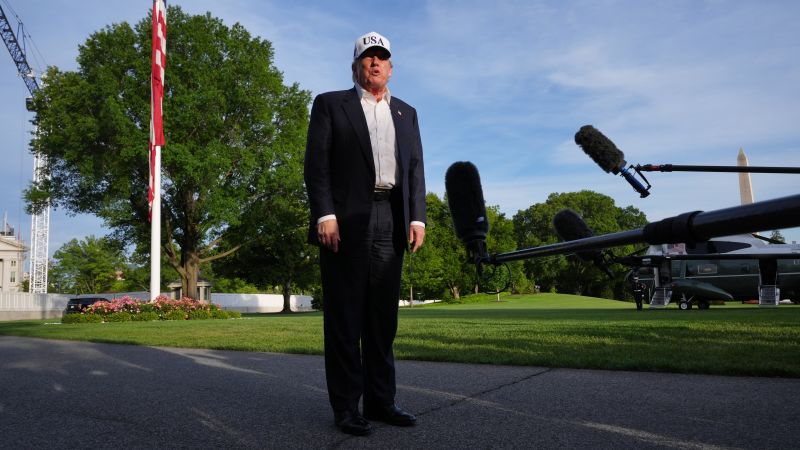
US and Nigerian Forces Eliminate Key ISIS Leader in Joint Operation
US and Nigerian forces kill senior – On Friday, U.S. and Nigerian military teams successfully eliminated a high-ranking ISIS commander, a move that President Donald Trump hailed as a significant blow to the terrorist organization’s global influence. The operation, according to Trump’s statement on Truth Social, marked a “dramatic reduction” in the group’s ability to carry out attacks. He described the mission as a “highly coordinated effort” involving American and Nigerian forces, emphasizing their “precision” and “strategic execution” in targeting one of the most active threats in Africa.
The Target: Abu-Bilal al-Minuki
Identified as Abu-Bilal al-Minuki, the slain commander was reported to be the second-in-command of ISIS, operating under the alias Abu-Mainok. The U.S. Office of Foreign Assets Control (OFAC) confirmed his birth in 1982 in Borno, a northeastern Nigerian state bordered by Cameroon, Chad, and Niger. This region has long been a hub for extremist activity, with al-Minuki reportedly leading operations that targeted Christian communities and coordinated attacks across the Lake Chad Basin.
“Tonight, at my direction, brave American forces and the Armed Forces of Nigeria flawlessly executed a meticulously planned and very complex mission to eliminate the most active terrorist in the world from the battlefield,” Trump stated in a Truth Social post. “He will no longer terrorize the people of Africa, or help plan operations to target Americans.”
Trump’s remarks underscored the strategic importance of the operation, framing it as a victory in the fight against radical Islamism. He highlighted al-Minuki’s belief that he could “hide in Africa” but failed to anticipate the U.S.-Nigerian intelligence network. “We had sources who kept us informed on what he was doing,” the president added, crediting the partnership for the mission’s success. The Nigerian government also recognized the operation, with officials acknowledging the “daring joint effort” that disrupted ISIS’s operations in the region.
Defending the Operation: Defense Secretary Pete Hegseth
Defense Secretary Pete Hegseth provided further context, stating that the U.S. had been actively tracking al-Minuki for months. “We killed him—and his entire posse,” he said, describing the operation as a demonstration of American military prowess and the value of alliances. Hegseth emphasized the “exceptional lethality, patience, and skill” of U.S. forces, which were “amplified” by Nigerian partners in combating shared threats. The operation reportedly struck al-Minuki’s compound in the Lake Chad Basin, a critical area for ISIS’s expansion in Africa.
“Operations like last night’s demonstrate the exceptional lethality, patience and skill of U.S. forces, amplified alongside willing and capable partners, to address shared threats,” Hegseth added.
The Nigerian State House confirmed the operation in a statement, praising the collaboration between the two nations. “Early assessments confirm the elimination of the wanted IS senior leader, Abu-Bilal Al-Manuki, also known as Abu-Mainok, along with several of his lieutenants,” the office said, highlighting the “heavy blow” dealt to ISIS’s ranks. Nigerian President Bola Ahmed Tinubu expressed gratitude to Trump, stating on social media that the partnership had “advanced our shared security objectives” and “strengthened the fight against terrorism in the region.”
Trump’s Track Record in Targeting ISIS in Nigeria
This incident is not the first time Trump has ordered strikes against ISIS in Nigeria. In December, he announced a “powerful and deadly strike” in northwestern Nigeria, claiming it had targeted militants responsible for killing “innocent Christians.” A month earlier, he had suggested military action following reports of a “mass slaughter” of Christians by Islamist extremists. These actions reflect a consistent strategy of using U.S. military power to counter radical groups, even as critics argue that the Nigerian government is already engaged in significant efforts to combat the threat.
The Nigerian government, however, has occasionally challenged Trump’s claims. During the December strike, officials noted that the country had been managing ISIS threats independently for years, with some expressing skepticism about the necessity of U.S. involvement. “We are not doing enough to protect Christians from violence,” one spokesperson stated, questioning Trump’s suggestion of an external military intervention. Despite this, the U.S. and Nigeria have maintained a collaborative relationship, with joint operations becoming a staple of their counterterrorism efforts.
Religious and Ethnic Dimensions of the Conflict
Nigeria, the continent’s most populous nation, is home to approximately 237.5 million people, with Christians and Muslims forming the two dominant religious groups. The conflict in the Lake Chad Basin has primarily involved Muslim extremists targeting Christian communities, but the situation is more complex. Experts note that both groups have suffered attacks, often attributed to radical factions within the country. This dynamic is compounded by communal and ethnic tensions, as well as disputes over land and water resources between farmers and herders.
“The reality on the ground is nuanced,” said one analyst. “While ISIS has been a major force, the conflict also reflects deeper societal divisions.” The attack on al-Minuki’s compound, located in a region with a mix of ethnic and religious populations, highlights the multifaceted nature of the violence. Despite the U.S. and Nigerian forces’ efforts, the struggle continues to be influenced by local factors, including political instability and economic hardship.
Implications for Regional Security
The elimination of al-Minuki is seen as a pivotal moment in the fight against ISIS in Africa. By targeting a top leader, the operation may weaken the group’s operational capabilities and disrupt its ability to plan attacks on both Nigerian and international targets. However, analysts caution that such victories are only part of a broader, ongoing challenge. The Lake Chad Basin remains a focal point for extremist activity, with ISIS and related groups continuing to exploit the region’s instability.
“While this strike is a major achievement, the threat persists,” remarked a security expert. “ISIS’s network is resilient, and the loss of one leader may lead to the emergence of others.” The collaboration between the U.S. and Nigeria has been a key component of this strategy, with both nations investing resources to counter the spread of radical Islamism. However, the long-term effectiveness of these efforts depends on sustained coordination and local engagement, which remains a critical factor in the region’s security landscape.
As the story has been updated to reflect new developments, the joint operation underscores the evolving nature of the conflict in Nigeria. While the immediate impact of al-Minuki’s death is clear, the broader implications for the region’s stability and the future of counterterrorism efforts will be closely watched. The cooperation between the U.S. and Nigeria continues to be a vital element in the fight against extremist groups, even as the complexities of the conflict deepen.
CNN’s Kevin Liptak, Kara Fox, and Nimi Princewell contributed to this report.
