
How discarded chewing gum helped convict a serial rapist of two cold case murders
How Discarded Chewing Gum Helped Convict a Serial Rapist in Two Cold Case Murders
How discarded chewing gum helped convict – In a twist that bridged decades of unsolved crime, a seemingly mundane act of spitting gum became the pivotal clue that led to the conviction of Mitchell Gaff in the brutal murders of two women in Washington state. The case, which had lingered in the shadows of history for over 40 years, was finally solved when DNA evidence extracted from a discarded piece of gum provided the missing link between the victims and their killer.
The Gum Incident Sparks a Breakthrough
Susan Logothetti, a detective with the Everett Police Department, remembered the moment vividly. In January 2024, she and two colleagues visited the modest yellow house in Everett, where Gaff, then 68, was living. Dressed in T-shirts and distributing flyers for a chewing gum brand, the team set up a casual encounter. Gaff, who was wearing pajamas, eagerly accepted the offer to sample the gum, enthusiastically chewing each stick as they presented it. The scene was unassuming, but it would soon reveal a critical piece of evidence.
“I recall watching him spit the first piece of gum into the ramekin and noticing the saliva. It was very hard for me to contain my excitement,” Logothetti recounted to CNN. This seemingly spontaneous act inadvertently provided the DNA needed to connect Gaff to the 1984 rape and murder case. The gum, which had been discarded during the encounter, was later analyzed and matched to biological material found on the victims, according to an affidavit of probable cause filed in March 2024.
A Conviction After Four Decades of Silence
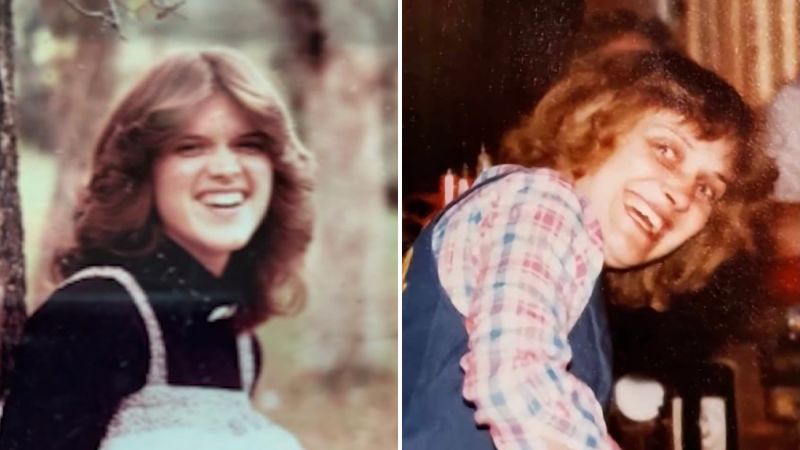
Gaff’s admission of guilt, made on April 16, confirmed his role in the violent deaths of Judy Weaver and Susan Vesey. The two women, both mothers, were killed in separate attacks in 1980 and 1984, initially believed to be unrelated. Despite identifying suspects, investigators were unable to secure convictions until the DNA from the gum offered conclusive proof. A judge recently sentenced Gaff to a minimum of 50 years and a maximum of life in prison, marking the end of a long and harrowing chapter for the families involved.
Gaff’s confession detailed his methodical approach to the crimes. He described how he targeted Vesey, a 21-year-old mother of two, by “trying random doors and finding her door unlocked.” He bound her, beat her, raped her, and strangled her before setting her bedroom ablaze to erase evidence. Years later, he attacked Weaver, a 42-year-old mother, in her home, wrapping cords around her neck and igniting the bedspread to cover his tracks. “Ms. Weaver died because of my actions,” he stated, acknowledging the impact of his choices.
The Evolution of DNA Technology and Cold Case Solving
When the murders occurred in the late 1970s and early 1980s, DNA profiling was not yet a reliable tool for forensic investigation. The discovery of the gum’s DNA came decades later, after a series of technological advancements transformed the field. Law enforcement, inspired by the potential of DNA analysis, revisited the Weaver case in 2020, uncovering a new lead that had previously been overlooked.
At the time of Weaver’s murder, the police had the foresight to request DNA testing from the lab, a decision that proved instrumental. They submitted vaginal swabs just hours after her death, a step that would eventually lead to the identification of Gaff. The case file, which Logothetti inherited from her predecessors, was initially filled with speculative theories, including allegations of money laundering and cocaine use. Weaver’s boyfriend, the primary suspect, died in 1994, but the new DNA evidence resurrected the investigation, connecting the dots between the two cases.
Modern Forensics and the Power of Innovation
The breakthroughs in DNA technology, particularly the development of software like STRmix, have revolutionized cold case solving. Lisa Collins, a forensic scientist with the Washington State Patrol, emphasized how these tools allow investigators to work with smaller DNA samples, extracting more information than ever before. “We can do more with less,” Collins explained, noting that even a single binding from Weaver’s body contained enough DNA to identify the killer after subtracting her own and her boyfriend’s profiles.
Once the third DNA profile was isolated, it was input into the Combined DNA Index System (CODIS), a national database of convicted offender profiles. The match was definitive, confirming Gaff as the perpetrator of both crimes. This process underscored the importance of modern genetic genealogy and advanced software in piecing together long-forgotten evidence. For families who had endured years of uncertainty, the conviction brought a sense of closure and justice long delayed.
Logothetti highlighted the role of science in resolving the mystery, stating, “The Weaver and Vesey cases just needed science to catch up.” Her words reflect the broader impact of forensic innovation, which has enabled investigators to revisit past crimes with fresh perspectives and cutting-edge methods. The use of gum as a piece of evidence also symbolizes how everyday objects can become crucial in solving some of the most complex cases.
Reflections on Justice and the Role of Collaboration
Gaff’s case exemplifies the power of collaboration between detectives and forensic scientists. While the initial investigation had stalled, the persistence of the police and the ingenuity of modern DNA analysis rekindled hope for resolution. Heather Wolfenbarger, Gaff’s defense attorney, declined to comment on the case, leaving the focus on the evidence that sealed his fate.
For the victims’ families, the conviction was not just a legal victory but also a healing process. The identification of Gaff allowed them to move beyond the lingering questions that had haunted them for decades. Additionally, the case brought a sense of relief to a woman who had been attacked by Gaff before the murders, though she survived the assault.
As the story of the gum and the two cold cases unfolds, it serves as a testament to the enduring value of forensic science. The journey from a casual taste test to a life sentence highlights how even the smallest clues, when combined with technological progress, can unravel the most elusive mysteries. For detectives like Logothetti, the case stands as a reminder of the importance of perseverance and the transformative impact of scientific discovery in the pursuit of justice.
In the end, the cold case that once seemed impossible to solve was brought to light through an unexpected act of spitting. What began as a routine promotion for a chewing gum brand became a critical moment in criminal history, proving that the right evidence, at the right time, can change the course of a life and bring closure to a family’s pain.
