
Leading challenger to UK Prime Minister Keir Starmer quits government
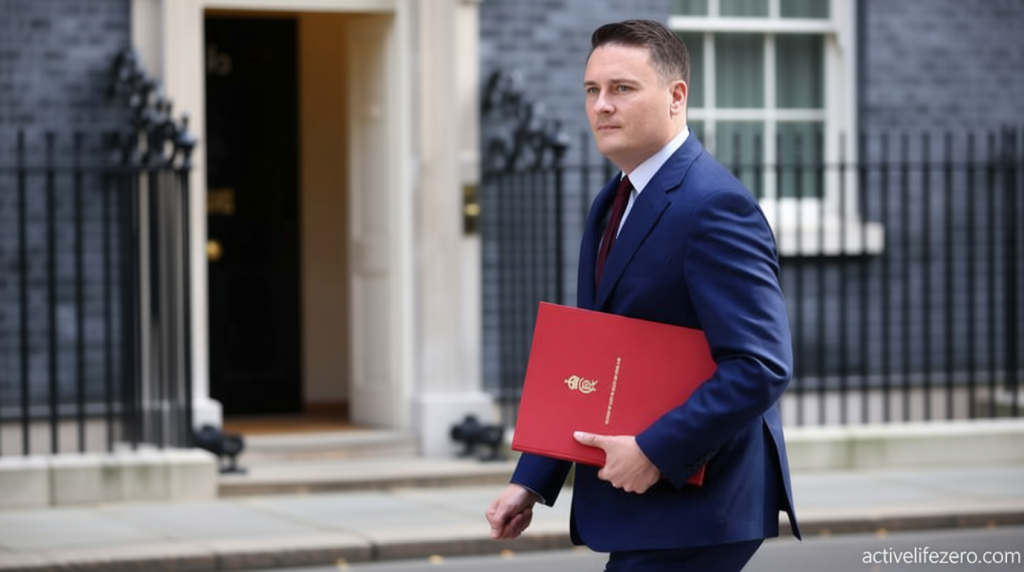
Leading Challenger to UK Prime Minister Keir Starmer Quits Government
Leading challenger to UK Prime Minister – Wes Streeting, the United Kingdom’s health secretary, has formally stepped down from his post, declaring Thursday that he no longer trusts Prime Minister Keir Starmer’s leadership. In a statement, Streeting argued that staying in the government would be “dishonourable and unprincipled” given his doubts about Starmer’s direction. His resignation marks a pivotal moment in the Labour Party, as it intensifies speculation about a potential leadership contest within the ruling party. While Streeting did not explicitly announce his bid to challenge Starmer, he has signaled his intent to act as a key figure in the ongoing political upheaval.
Internal Party Tensions Escalate
Streeting’s decision follows a wave of discontent among Labour lawmakers after recent local and national elections. The party suffered significant setbacks, with results in England, Scotland, and Wales prompting a rift in its ranks. Over 90 Labour MPs have since publicly demanded Starmer’s removal, citing a lack of clarity and unity. This internal revolt has created a vacuum of leadership, with Streeting becoming the first minister in Starmer’s government to resign since the crisis began.
In his letter to Starmer, Streeting emphasized that the recent elections have “placed nationalists in power across the nation,” a trend he believes risks destabilizing the United Kingdom. He also highlighted concerns about the party’s inability to articulate a cohesive vision, stating that progressive voters are “losing faith” in Labour’s ability to represent their values. “We need vision, but we have a vacuum; we need direction, but we face drift,” he wrote, underscoring his belief in the urgency of leadership change.
NHS Reforms and Mixed Public Reception
Streeting’s tenure as health secretary has been marked by efforts to modernize the National Health Service (NHS). Despite challenges, his administration reported a notable decline in waiting lists, with a drop of 110,000 in March—the largest monthly reduction since 2008, excluding the pandemic era. The data, released on the same day as his resignation, suggests progress in addressing long-standing issues within the healthcare system. Streeting praised the government’s trajectory, claiming it is “on track to achieve the fastest improvement in NHS waiting times in history.”
However, his departure has sparked debate about whether his efforts were sufficient to counter the growing unrest within the party. While some view his resignation as a catalyst for a leadership race, others believe it may not immediately trigger a contest. To initiate a challenge, Streeting would need backing from at least one-fifth of Labour MPs, currently 81 lawmakers. His next move remains unclear, but the timing of his exit—coinciding with positive NHS metrics—has drawn attention to the potential for a strategic shift in the party’s priorities.
Starmer’s Resilience and Political Challenges
Prime Minister Keir Starmer has maintained his stance, insisting that leadership change would lead to a return of the “chaos” experienced under the previous Conservative government. In a speech on Monday, he defended his position, pointing to the party’s landslide victory in 2024 as evidence of public support. Starmer’s allies argue that his government has managed to stabilize the nation, even as challenges persist.
Yet, the resignations of key figures like Streeting and Angela Rayner have cast doubt on Starmer’s grip on the Labour leadership. Rayner, the former deputy prime minister, recently resolved a dispute over unpaid property taxes, which had caused her to step down in September. Although neither Streeting nor Rayner has formally launched a leadership bid, both are seen as viable contenders for the top role. Streeting, representing a more centrist faction of Labour, contrasts with Rayner, who has historically aligned with the party’s left wing.
Streeting’s Background and Ideological Stance
Streeting’s political career has been defined by his ability to bridge ideological divides. Before entering national politics, he spent years working in grassroots roles, including as a local councilor and president of the National Union of Students. His early exposure to public housing estates in East London has shaped his focus on social equity and institutional reform.
His admiration for Tony Blair’s leadership has also influenced his approach. Despite a brief departure from Labour in 2003 over Blair’s support for the Iraq War, Streeting has since embraced what he calls “Blairism”—a blend of pragmatism and progressive ideals. This philosophy underpinned his efforts to revamp the NHS, aiming to balance efficiency with accessibility. However, critics argue that his ambitions extend beyond reform, suggesting he is driven by a desire for power rather than principle.
Uncertain Future and Political Alliances
Streeting’s potential challenge to Starmer may gain momentum from his recent achievements in the NHS. His allies highlight his skill in communicating complex policies to the public, a trait that has bolstered the government’s image. Yet, his political connections, particularly with Peter Mandelson, could complicate his bid. Mandelson, a seasoned Labour leader, was ousted as ambassador to Washington due to his ties to Jeffrey Epstein, a convicted sex offender. Streeting’s friendship with Mandelson may be seen as both a strength and a potential liability in the leadership race.
As the Labour Party grapples with its future, the resignations of Streeting and Rayner have intensified the debate over Starmer’s leadership. With the next general election set for 2029, the timing of these exits has raised questions about the party’s ability to unify. While Starmer remains defiant, the pressure to adapt is mounting, and the leadership race appears to be gathering pace. The coming weeks will be crucial in determining whether Streeting can capitalize on his position as a reformer or if his departure will simply signal the beginning of broader instability within Labour.
Broader Implications for the Labour Party
Streeting’s resignation reflects a broader dissatisfaction with Starmer’s leadership among Labour members. The party’s recent electoral losses have exposed vulnerabilities, particularly in regions where nationalist movements have gained traction. For Streeting, the issue is not just about policy but also about the party’s identity, which he claims has become muddled under Starmer’s tenure.
His departure has also sparked discussions about the future of the Labour Party’s internal dynamics. Streeting, who hails from the right wing of the party, represents a faction that seeks to modernize Labour’s image while maintaining its core values. This positioning could appeal to voters disillusioned with the party’s traditional left-wing approach, potentially reshaping its electoral strategy. However, the challenge remains to balance reform with the party’s commitment to progressive ideals, a task that Starmer and his allies claim they have managed thus far.
As the political landscape shifts, the Labour Party stands at a crossroads. Streeting’s exit, coupled with Rayner’s recent resolution of personal scandals, has added layers of complexity to the leadership race. While Starmer continues to assert his leadership, the support he receives from within the party may be tested by the growing momentum of his rivals. The outcome of this contest could determine not only the future of Labour but also the trajectory of the UK’s political direction in the years to come.
Conclusion: A Political Crossroads
Streeting’s resignation has sent shockwaves through the Labour Party, highlighting the tension between reform and tradition. His critique of Starmer’s leadership, rooted in concerns about the party’s identity and electoral strategy, underscores a broader ideological struggle. As the data on NHS improvements serves as a backdrop to his departure, the question remains whether his exit will lead to a leadership contest or signal a more sustained challenge to Starmer’s vision.
With the next general election looming, the Labour Party faces a critical moment. The resignations of key figures like Streeting and Rayner have not only tested Starmer’s resilience but also opened the door for new leadership possibilities. Whether this will culminate in a contest or a realignment within the party depends on the next steps of those challenging Starmer—and the public’s reaction to their arguments. For now, the political landscape remains in flux, with the potential for significant change on the horizon.
