
Scientists find clues that a new tectonic plate boundary is forming
Scientists find clues that a new tectonic plate boundary is forming
Africa’s Potential Geological Transformation
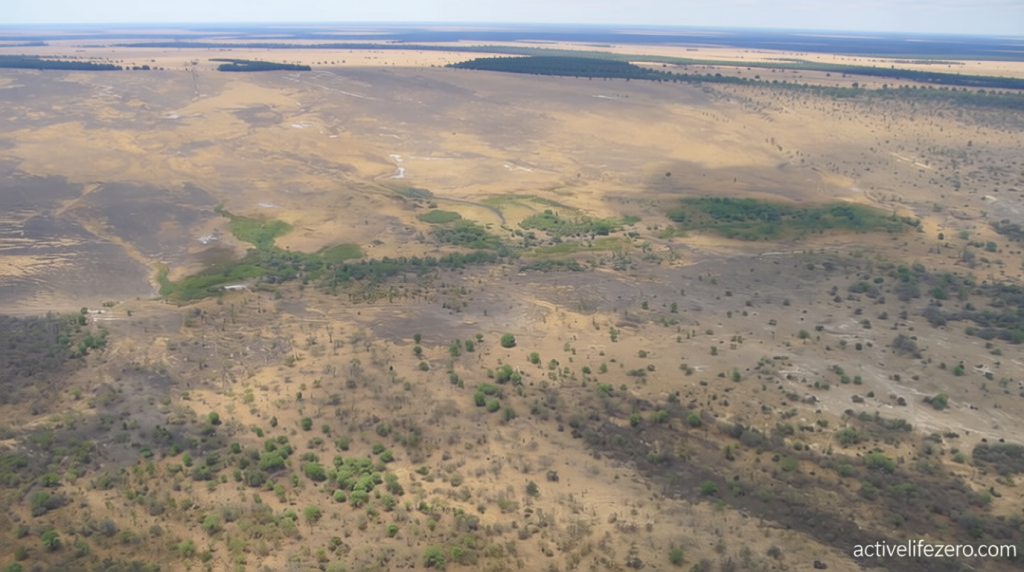
Scientists find clues that a new tectonic – Sub-Saharan Africa may soon experience a dramatic shift in its geological structure, with experts suggesting that the initial phases of a division between tectonic plates are already underway. This potential split could manifest along the Kafue Rift, a segment of a broader rift system stretching over 1,500 miles (2,500 kilometers) from Tanzania to Namibia. While such rifts are common, their activity is often subtle, and the Kafue Rift was previously considered dormant. However, recent observations have raised questions about its reactivation, hinting at the possibility of a new continental rift forming in the region.
Rifts and Their Hidden Activity
Rifts are fractures in the Earth’s crust that can disrupt the surface, leading to land subsidence and seismic activity. Though numerous rift systems exist globally, most are inactive or dead, with only rare instances of renewed movement. Geologists have long regarded the Kafue Rift as one such example of a non-functional system. Yet, emerging data has challenged this view, indicating that the rift may have recently become active. Researchers are now closely examining whether this region is transitioning into a new tectonic boundary, which could eventually carve a new sea into the continent.
Previous investigations into the Kafue Rift have compiled a range of indicators. These include faint seismic events undetectable to the human senses, elevated temperatures beneath the surface, and minute elevation changes captured through satellite imaging. Such findings have led to speculation that the area is once again tectonically active. A new study, released this week in the journal Frontiers in Earth Science, adds a significant layer to this evidence, offering geochemical data that could confirm the rift’s evolving role in Earth’s dynamics.
Geochemical Insights and Mantle Connections
Rūta Karolytė, a researcher who led the study while affiliated with the University of Oxford in England, emphasized the importance of their findings. “We have the first geochemical data from this area,” she stated, “which is a distinct type of evidence that solidifies the notion of active rift processes.” The study focused on analyzing helium isotopes in hot springs and geothermal wells in Zambia, located above the suspected rift. By comparing the ratios of helium-3 and helium-4, the team aimed to detect signs of mantle material rising to the surface.
“We found more helium-3 than you’d normally find in the crust, which is generally a signal of mantle fluids coming up into the water,” Karolytė added.
The research team’s analysis revealed higher concentrations of helium-3 in samples from the Kafue Rift area, suggesting a link to the Earth’s mantle. This discovery is significant because the mantle, the thick layer between the crust and core, is typically associated with deep geological activity. In contrast, helium-4 is more commonly found in the crust, making the increased helium-3 levels a potential marker of ongoing tectonic movement. While the results are preliminary—based on samples from just six sites within a limited region—the team also tested two hot springs located about 60 miles (95 kilometers) away from the rift. These distant samples did not show a similar helium-3 anomaly, reinforcing the idea that the rift is the source of the unusual activity.
Implications for Plate Boundary Formation
Estella Atekwana, a professor of Earth and planetary sciences at the University of California, Davis, highlighted the importance of studying such early-stage rifts. “How does a new plate boundary begin? Mature boundaries are easy to identify, but the earliest stages are often difficult to detect,” she explained. “If the Kafue Rift is part of a developing plate boundary, it provides a rare opportunity to observe the formation of these boundaries before they are influenced by later volcanic or seismic events.”
The formation of a new tectonic boundary would mark a pivotal moment in Earth’s history. Tectonic plates, massive slabs of rock spanning hundreds to thousands of miles, have been slowly shifting since the planet’s early days. Their movement, akin to fingernail growth, shapes the Earth’s surface through processes like earthquakes, mountain building, and volcanic eruptions. While most plate boundaries are submerged in the ocean, they can also form on land, as seen in the case of the Kafue Rift. These boundaries are critical zones where most geological activity occurs, making the study of their development essential for understanding Earth’s dynamic evolution.
Understanding Tectonic Activity Across Time
Approximately 200 million years ago, the separation of tectonic plates led to the fragmentation of the supercontinent Pangea, creating the continents we recognize today. This process, driven by the slow movement of plates, continues to shape the planet. The Kafue Rift’s current activity could be a modern echo of this ancient transformation. If the rift becomes a full-fledged tectonic boundary, it might eventually result in the creation of a new body of water, similar to how the Atlantic Ocean formed from the splitting of the African and South American plates.
Karolytė, who is now a principal product scientist at Snowfox Discovery, a UK-based company specializing in natural hydrogen exploration, explained the methodology behind their research. “There’s hot water bubbling up to the surface, and we sampled the gas that’s coming from that,” she said. This process allowed the team to measure the helium isotopes, which are often used as indicators of mantle influence. The presence of helium-3 in higher quantities than expected in the rift area suggests that the Earth’s mantle is interacting with the crust, a sign that the region could be entering a new phase of tectonic activity.
The study’s findings are not definitive but offer compelling evidence. While the six samples from the rift zone suggest mantle involvement, the lack of similar patterns in distant sites indicates that the activity is localized. This distinction is crucial, as it helps differentiate between isolated geological phenomena and the broader development of a new plate boundary. Over time, as more data is collected, scientists may gain a clearer picture of the rift’s potential to evolve into a significant tectonic feature. Such a development would provide unprecedented insights into how plate boundaries originate, enriching our understanding of the Earth’s ever-changing surface.
Future Prospects and Ongoing Research
As the Kafue Rift continues to show signs of activity, researchers are keen to monitor its progress. The movement of tectonic plates is a slow but powerful force, capable of reshaping landscapes over millions of years. While the split of Africa may take tens of thousands of years to materialize, the early indicators are promising. The combination of seismic data, thermal anomalies, and geochemical evidence creates a compelling case for the rift’s reactivation.
Further studies will be necessary to confirm the long-term stability of the Kafue Rift as a plate boundary. The current evidence suggests that the rift could be the first stage of a larger geological event. If the findings hold, the Kafue Rift might become a model for understanding how new tectonic boundaries emerge, offering a window into the Earth’s past and future. This research not only enhances our knowledge of plate tectonics but also underscores the planet’s capacity for transformation, even in regions once thought to be geologically stable.
As the scientific community delves deeper into the Kafue Rift’s activity, the implications extend beyond Africa. The study could contribute to broader discussions about the mechanisms of continental rifting and the formation of new oceans. By examining the early stages of plate boundary development, researchers may unlock new perspectives on the Earth’s geological history and the processes that continue to shape it today.
