
Southern California mayor resigns, will plead guilty to acting as agent for Chinese government
Southern California mayor resigns, will plead guilty to acting as agent for Chinese government
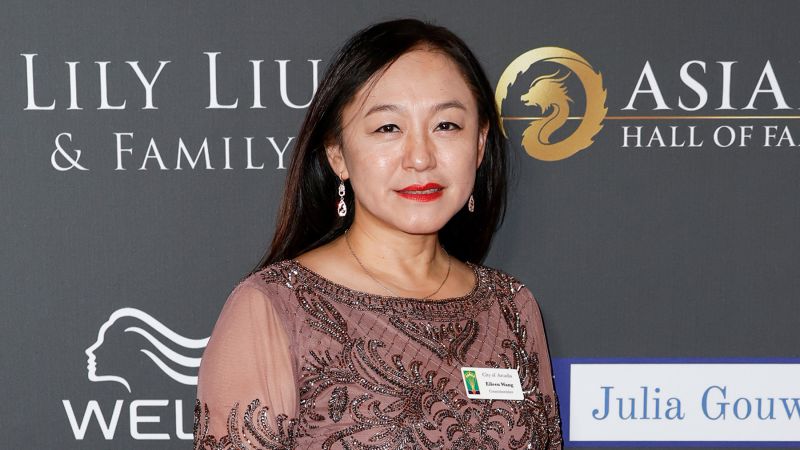
Southern California mayor resigns will plead – Officials announced Monday that Eileen Wang, the mayor of Arcadia, has resigned from her city position and will formally accept a guilty plea for serving as an illegal agent of the Chinese government. The decision comes after she was charged in April with one count of acting as an unauthorized representative of a foreign government in the United States. The allegations state that she disseminated content supportive of Beijing without notifying the U.S. authorities, as mandated by law.
Wang, a 58-year-old civic leader, was elected in November 2022 to a five-person city council, where the mayor is chosen through a rotating system. Her attorneys, Jason Liang and Brian Sun, highlighted in a statement that she acknowledges the gravity of the charge and takes responsibility for her “past personal mistakes.” The pair emphasized her commitment to the Arcadia community, stating, “Her love and devotion for the Arcadia community have not changed and did not waver.”
“We want to be clear: this investigation concerns individual conduct, and the charges are for conduct that ceased after Ms. Wang was sworn into office in December 2022,” said Dominic Lazzaretto, the city’s manager, in a news release.
According to her plea agreement, Wang and her former fiancé, Yaoning “Mike” Sun, worked on behalf of Chinese government officials from late 2020 to 2022. Their efforts were directed at advancing the interests of the People’s Republic of China by promoting pro-PRC propaganda in the United States. Sun, who had previously pleaded guilty to the same charge in October, is currently serving a four-year sentence. He was also listed as the treasurer for Wang’s 2022 campaign in the city’s official filings.
Wang and Sun operated the news website U.S. News Center, which targeted the Chinese American community. The platform was used to publish content aligned with Chinese officials, as per instructions from government representatives. One notable example occurred in June 2021, when a Chinese official sent Wang a link to a letter to the editor in the Los Angeles Times. The letter, authored by the consul general of the People’s Republic of China in Los Angeles, contested claims of Uyghur persecution, forced labor, and human rights abuses in Xinjiang. It asserted that “There has never been genocide in Xinjiang or forced labor in the region’s cotton fields or any other sector.” Within minutes, Wang shared the link on her news site, amplifying the message without prior disclosure.
Wang’s attorneys noted that she was engaged to Sun at the time of the incident. However, they revealed that the relationship ended in spring 2024. Their statement described the former partner as “the wrong person” who “ultimately led her astray,” while underscoring her continued dedication to public service. The legal proceedings also involve John Chen, another individual who pleaded guilty to acting as a Chinese government agent and received a 20-month prison sentence. Chen’s involvement adds context to the broader network of officials accused of supporting Beijing’s narratives through U.S. platforms.
The city of Arcadia, home to approximately 53,000 residents, is situated about 13 miles northeast of Los Angeles. Its population is predominantly Asian, with a significant Chinese community. The case has sparked discussions about the influence of foreign entities on local governance and the balance between individual expression and national security obligations. City manager Lazzaretto clarified that no city funds or staff were implicated in the alleged activities, focusing the narrative on the personal actions of the mayor.
The charges against Wang are part of a larger effort by federal authorities to address cases of foreign influence in U.S. politics. The maximum sentence for her conviction is 10 years in federal prison, reflecting the severity of the offense. Her attorneys described the plea as a step toward accountability, stating, “She apologizes and is sorry for the mistakes she has made in her personal life.” This acknowledgment comes as the city prepares for the next phase of the legal process, with Wang expected to appear in federal court on Monday afternoon to formally enter her plea.
International responses to China’s policies in Xinjiang have been growing stronger, with the U.S. and several other countries labeling the practices as genocide and crimes against humanity. Wang’s actions, particularly her rapid dissemination of pro-PRC content, have been seen as a direct contribution to this narrative. The incident underscores how personal relationships can intersect with professional responsibilities, raising questions about transparency and ethical standards in public office.
While the plea agreement outlines the scope of Wang’s involvement, it also highlights the broader implications of her actions. The U.S. News Center, which she co-managed, became a conduit for Chinese propaganda, blending news reporting with political messaging. This dual role has drawn scrutiny over the potential for media platforms to serve as tools for foreign influence. The case has prompted conversations about the role of civic leaders in shaping public opinion and the need for clearer guidelines on disclosing foreign affiliations.
City officials have expressed confidence in the legal process, emphasizing that the focus remains on individual conduct rather than systemic issues. Lazzaretto’s statement serves as a reassurance that Arcadia’s operations are unaffected by the charges. However, the situation has also highlighted the challenges of maintaining impartiality in a diverse city with strong cultural ties to China. The mayor’s resignation and guilty plea mark a significant moment in the city’s history, symbolizing the intersection of personal beliefs and political accountability.
As the legal proceedings unfold, the case continues to reflect broader tensions between the United States and China over issues of human rights and political influence. Wang’s actions, though personal in nature, have become emblematic of the growing concern about foreign agents shaping domestic discourse. The outcome of her plea may set a precedent for how similar cases are handled in the future, influencing both legal and political landscapes in Southern California.
