
Parents released from Arizona DHS facility reunite with their teen son dying of cancer
Parents released from Arizona DHS facility reunite with their teen son dying of cancer
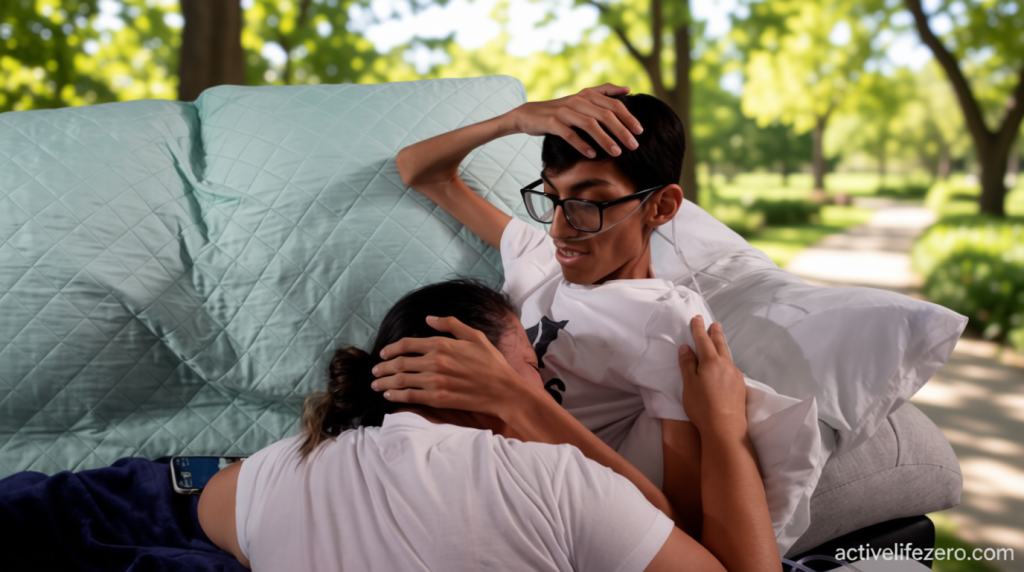
Parents released from Arizona DHS facility – After a long battle with the Department of Homeland Security, the parents of an 18-year-old U.S. citizen with terminal colon cancer were finally allowed to reunite with their son in Durango, Mexico. The couple, Isidoro González Avilés and Norma Anabel Ramírez Amaya, spent several weeks in detention before being released on Thursday, according to reports from CNN affiliate WLS. Their emotional reunion occurred Saturday evening, just one day after they returned to their homeland, where their son Kevin González had been waiting to see them once more.
The Family’s Struggle
Kevin González, who was born in the United States but grew up in Mexico, contracted the illness during a visit to his family in Chicago over the holiday season. He was diagnosed with stage 4 colon cancer, a condition that has left him with limited time to spend with his loved ones. The emotional weight of his situation became apparent when he spoke to CNN shortly after reuniting with his parents. “What I want to say to people is thank you for helping my family to have the choice,” the teenager said, his face pale and worn from the ordeal. His words carried a deep sense of gratitude, as if the reunion itself was a miracle.
Avilés and Amaya, both Mexican nationals, had previously been deported from the U.S. after entering the country without proper documentation. Their history with immigration authorities dates back years, as the family’s legal status has been a constant source of uncertainty. In a statement to CNN on Friday, the Department of Homeland Security confirmed that the couple had been arrested near Douglas, Arizona, on April 14. They were detained for weeks before being sent back to Mexico, where they could finally be with their son.
A Desperate Bid for Reunion
Following Kevin’s diagnosis, the couple made a bold attempt to reenter the U.S. in April, hoping to be close to their son during his final months. However, their efforts were met with resistance. The DHS stated that the couple had applied for B1/B2 visas – temporary nonimmigrant permits – but their requests were denied due to their prior unlawful entries. The decision to deport them came just days after they were apprehended, leaving them separated from Kevin once again.
Kevin’s father, Isidoro Avilés, shared his family’s plight in an interview before the reunion. “We went through a lot, and in the end, all I want is to be with him,” he said, describing the couple’s experience in detention. He recounted how they were treated as if they were criminals, with some even chained at their hands and feet during court appearances. “They detained us at the border, and we were denied humanitarian visas to see our son,” Avilés added, emphasizing the heartbreak of being unable to care for his child in his final days.
Avilés and Amaya had faced multiple legal charges in the past, according to DHS. Their son’s father was arrested and charged with various offenses, ranging from minor infractions to more serious crimes, and was deported in 2011. The details of those charges remain unclear, but the couple’s repeated separations from Kevin have highlighted the emotional toll of immigration policies on families.
Emotional Reunion and Hope
When Avilés and Amaya finally arrived in Durango, they were overcome with emotion. The couple described the moment they embraced Kevin as one of profound relief and joy. “These tears are from emotion, from seeing him again, from touching him again, from telling him how much I love him,” said Norma Amaya, holding her son tightly. The family’s reunion was not only a personal triumph but also a symbol of resilience in the face of bureaucratic challenges.
Kevin, whose condition has been deteriorating rapidly, expressed confidence in his father’s words. “I have a lot of faith in him, and I know he is going to heal from this and from many more things,” Avilés said, reflecting on his son’s strength. The teenager, despite his frailty, showed a sense of optimism that has become a source of hope for his family. He also shared a touching gesture, displaying tattoos of his name and that of Saint Jude, the patron saint of lost causes and desperate situations.
Representative Delia Ramirez, who represents the district where Kevin is receiving treatment in Chicago, voiced her support for the family. In a statement on Thursday, she criticized the deportation process, stating that denying visas to Kevin’s family did not protect communities. “Putting families through the pain, stress, and fear of separation is not making our loved ones safer,” she argued. Ramirez also highlighted the inhumane conditions of for-profit detention facilities, suggesting that prolonged separation is not an effective way to secure the nation.
A Final Mother’s Day
As the family celebrated their time together in Mexico, Kevin shared his plans for Mother’s Day. “I will celebrate Mother’s Day Sunday by giving my mother lots of hugs, over and over,” he said, expressing his desire to cherish every moment with his loved ones. The teenager’s words underscored the importance of family bonds in his final days, even as he faced an uncertain future. For Avilés, the reunion marked a turning point in his son’s journey. “We managed to make my son’s dream come true: to be with him again, to love him, to give him the love we could not give him during these months when he was not with us,” he said, his voice filled with emotion.
Kevin’s condition has been a focal point of the family’s fight for reunification. His mother, Norma Amaya, has been a constant presence in his care, but the separation from her was a source of anguish. The couple’s return to Mexico has allowed them to provide the comfort and support Kevin desperately needs. Despite the challenges of their deportation history, their determination to be with their son has not wavered.
The Broader Impact
Kevin’s story has sparked discussions about the impact of immigration policies on families. His parents’ experience is not unique, as many immigrant families face similar struggles when trying to reunite. The Department of Homeland Security has been under scrutiny for its handling of such cases, with critics arguing that the process is often too rigid and emotionally taxing. Avilés and Amaya’s ordeal has become a poignant example of the human cost of deportation.
As the family spends time together in Durango, the emotional resonance of their reunion has been amplified by the contrast of their past struggles. Kevin’s father’s words, “We went through a lot, and in the end, all I want is to be with him,” encapsulate the heart of their journey. The couple’s return to Mexico has allowed them to be present for their son’s final moments, a gift that was once thought impossible. Their story serves as a reminder of the importance of family unity, even in the face of legal barriers.
Ever Hernandez and CNN’s José Álvarez, Graham Hurley, and Sarah Dewberry contributed to this report, highlighting the collaborative effort to bring the family together. The case of Kevin González has not only brought attention to the personal sacrifices of immigrant families but also to the broader implications of immigration enforcement policies. As the parents continue to care for their son in Mexico, they carry with them the hope that their story will inspire others facing similar challenges.
