
Protein for Muscle Gain: Essential Sources and Amounts
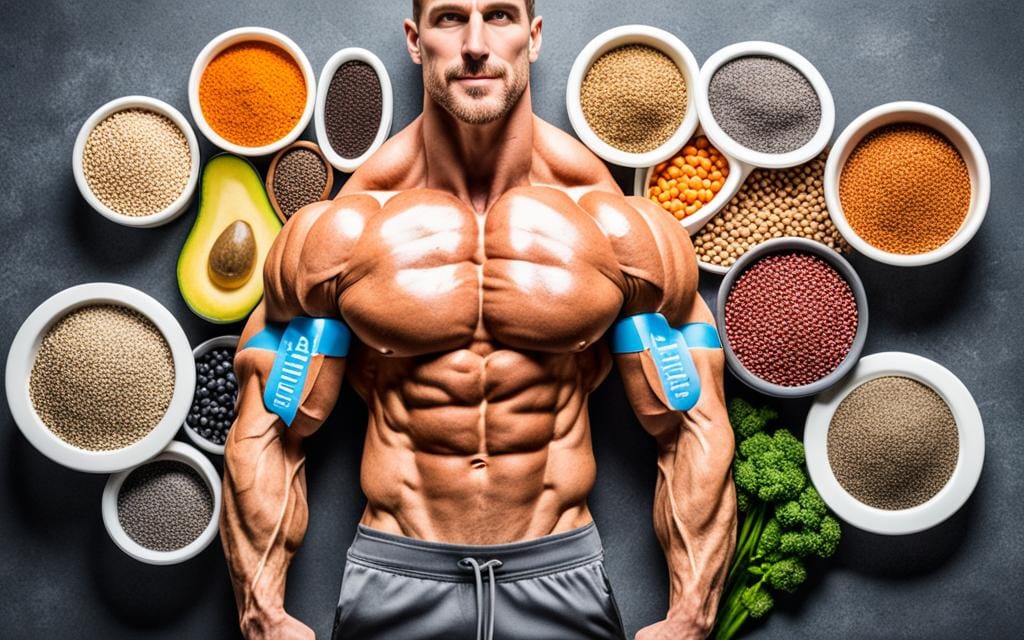
Protein for Muscle Gain – Protein is crucial for athletes, bodybuilders, and those who love fitness. It helps us build lean muscle and keep it strong. This guide will show you the best protein sources, the right amounts for muscle growth, and tips to reach your fitness targets.
Muscles are made of protein, making it vital for their growth. It’s key to choose the best kinds and know how much to eat. You can get protein from animal or plant sources. We’ll share the top choices in each group and advise on adding them to your meals wisely.
We’ll also talk about when and how to eat protein. Plus, we’ll look at how supplements can help. After reading, you should know exactly how to use protein to get stronger and grow more muscle.
The Importance of Protein for Building Muscle
Protein is key when building muscle. It’s the basic material for our muscles so we need it for growth and repair. When we work out, our muscles get tiny tears. Protein steps in to fix and build up these fibers. This makes our muscles grow stronger over time.
A good amount of protein does a lot for our muscles. It gives our bodies the building blocks, amino acids, to make new muscle. It also stops the loss of muscle, keeping what we have. Plus, protein helps our bodies recover after hard exercise, so we’re ready to go again.
Protein is incredibly important for muscle growth. With the right protein amount, our workouts do more for us. It’s crucial to know how protein helps if we want our diet and exercise to work well together.
| Protein’s Role in Muscle Building | Benefits |
|---|---|
| Provides the building blocks for muscle growth and repair | Supports muscle synthesis and prevents muscle breakdown |
| Aids in the recovery process after intense workouts | Enhances the results of strength training and muscle-building activities |
Knowing how important protein is helps us with our fitness and diet plans. If we eat the right amount and types of protein, we can reach our muscle goals. It’s all about working smart with what we eat and how we exercise.
How Much Protein Do You Need for Muscle Growth?
Protein is key in building muscle. The right amount you need depends on your age, how active you are, and your health. Most experts say those who want to increase muscle should eat between 1.6 to 2.2 grams of protein for every kilogram they weigh every day.
Calculating Your Daily Protein Requirements
Figuring out how much protein you need daily for muscle growth involves a few steps. You need to know your weight. Your activity level and muscle goals also matter.
Here’s a simple way to find out how much protein you should eat for muscle growth:
- First, find your weight in kilograms. If you know it in pounds, divide by 2.2 to change to kg.
- Second, multiply your weight in kg by the protein recommendation (1.6 to 2.2 g/kg).
- The answer tells you the ideal amount of protein you should aim to eat daily for muscle growth (in grams).
For instance, if you are 150 lbs (68 kg), you should aim to eat between 109 g and 150 g of protein each day for muscle growth.
But remember, these numbers are just a starting point. Your actual protein needs might differ. Factors like your age and sex come into play. For the best advice, talk to a doctor or a dietitian about how much protein you should eat to hit your muscle goals.
Top Animal-Based Protein Sources for Muscle Building
Animal-based proteins are the top choice for building muscle. They provide complete amino acids and are easily used by our bodies. This helps in muscle growth and repair.
Some top animal-based proteins for muscle building are:
- Lean meats, such as chicken, turkey, and lean beef, provide high-quality, complete protein.
- Include eggs in your diet for all essential amino acids.
- Dairy products, like milk and yogurt, are rich in protein, calcium, and vitamin D.
- Seafood offers a mix of protein, healthy fats, and vital vitamins and minerals.
These sources aren’t just great for muscles. They also boost your health. Adding them to your meals can help you meet your muscle goals.
| Protein Source | Protein Content (per 100g) | Amino Acid Profile |
|---|---|---|
| Chicken Breast | 31g | Complete, high-quality |
| Salmon | 25g | Complete, high-quality |
| Eggs | 13g | Complete, high-quality |
| Greek Yogurt | 10g | Complete, high-quality |
Eat the best animal proteins to gain muscle. This ensures your body gets the proteins it needs for lean muscle.
Plant-Based Protein Sources for Vegetarians and Vegans
Vegetarians and vegans often worry about getting enough protein for their muscles. Yet, the plant world is full of protein-rich foods. These options can help them on their journey to build muscle. Here are some top plant-based proteins to consider.
Combining Plant Proteins for Complete Amino Acid Profile
When you depend on plants for protein, mix it up. This ensures you get all kinds of amino acids. Not all plants have every essential amino acid. But, by eating a variety, you complete the puzzle for muscle growth.
- Legumes like lentils, beans, and peas give you lots of protein and a mix of essential amino acids.
- Nuts and seeds, such as almonds, walnuts, and chia seeds, are full of protein and good fats for muscles.
- Soy products, like tofu, tempeh, and edamame, are top-notch for proteins. They have all essential amino acids.
- Grains that have been around a long time, like quinoa and buckwheat, are packed with protein. They also offer nutrients good for muscle growth.
By mixing and matching these foods, vegans and vegetarians can get all the amino acids they need. This supports their muscle-building work.
Protein for Muscle Gain: Timing and Distribution
Building muscle isn’t just about how much protein you eat. When and how you eat protein also matters. The best times and ways to take in protein are very important for muscle growth.
Distributing your protein intake evenly all day is key. This keeps your body supplied with amino acids. Amino acids help build and repair muscles.
- Consume protein at regular intervals: Eat protein-rich foods or snacks every 3-4 hours. This keeps your body ready to build muscle.
- Time protein around workouts: Eat protein before and after working out. This boosts muscle growth. Aim for 20-30 grams of quality protein.
- Include protein with each meal: Meat, eggs, dairy, or plants should be in every meal. This way, your body always has amino acids for muscle repair.
Focus on when you eat protein to help your muscles grow. By spreading out your protein intake, you can make it work better for you. This supports your muscle goals.

Don’t forget how important it is to time your protein for muscle growth. Use these tips in your diet plan. This ensures your body gets what it needs to get stronger and reach your exercise goals.
Protein Supplements: When and Why You Might Need Them
Whole foods are the best for getting protein. But, protein supplements come in handy. They make sure you get enough protein every day, which can be hard for some. This is great news if you’re always busy or find it hard to eat lots of protein-rich foods. Including protein supplements in your meals helps a lot in your journey to grow and recover your muscles.
Types of Protein Supplements and Their Benefits
When it comes to protein supplements, there are many kinds. Each has something special to offer for your health and fitness. Let’s take a look at what’s out there:
- Whey Protein – Ideal for after you workout, as it helps muscles grow and fix quickly.
- Casein Protein – Slower to digest, it keeps feeding your muscles over time and is good for maintenance or recovery.
- Plant-Based Proteins – Soy, pea, and hemp proteins are perfect for those who eat no animal products. They fulfill all your essential amino acid needs.
- Blended Proteins – A mix of several protein types provides a full set of amino acids. This supports your muscles in various ways.
Your choice of protein supplement depends on what you hope to achieve. For muscle growth and bounce-back, look into whey or blended proteins. If you want an energy boost while keeping your muscles in shape, casein-based products are a good fit.
| Protein Supplement | Key Benefits |
|---|---|
| Whey Protein | Fast-absorbing, complete protein profile, supports muscle growth and recovery |
| Casein Protein | Slow-digesting, provides sustained amino acid release, beneficial for muscle maintenance |
| Plant-Based Proteins | Suitable for vegetarians and vegans, provide a range of essential amino acids |
| Blended Proteins | Combines multiple protein sources for a comprehensive amino acid profile |
Finding the right protein supplement can be key to reaching your muscle goals. Knowing what each type does helps you make the best choice for your diet and exercise plans.
Protein for Muscle Gain: Myths and Misconceptions
Many myths and misconceptions confuse people about building muscle. Let’s talk about some of the most common ones. We’ll see the truth behind them.
Some believe more protein is always better for building muscles. However, too much protein can harm you. It might overload your kidneys and cause other health problems.
Not every protein supplement is made the same. The kind of protein, how your body absorbs it, and what else is in the supplement varies. Be sure to pick the best ones for your needs.
People also think that eating more protein is the only way to grow muscles. But that’s not completely true. Building muscles needs more than just protein. It also requires exercise, enough rest, and the right amount of food.
- Myth: More protein is always better for muscle building
- Myth: All protein supplements are the same
- Myth: Protein intake alone is the sole driver of muscle growth
To have a better muscle building plan, clear these myths. More isn’t always better. Quality protein is key, and you need to balance it with the right exercise and diet.
| Myth | Fact |
|---|---|
| More protein is always better for muscle building | Excessive protein intake can be detrimental to health and does not necessarily result in faster or more significant muscle gains. |
| All protein supplements are the same | The quality, absorption rate, and nutrient composition of protein supplements can vary greatly. It’s important to choose high-quality supplements that meet your specific needs. |
| Protein intake alone is the sole driver of muscle growth | While protein is crucial, other factors such as resistance training, rest, and overall caloric intake also play a crucial role in promoting muscle development. |
Protein for Muscle Gain: Optimizing Your Diet
Protein is vital for growing muscles, yet keeping a balanced diet is crucial. This balanced diet should have enough of carbohydrates and healthy fats. It optimizes your muscle-building chances.
Balancing Macronutrients for Effective Muscle Building
Your muscles get energy from carbohydrates to perform well in workouts. Healthy fats are needed for making hormones. These help in muscle growth and keeping you healthy. Balancing all these macronutrients leads to a diet that’s good for your fitness goals.
Here’s how you can balance your macronutrients to improve muscle growth:
- Aim for a macronutrient ratio of about 40% carbs, 30% protein, and 30% fats.
- Choose complex carbs like whole grains, fruits, and veggies for longer-lasting energy.
- Use healthy fats from foods such as avocados, nuts, seeds, and olive oil to help make hormones. They also improve your overall health.
- Spread your protein intake evenly throughout your day to boost building muscle.
| Macronutrient | Recommended Intake | Benefits for Muscle Building |
|---|---|---|
| Carbohydrates | 40% of total calories | They give energy for workouts, help your body recover, and fill up your glycogen stores again. |
| Protein | 30% of total calories | It’s crucial for making and fixing muscle tissue. |
| Healthy Fats | 30% of total calories | They help in making hormones, making your body more sensitive to insulin, and give you energy. |
With the right macronutrient balance and choosing nutrient-rich, whole foods, you can craft a diet that boosts your muscle growth. This leads to meeting your fitness goals.
Workout Tips for Maximizing Muscle Growth with Protein
To get the most from protein for muscles, mix it with a good exercise plan. This includes targeted resistance training, taking breaks, and consuming protein at the right times. Such a mix can boost muscle growth and strength.
Here are some gym tips to boost your protein’s muscle-building power:
- Focus on Resistance Training: Do exercises like lifting weights, using your body weight, or pulling on resistant bands. These push your muscles to grow and get stronger.
- Time Your Protein Intake: Eat protein-rich foods or supplements just before or after you work out. This feeds your muscles the right stuff so they can repair and grow quickly.
- Allow for Adequate Rest: Make sure you rest enough between your workouts. This is when your muscles repair and get bigger. Let them have that time.
- Vary Your Workout Routine: Keep your exercises fresh. Change up what you do to keep challenging your muscles. This can mean doing new exercises or adjusting the weights you use.
- Stay Hydrated: Drinking water is key. Make sure to keep hydrated before, during, and after you exercise. This helps your muscles recover and grow faster.
Following these tips, along with a protein-rich diet, will really step up your muscle growth. Enjoy the results from your hard work at the gym!
Signs You’re Getting Enough (or Not Enough) Protein
Getting enough protein is key for building and keeping your muscles. It’s important to know if you’re eating the right amount of protein. This way, you can adjust your diet to meet your muscle goals.
Tracking Your Protein Intake for Optimal Results
Listen to what your body tells you about protein. Paying attention to certain signals can show if you’re getting enough protein. Here’s what to watch for:
- Signs of protein deficiency: Feeling tired, slow muscle recovery after exercise, thin hair, and weak nails, and losing weight unintentionally might mean you need more protein.
- Indicators of adequate protein intake: Feeling strong, quick muscle recovery, keeping a steady weight, and good hair and nails shows you’re getting the right amount of protein.
To make sure you’re eating enough protein for muscle growth, keep a food diary. Calculate how much protein you eat every day. A good target is 1.6 to 2.2 grams of protein for each kilogram you weigh. This amount changes based on how active you are and your muscle goals.
By keeping an eye on these signals and adjusting your protein intake as needed, you’ll feed your body what it needs. This is vital for helping your muscles grow and heal.
Conclusion
We’ve learned about the crucial role of protein in keeping our muscles strong. Knowing where to get protein from, like animals and plants, is important. We also found out when and how much protein to eat. This helps us build muscles effectively.
It’s also good that we talked about some myths around protein. Now we can choose our meals wisely. It’s not just about protein, but also other big nutrients. Working out right is also essential for strong muscles.
Moving on, let’s eat many foods high in protein. These can be lean meats, dairy, beans, or options from plants. If we stick to these basics and keep working hard, we’ll get the body we want. And our muscles will grow as much as possible.
