
8 people convicted over shooting at a Texas immigration detention center
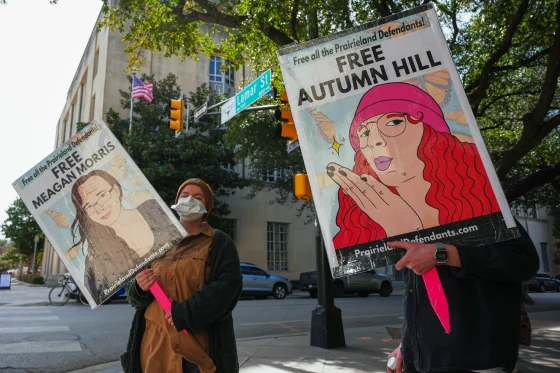
8 people convicted in shooting at Texas immigration detention center
DALLAS — A federal jury on Friday found eight individuals guilty of terrorism-related charges tied to a shooting incident at a Texas immigration facility. The prosecution connected the attack to Antifa, a far-left movement that has drawn scrutiny from the Trump administration. Additional charges, including attempted murder, were also resolved with guilty verdicts, stemming from an ambush outside the Prairieland Detention Center near Dallas last summer that injured a police officer.
Sentencing is scheduled for June, and the trial has drawn attention beyond the Fort Worth courtroom. Legal analysts and advocates described it as a test of how aggressively the government can prosecute demonstrators. Defense attorneys argued that their clients were not Antifa members but had organized a “noise demonstration” to support detained immigrants affected by mass deportation efforts under the Trump era.
FBI Director highlights Antifa ties in charges
FBI Director Kash Patel noted that this case marks the first time a “material support to terrorism” charge has been used against individuals associated with Antifa. The movement, known as “anti-fascists,” is not a single entity but encompasses militant groups opposing neo-Nazis and white supremacists at rallies.
During closing arguments, prosecutor Shawn Smith emphasized that the group’s actions—such as carrying firearms, first aid kits, and body armor—signaled their violent intent. He described their tactics as “antifa methods” and highlighted their focus on “operational security.” “This was not a peaceful protest, this was a direct action,” Smith stated.
“That opposition is something the government wants to squash so a case like this helps them see how far they can go in criminalizing constitutionally protected protests and also helps them intimidate, increase the fear, hoping folks in other cities will think twice over protesting,” said Suzanne Adely, interim president of the National Lawyers Guild.
Defense attorneys countered by asserting there was no premeditated plan for violence on July 4, when the shooting occurred outside the Alvarado facility. They claimed protesters brought firearms for self-defense after guards emerged from the center. Prosecutors, however, argued that defendant Benjamin Song—a former U.S. Marine Corps reservist—yelled “get to the rifles” and initiated the gunfire, striking a police officer who had just arrived.
Alvarado Police Lt. Thomas Gross testified that he encountered a person in all-black attire with a face mask and rifle. He described being shot in the shoulder and neck, though Song’s attorney, Phillip Hayes, suggested the bullet was a ricochet and that Song’s fire was “suppressive.” Hayes contended the case was “overcharged from the beginning.”
Before the trial, several individuals had already pleaded guilty to material support charges, accused of backing Antifa. They face up to 15 years in prison. Critics argue the outcome could redefine how protests are viewed, expanding the government’s power to label dissent as terrorism. The lack of a domestic equivalent to the State Department’s foreign terror list further complicates the legal framework, as U.S. organizations enjoy protections under the First Amendment.
