
Sudan war: Why Hemedti’s legitimacy push in Uganda falters amid RSF atrocities
Sudan War: Why Hemedti’s Legitimacy Push in Uganda Faces Challenges Amid RSF Atrocities
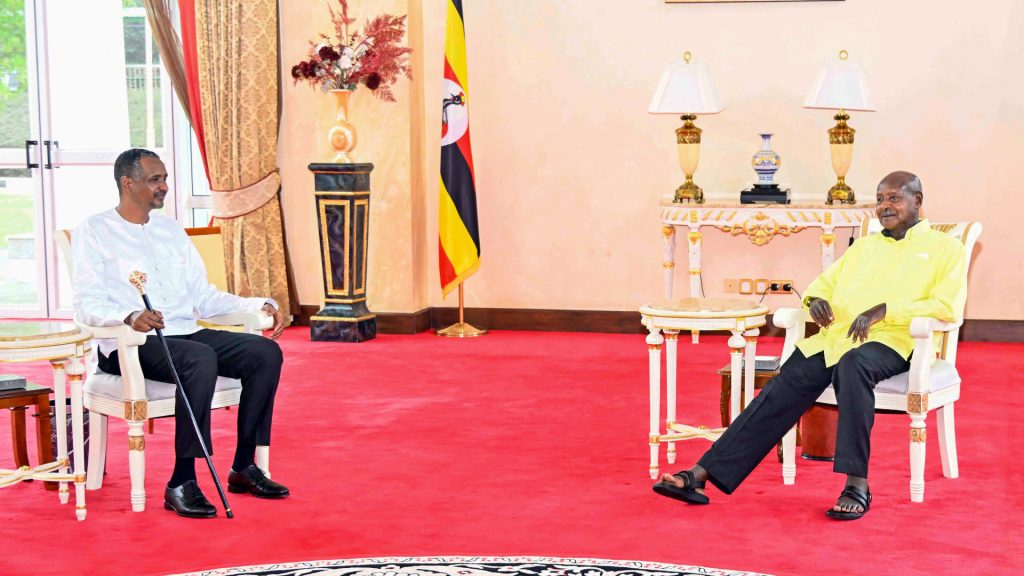
On 20 February, Mohamed Hamdan Dagalo, the commander of Sudan’s Rapid Support Forces (RSF), widely recognized as Hemedti, made a significant trip to Kampala, Uganda. During his visit, he met with Ugandan President Yoweri Museveni, marking a notable diplomatic step for the RSF leader outside Sudan’s borders.
The journey occurred just one day after a UN investigation identified the RSF as responsible for genocidal acts in Darfur. This was followed by U.S. sanctions targeting three RSF commanders for their role in atrocities in el-Fasher. These developments highlighted the growing international scrutiny of the RSF’s actions, which had already drawn widespread criticism for their violence in the region.
Hemedti’s visit coincided with mounting global condemnation of the RSF’s conduct. In December 2023, the U.S. classified RSF activities in Darfur as ethnic cleansing, and throughout 2024, the UN Security Council issued multiple resolutions and briefings on the group’s war crimes. The RSF’s ability to maintain control over territories while facing these accusations has raised questions about its role in Sudan’s governance.
Accompanied by key figures from the Tasis initiative—a political framework established in Nairobi to position the RSF as an alternative to state authority—Hemedti sought to bolster his image. However, this effort struggled to gain recognition, as governments, regional alliances, and international organizations largely dismissed the parallel governance model.
Sudan’s government criticized Uganda for hosting Hemedti, viewing the move as a slight to the Sudanese people and their collective dignity. Yet, for Uganda, the visit signaled a broader ambition: to establish itself as a mediator in regional conflicts without aligning with a single Sudanese faction. The country’s neutral stance in Horn of Africa diplomacy made it an attractive venue for Hemedti’s outreach.
The RSF’s presence in administrative roles across certain regions underscores its evolving influence. By maintaining control over local governance, the group aims to transition from a military force to a political entity, all while preserving its autonomy. This dual approach has sparked concerns about Sudan’s potential fragmentation into competing power centers.
Hemedti’s strategy appears to involve a calculated shift in focus. No longer confined to military operations or domestic audiences, he now seeks regional support to reshape narratives and build alliances. His speech in Kampala emphasized unity, opposition to division, and a commitment to dialogue, positioning the RSF as a defender against Islamist threats and a proponent of civilian-led governance.
Despite these efforts, the RSF faces an inherent dilemma. Accused of mass violence, Hemedti promotes democratic ideals while overseeing structures that operate independently of the state. This contradiction reflects a larger challenge: how can a force linked to atrocities claim legitimacy while maintaining its military dominance?
Analysts at the International Crisis Group have warned that Sudan’s conflict is increasingly a battle over sovereignty, not just control of the capital. Prolonged power struggles between rival groups often culminate in lasting political divisions. Hemedti’s Uganda visit, therefore, serves dual purposes: to rehabilitate the RSF’s image under global pressure and to secure its status as a credible political actor in regional diplomacy.
Uganda’s Strategic Position
Uganda’s selection as a host was deliberate. Museveni has long championed “African solutions to African problems,” and the nation holds a central role in East African diplomacy. By welcoming Hemedti, Uganda enhances its influence without becoming entangled in Sudan’s internal disputes. The Tasis initiative, which struggled in Nairobi, now finds new ground in Kampala, where the RSF’s claims of civilian-backed administration gain symbolic weight.
“The Rift Valley Institute notes that Hemedti’s engagement with Uganda represents a pivotal moment in Sudan’s political evolution, testing whether the RSF can reconcile its military actions with aspirations for civilian authority.”
This visit also ties into broader mediation efforts led by the African Union and the Intergovernmental Authority on Development (Igad). By aligning with Ugandan leadership, Hemedti may gain leverage in these talks, though the balance remains delicate. Museveni’s support risks entangling Uganda in Sudan’s complexities while advancing its own regional ambitions.
