
Planetary parade: How and when to spot six planets in UK skies in rare alignment
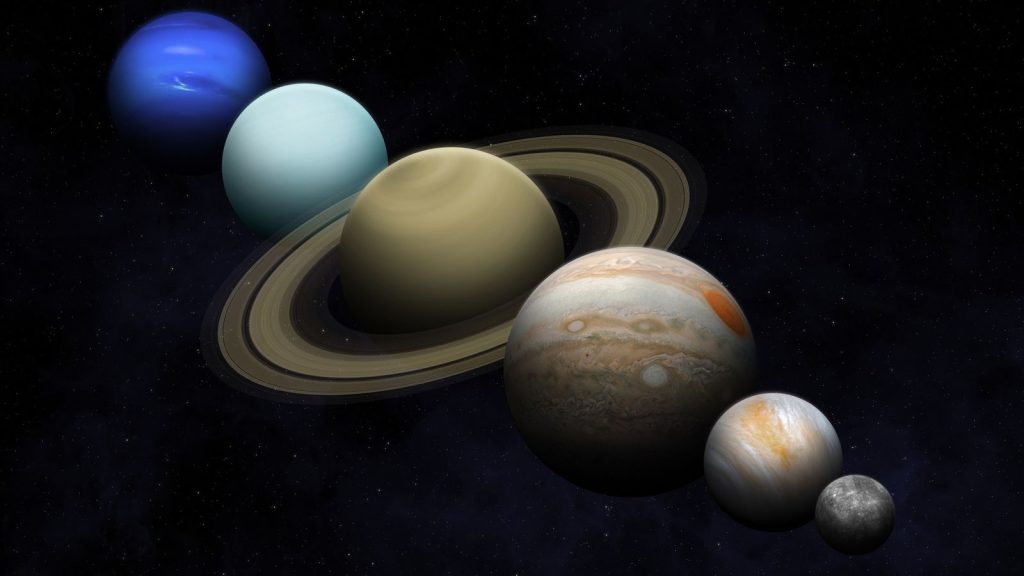
Planetary Parade: Rare Opportunity to Spot Six Planets in UK Skies
This weekend will witness a rare celestial alignment as six planets converge in the night sky, a spectacle typically seen only infrequently.
The phenomenon will showcase Mercury, Venus, Saturn, Jupiter, Uranus, and Neptune, with several of these planets observable without the need for optical aids.
According to the Greenwich Royal Observatory, this event could present all six planets simultaneously, offering a unique chance for stargazers to witness such a display.
Visibility and Best Viewing Times
After sunset on Saturday, February 28, and Sunday, March 1, Mercury, Venus, Jupiter, and Saturn will be visible to the naked eye globally, assuming clear skies.
The Royal Observatory notes that Uranus and Neptune will require binoculars or telescopes for observation, as they will appear closer to the horizon in the western sky, complicating visibility due to sunlight and surrounding landmarks.
For UK residents, Sunday is advised as the most favorable day, with peak observation moments predicted at 6:10 PM in London and 6:16 PM in Manchester.
Identifying Planets in the Night Sky
At least one bright planet is typically visible each night, as stated by NASA.
“If it is twinkling, it’s a star. If it is not twinkling, it’s a planet,” said planetary scientist Sara Mazrouei of Humber Polytechnic.
As planets orbit the sun, they occasionally appear in close spatial proximity, according to NASA.
The term “planetary alignment” refers to apparent groupings involving other planets, the moon, or bright stars, which seem to form a line or arc from Earth’s perspective.
Understanding Planetary Alignments
NASA explains that while planets aren’t in a straight line, they will cluster near the sun, creating a visually striking configuration.
“Planetary alignments, where multiple planets appear close together in the sky, occur periodically but are relatively rare,” noted Dr. Shyam Balaji, a researcher in astroparticle physics and cosmology at King’s College London.
Such alignments of six or more planets happen roughly every few decades, as per the expert’s previous remarks.
Weather Conditions and Viewing Tips
Weather forecasts indicate favorable conditions for viewing on Saturday night, with England and Wales likely to experience clearer skies before cloud cover expands from the northwest.
On Sunday night, showery rain may spread eastward, intensifying in the northwest, which could leave southern England with better viewing conditions.
Additional guidance for observers includes: locate away from city lights, use astronomical software for real-time planet positions, exercise caution during twilight hours, and check updated viewing information from reliable sources as the event approaches.
