
How US and Israeli air strikes on Iran have caused international travel chaos: Flights cancelled or diverted with passengers left stranded
How US and Israeli air strikes on Iran have caused international travel chaos: Flights cancelled or diverted with passengers left stranded
International travel has once again been thrown into disarray, but this time it’s not due to a technical glitch, a sandstorm, or any other natural event. The situation is far more alarming, as a conflict in the Middle East has disrupted air operations and stranded thousands of travelers.
Regional Airspace Closures Trigger Flight Disruptions
The UAE, Bahrain, Iraq, and Qatar have closed their airspaces in response to Iranian retaliatory strikes targeting Gulf states. Airlines operating in the region have either cancelled flights or rerouted them, leaving passengers in limbo at airports across the Middle East.
Abu Dhabi’s Zayed International Airport (AUH) and Dubai’s DXB airport are among the world’s largest hubs. Alongside Doha’s airport in Qatar, they serve as critical links for onward journeys to Asia and the Pacific. Over 127 million passengers passed through these two airports in 2025 alone, highlighting their significance in global travel networks.
British Travelers Affected by Regional Instability
The UAE remains a top destination for British holidaymakers, with Dubai welcoming nearly 20 million international visitors last year—over 1.32 million of whom were from the UK. However, the strikes have forced many to reconsider their plans.
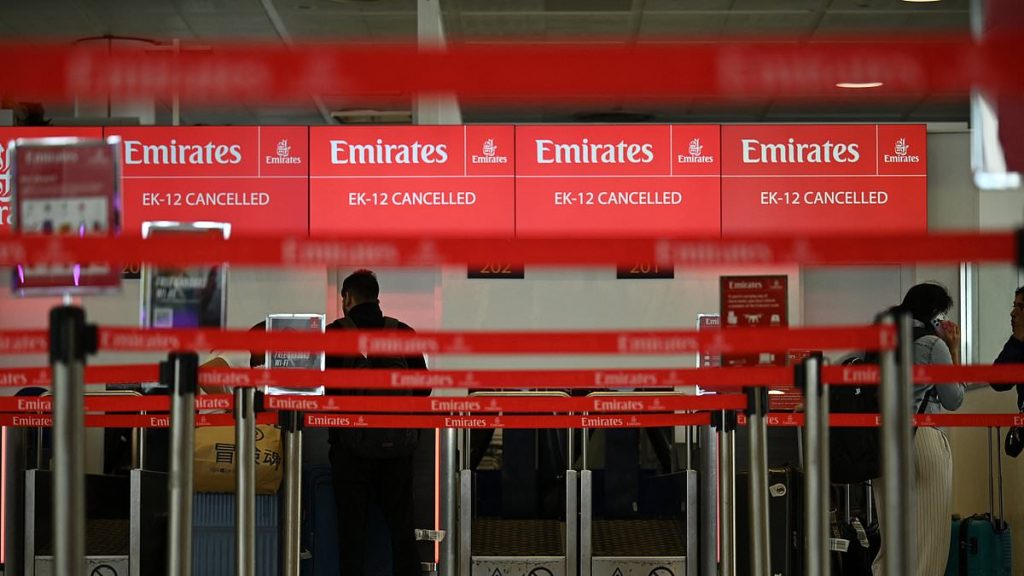
On Saturday, Emirates flights from London Gatwick were cancelled after the US and Israel launched strikes against Iran. Explosions from Israeli projectile interceptions over Tel Aviv added to the urgency. Passengers at Beirut’s Rafic Hariri International Airport also faced delays and uncertainty due to the missile attacks.
British Airways stated:
“We are closely monitoring the situation and have cancelled a number of our flights to the Middle East. Safety is always our top priority, and we’re contacting customers to advise them of their travel options.”
While some flights have resumed, the Foreign Office has not officially warned against traveling to the UAE. This means passengers who cancel due to safety concerns may not be eligible for full refunds. Airlines like Emirates have paused operations to and from Dubai, citing ongoing assessments with local authorities. Wizz Air has suspended all flights to Israel, Abu Dhabi, Dubai, and Amman until March 7. Virgin Atlantic is also rerouting flights to bypass Iraqi airspace and has cancelled its London to Dubai service.
Travelers Share Their Experiences
Nigel Rawlence, a retired businessman from the Isle of Wight, was on holiday in Abu Dhabi with his wife. ‘We managed to get out on Friday before the attacks started,’ he said. ‘You would never have known something like this was about to happen. We consider ourselves fortunate and won’t be going back in a hurry.’
